
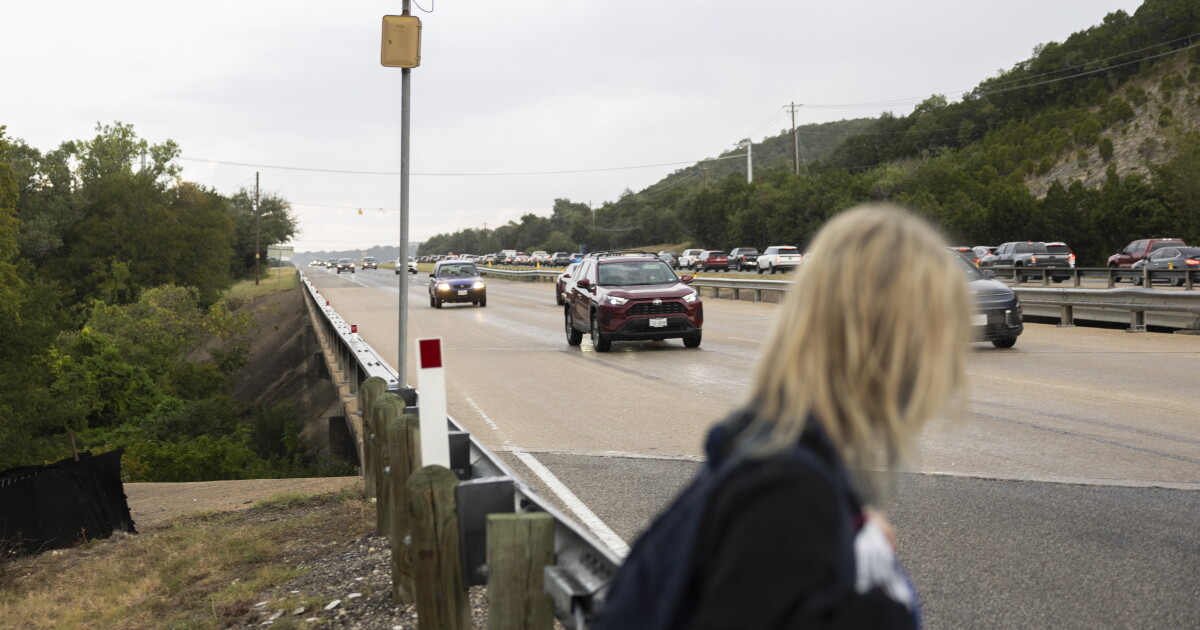
On a late August Friday afternoon, Margaret, a freshman at Anderson High School, had three choices to get home: walk against traffic along Loop 360 with no sidewalk; walk on a trail for more than an hour; or take a shortcut by going down a steep concrete embankment, across Bull Creek, and up another embankment.
“It’s just really hard to get down to the trail, so the highway is easier, it’s just more scary,” Margaret said as she looked down the steep slope. “I don’t want to get run over just trying to walk home.”
Margaret was prepared to walk in the 100-degree heat, but unexpected rain brought temperatures down to the low 90s. This was the second time she was walking home from her newly assigned bus hub. The first time she said she almost had a heatstroke.
The Austin Independent School District changed its transportation system for high school students for the 2026-27 school year as part of budget cuts. Under the new system, the district replaced neighborhood stops with hubs at elementary schools, CapMetro bus stops and community centers. Two weeks into the school year, some families are struggling with the change.
“I shouldn’t have to feel like it’s an inconvenience for the kids to use the bus system,” Daphne Harrington, Margaret’s mom, said. “I realize there’s budget cuts, but it shouldn’t come at the expense of the safety of our children.”
In previous years, Margaret would be dropped off by the school bus right outside the family’s apartment complex on Loop 360. But since the beginning of the school year Harrington has been trying to solve how to get her kids home. She relied on co-workers and friends to pick her kids up and took off early from work, but that meant cuts to her pay.
“I’m the sole caregiver of my children. I don’t get any assistance from anywhere, so they depend on me,” Harrington said. “If I don’t work, I don’t have enough to cover my rent or my electricity or the bills, or we have to ration and spread out dinners.”
Despite bringing the district an estimated $2.3 million in savings, there has been pushback from the community.
Lorianne Willett
/
KUT News
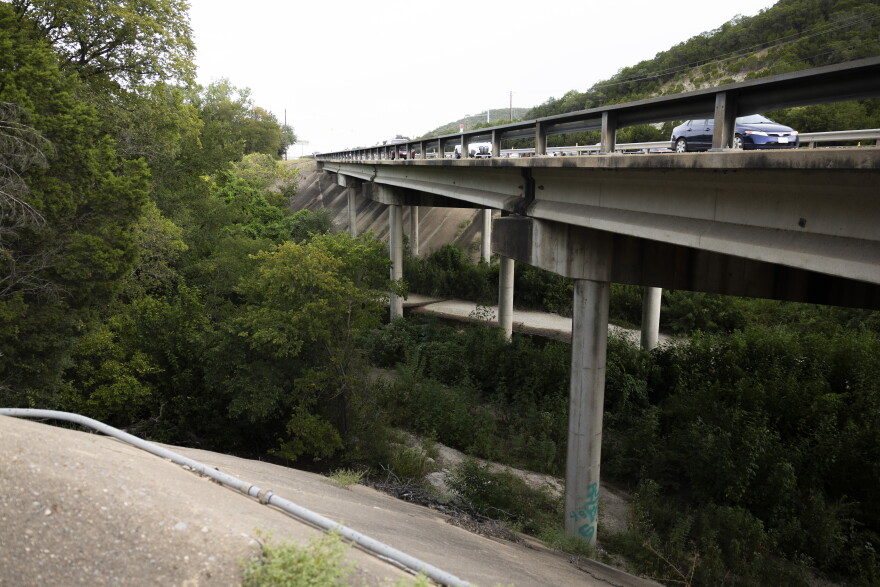
Bull Creek Trail runs beneath Loop 360. The trail and the shoulder of Loop 360 are Margaret’s two options to walk home from her Austin ISD bus hub.
Taking in feedback
Since the hub system was announced, parents have raised concerns about students’ safety. Kris Hafezizadeh, AISD’s executive director of transportation and vehicle services, said his team went through more than 3,500 comments.
“Austin ISD never had this, so it can be challenging … It’s also a new thing for my team: the terminals, the drivers, the schedulers, and so on and so on,” Hafezizadeh said. “We added more hubs, especially for the areas in the middle of nowhere, and we keep accommodating.”
The district started with 98 hubs located an average distance of 2.5 miles from students’ homes. That number has gone up to 108 hubs about 1.5 miles from their homes, Hafezizadeh said.
Katy Chrzanowski’s son was assigned a hub that would have made him walk under U.S. Highway 183. But Chrzanowski said the district added a hub closer to their home after she filed a grievance.
“It was great that the district worked with us and found good solutions. At least for us, I’m not sure if that happened everywhere,” she said.
Not all parents have praised the district for adding hubs. Harrington said she tried for weeks to get ahold of district officials through emails and phone calls.
“When I did reach somebody at transportation, I was told it’s my responsibility to get my kids to and from school,” she said.
District officials have asked families to carpool, have students bike or take public transportation to and from the hubs. But those options aren’t viable for everyone.
For Harrington, the solution was simple: the bus her kids take from Anderson High drives past their apartment complex before getting to the hub; the district just needed to add an extra stop.
Transportation challenges
Hafezizadeh said the district has been adding stops in areas with highways, where there’s not public transit and where walking is not an option. But deciding where and how many stops to add is a balancing act, he said, because if the district adds a stop for one family, it will have to do it for dozens more, cutting back on savings.
“That extends the time of the route, causes delays to school,” he said. “Then if that happens, guess what I gotta do? I gotta create another brand new route. Then now you’re talking $65,000 a year.”
The state of Texas doesn’t require districts to provide bus services to all students, and federal law only requires them to provide transportation for some students with disabilities and homeless students.
Texas provides transportation funding for students who live more than 2 miles from their assigned campus. Some students within that 2-mile radius also qualify for funding if they have to walk through hazardous routes, including crossing a major highway or a bridge where no walkway is provided. But AISD officials say the funding provided by the state is not enough.
Lorianne Willett
/
KUT News
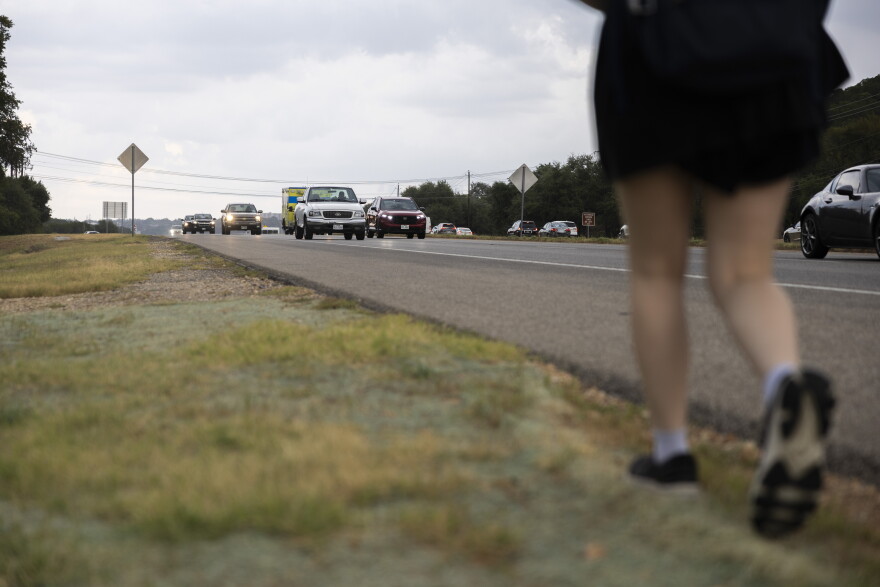
Austin ISD has added more bus hubs in response to concerns from parents about hazardous routes.
AISD officials say they transport 18,000 students a day and spend $7.22 per mile of bus travel, but the state provides only $1 of that. Hafezizadeh said he hopes the transportation formulas change soon.
Every year the district readjusts its routes, but this school year presented a bigger challenge. The district had to come up with new routes for kids from closing schools. They also planned to use the hub model for middle schools, but backtracked and only applied it to high schools.
A new hub
After KUT News spoke with Hafezizadeh about Harrington’s concerns, she was able to get in touch with him. Following a review of the route, he said his team visited the area and will be adding a stop by the family’s apartment complex as soon as Friday.
“I called five, six times and never got a call back,” Harrington said. “No parent should have to do that, if they have concerns they should be heard the first time. Not the third, the fifth, sixth time, they should be heard the first time, because every kid matters.”
Harrington will lose 12 hours of work this week to pick her kids up from school but said she is relieved they will make it home safe by themselves the rest of the year.