
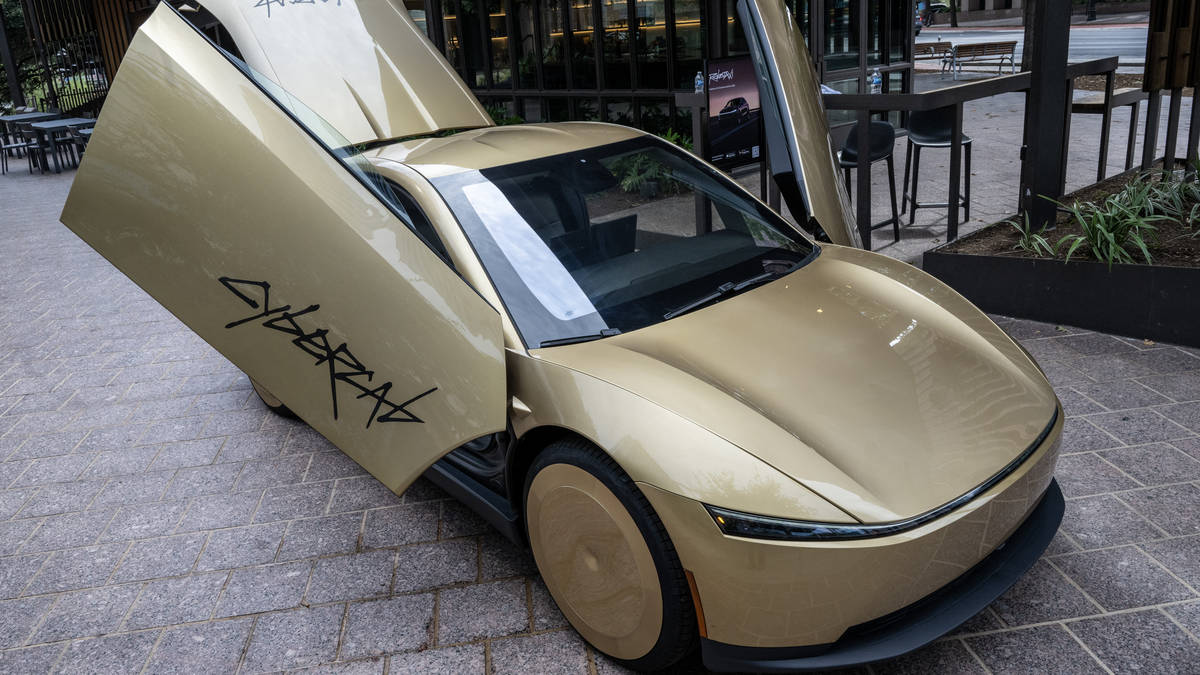
The two-seater Cybercab was first unveiled in 2024 and has been designed specifically for fully autonomous journeys.
Tesla began production earlier this year and currently has 45 Cybercabs registered in Texas, according to state records cited by Reuters.
Tesla already operates a robotaxi service using autonomous Model Y vehicles in several cities across Texas and Florida.
The company ultimately plans for the Cybercab to become the main vehicle in a much larger driverless taxi network.
However, regulatory hurdles could limit how quickly the new vehicles are deployed.
US rules restrict the number of vehicles without traditional controls that manufacturers can sell, while Tesla also lacks some of the permits required to operate fully driverless services in markets including California.
The launch comes as Tesla faces growing competition from companies such as Waymo, which currently operates a significantly larger driverless taxi fleet in the US.
Tesla is also betting heavily on autonomous vehicles as its traditional electric car business faces increasing global competition.
CEO Elon Musk has previously said the Cybercab could eventually become Tesla’s highest-volume vehicle, although the company has acknowledged that its initial production and expansion will be gradual.