
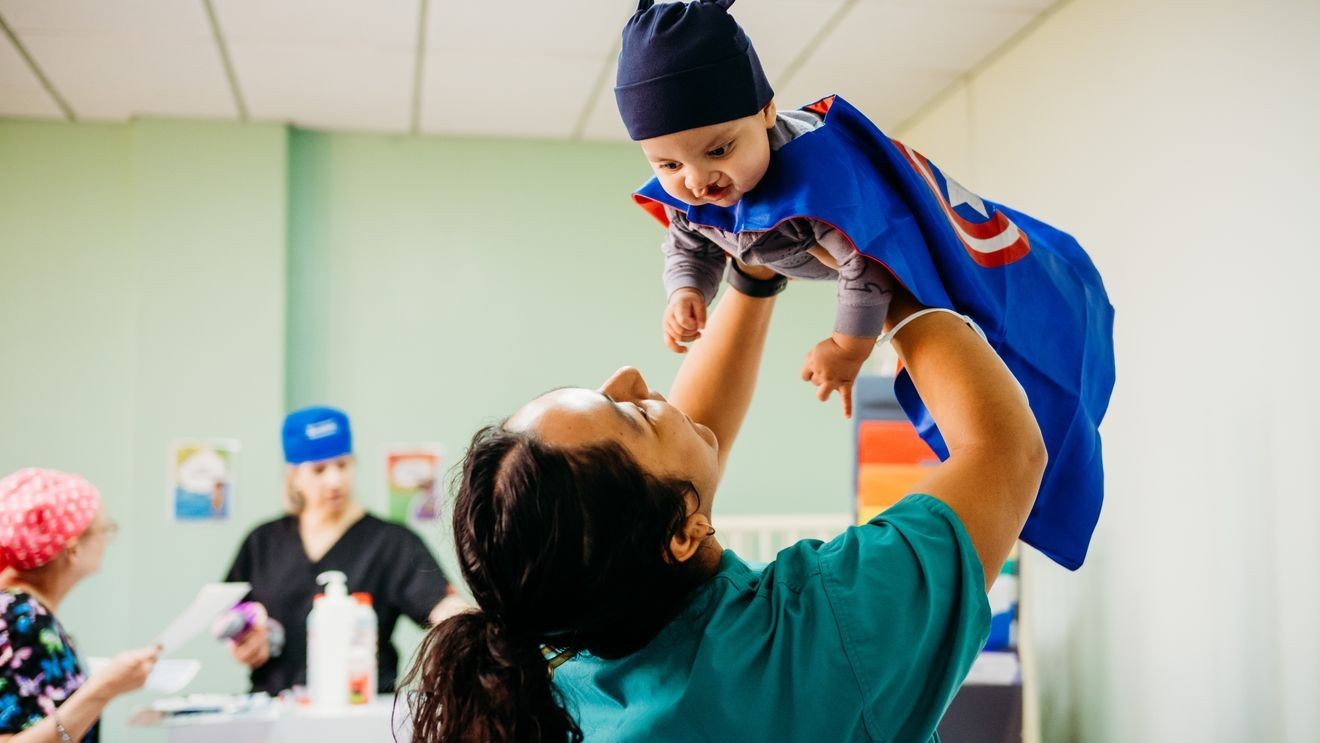
Austin, TX — For more than four decades, Austin medical volunteers have traveled beyond Central Texas to provide surgical care to children and families living with cleft lip and palate.
Austin Smiles provides surgical and post-surgical care in Central Texas and Latin America. The nonprofit says cleft conditions affect about one in every 700 children and can significantly impact a child’s ability to eat, speak and thrive.
For longtime Austin Smiles medical volunteers Dr. Carolyn Biebas and Dr. Stan Eckert, the impact is measured in individual patients and families.
Biebas said one of the moments that has stayed with her is seeing a mother reunited with her baby following surgery.
“Well, I remember individual stories that were especially touching, but there are so many touching scenarios. The thing that always stands out is giving the baby back to the mother after their lip is fixed and the stories of people traveling great distances and enduring great hardship just to get there to see us.”
The doctors say the potential impact reaches far beyond appearance.
Eckert said surgery can help children and young adults live healthier lives without the stigma that can accompany an untreated cleft condition. Palate repair can also improve speech, potentially opening doors to employment and greater independence.
Biebas described the potential impact of improved speech this way:
“It changes everything about their life. It’s hard for them to hold a job and take care of themselves, but once you give them the ability to have effective speech that people can understand, then they can get a job and they can be productive in all areas of life.”
The need for care also does not necessarily end after surgery.
Eckert said children may need speech therapy, dental care, and emotional support throughout their lives. Biebas said Austin Smiles has expanded the scope of its missions over the years, with speech pathologists and, when available, dentists and ENT surgeons joining teams to provide more comprehensive care.
The organization also provides opportunities for children living with cleft conditions locally to connect with one another through Camp Amigo. Eckert said children have described being the only student at school with a cleft lip, only to attend the gathering and find themselves surrounded by other children with similar experiences.
The missions themselves have also changed dramatically.
On early trips, teams sometimes arrived without knowing which patients would be waiting or what procedures they would need. Eckert recalled seeing as many as 100 patients and their families lined up on the first day as doctors worked to determine a surgical schedule. Today, technology allows Austin Smiles teams to virtually screen patients before volunteers ever leave Austin.
But the doctors say the reason they return has remained remarkably consistent.
“Because once you do it, you’re hooked for so many of us. Not everyone goes, but for so many of us, you, you really, you bond with the team and with the process, and it just feels great.”
Austin Smiles will celebrate its milestone year at the 40th Annual Wish Upon a Smile Gala on November 7 at the Starlight Terrace at The Oasis on Lake Travis. More than 350 guests are expected. Grammy Award winner Grupo Fantasma is scheduled to perform, and a livestream is planned on the nonprofit’s Facebook and YouTube platforms beginning at 6:30 p.m.
Related: Austin Smiles leaves for their 47th medical mission trip to El Salvador
The organization will also present its Cullington, Fox, Beckham International Service Award to founding surgeons Dr. Fred Wilder and Dr. Bill Gorman, recognizing their decades of volunteer service locally and internationally.
For Biebas, the anniversary is also a reminder of why volunteers continue doing the work.
“And I too just considered it a great privilege to be able to do this, and, and I feel lucky that I have a skill that I can use in this way because I think everyone wants to help people, you know, people really are generous and, and well-meaning and, and so we’re, we’re just lucky that we have a very concrete way that we can help people and, and see a dramatic difference.”