
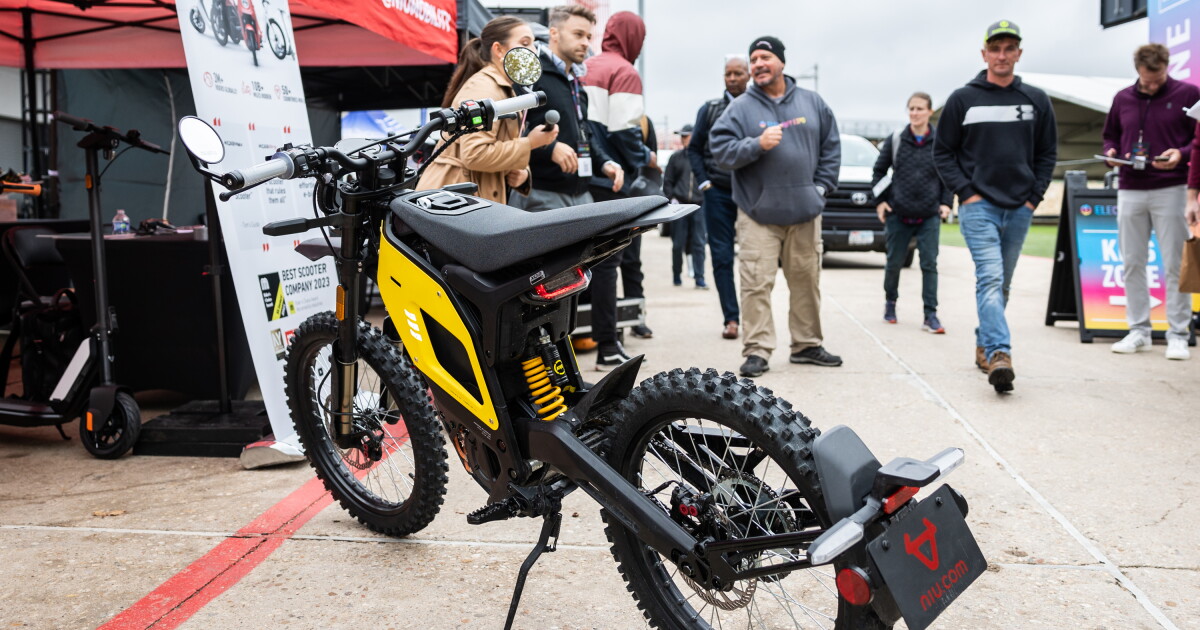
Austin is stepping up enforcement of rules for e-motorcycles, or e-motos, as the devices become more popular, especially among teens and young adults.
E-motos are high-powered, self-propelled bikes that can reach speeds over 28 miles per hour. They can operate on public streets with the proper documentation, including a driver’s license and insurance, and safety gear, like a helmet.
Assistant Austin Police Chief Mike Chancellor said there are already state laws that regulate these devices. But the challenge is identifying what an e-moto is versus an e-bike or a motorcycle.
An electric bike does have a motor, but its top speed reaches no more than 28 miles per hour. They also often have fully operable pedals. An e-moto can have pedals, although some don’t, but they’re different in that it usually has a larger motor with speeds that exceed 28 miles per hour. Motorcycles are self-propelled vehicles with large engines.
The Austin Police Department has updated its training that focuses on speed and motor sizes. Officers will be looking out for e-motos on sidewalks and trails, where they cannot be used, as well as proper use on city roads.
Warnings will be given to people, but police will be handing out tickets if they feel like a warning would not stop the behavior or if the person is using the device dangerously. Arrest is also possible if the rider or group is behaving egregiously.
Additionally, Chancellor said parents who knowingly allow a child under 18 to operate an e-moto could be cited.
“We are trying to educate the community as much as we can on what those differences are,” Chancellor said. “So that parents, so that users of these vehicles and so that law enforcement officers can understand the differences and what laws apply and how to handle these situations.”
Austin park rangers and staff have also been trained on the rules and will also be educating the public about the use of these devices at city parks and on city trails.
In May, the Austin City Council passed a resolution aimed at regulating these devices after several people raised concerns about them in neighborhoods, on sidewalks and on hiking trails. Council Member Paige Ellis has spearheaded that effort.
“The goal here is never to punish riders who don’t know any better,” Ellis said. “It is about education and safety.”
As options for mobility have changed, the city has been trying to crack down on high-speed devices, like electric scooters and e-bikes, while also maintaining the safety of riders, drivers and pedestrians.
Last April, the city implemented new rules for electric scooters around downtown. The University of Texas also recently put new rules in place that create pedestrian-friendly zones to help improve safety of riders and walkers on campus.
Austin City Council Member Krista Laine is supportive of the efforts.
“People need lower-cost effective ways to get to work and school, but we also need clear enforceable rules and licensing requirements that keep safety front and center,” Laine said.
The city is not looking for an all out ban on e-motos. Ellis said city staff are exploring creating designated areas for these types of devices so people can enjoy them recreationally and safely. Any changes and designated areas would have to be approved by the Austin City Council.