
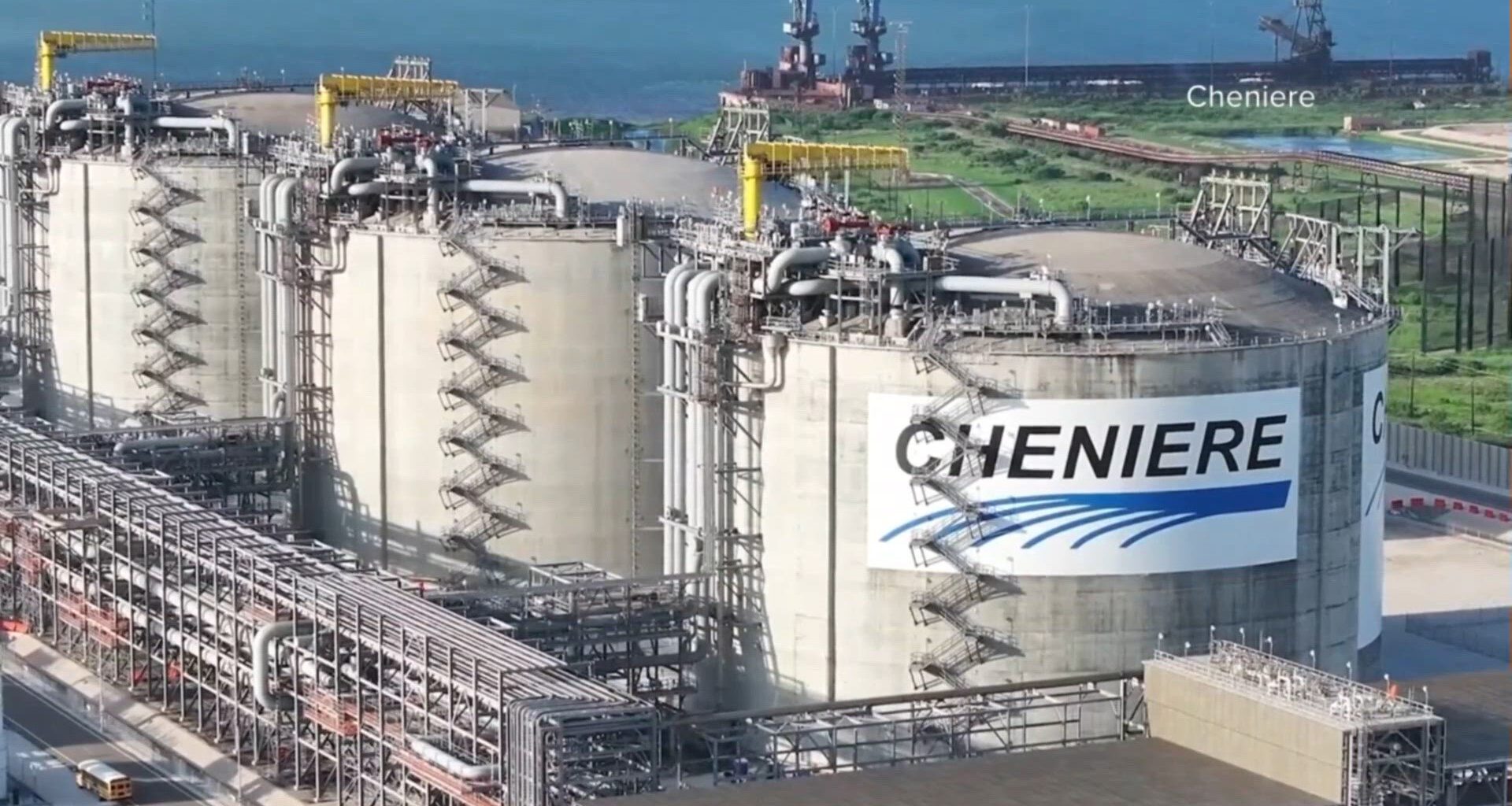
Cheniere is seeking permits for a fourth stage of its San Patricio County LNG expansion as residents raise concerns about air emissions and flaring.
PORTLAND, Texas — Cheniere is seeking state and federal air permits for a proposed fourth stage of expansion at its Corpus Christi liquefied natural gas facility in San Patricio County, drawing concerns from residents and environmental advocates over potential increases in air emissions.
The Texas Commission on Environmental Quality held a public meeting Thursday night in Portland on the proposed permits for Corpus Christi Liquefaction Stage IV.

This story continues below.
The proposed project would expand the existing LNG terminal with four additional large-scale, natural gas-driven liquefaction trains. Corpus Christi Liquefaction is a subsidiary of Cheniere Energy.
TCEQ’s preliminary determination says the agency’s technical review found the proposed emissions subject to federal Prevention of Significant Deterioration requirements would not violate applicable state or federal air-quality rules. The agency also determined the project would use Best Available Control Technology for the pollutants subject to that review.
The preliminary determination lists allowable annual emissions associated with the project, including nearly 5.94 million tons of carbon dioxide equivalent.
The proposed permits also contain requirements for monitoring and controlling emissions from the facility’s flare systems. Those systems include two wet/dry flares and two marine flares.
Under the proposed permit conditions, flare monitoring systems would continuously measure factors including the flow and composition of gas sent to the flares. The monitors and analyzers would be required to operate at least 95% of the time when a flare is operational, averaged over a rolling 12-month period. Flare emissions would also be limited by permitted caps on a rolling 12-month basis.
The permit would also require the wet/dry flares to maintain a flame or constant pilot flame, with the pilot continuously monitored. Marine flares would be required to have a flame present when LNG carriers are connected to the facility’s vapor transfer arm.
Those requirements were a point of discussion during Thursday night’s meeting, where some residents questioned Cheniere’s existing emissions record and how additional equipment could affect air quality in the region.
Patrick Nye, founder of the Coastal Watch Association, told attendees his group has been collecting air-quality data and believes some measurements show pollution above federal limits.
Cheniere representatives pushed back on concerns about the company’s operations and said the company is committed to meeting its regulatory requirements.
In a statement to 3NEWS, Cheniere said Stage IV remains in development and that the company is pursuing multiple permits at the state and federal levels.
The company said it anticipates receiving the permits needed ahead of a final investment decision by late 2027.
Cheniere has not yet released an estimated cost for the project. The company said Stage IV is expected to create thousands of construction jobs and more than 300 permanent jobs.
On emissions, Cheniere said it aims to comply with its emissions and monitoring requirements and that deviations are reported to TCEQ as required.
The company also pointed to publicly available air-quality data from the University of Texas at Austin and its most recent report on air quality in the Gregory-Portland area, saying the information provides context about regional air quality since Cheniere began operating there.
Cheniere’s full statement:
“Our CCL Stage IV Project is in development.
We operate in a highly regulated industry, and the TCEQ air permit you reference is one of many permits we are pursuing at the state and federal levels. We anticipate receiving the permits required ahead of a final investment decision (FID) by late 2027.
We do not yet have an estimated project cost to share, but we believe Stage IV represents an important potential financial investment with positive economic and job impacts for the Coastal Bend region. Per our application, Stage IV is projected to create thousands of construction jobs and more than 300 permanent jobs.
Cheniere aims to comply with all of its emissions and monitoring requirements, and any deviations are reported to TCEQ as required. We are committed to safe, reliable and environmentally responsible operations.
Additionally, sharing UT Austin’s publicly available data and most recent report re: Gregory-Portland air quality. This provides context related to the region’s air quality since we’ve been in operation.”
Texas Oil & Gas Association responds
The Texas Oil & Gas Association also weighed in on the proposed expansion.
Todd Staples, president of TXOGA, said the Coastal Bend’s oil and natural gas infrastructure has made the region a global energy hub and argued additional investment would benefit the area economically.
“Texas natural gas fuels our daily lives and supports America’s energy and national security goals by exporting the remainder as LNG to allies and trading partners. With the industry’s production, pipelines, refineries, LNG export terminals, and ports, the Coastal Bend region has become a global energy gateway. Investments made by the oil and natural gas industry over the years, and the proposed investments underway, will continue to create jobs, support economic development, and build up a region that is vital to the nation’s economic, energy, and national security goals.”
The proposed permits are not yet final.
TCEQ’s notice says members of the public can submit formal comments on the application and preliminary decision. Certain portions of the permits are also subject to requests for a contested case hearing.
If approved, Stage IV would add four large-scale liquefaction trains to Cheniere’s existing Corpus Christi LNG terminal. The company says a final investment decision is not expected until late 2027.