
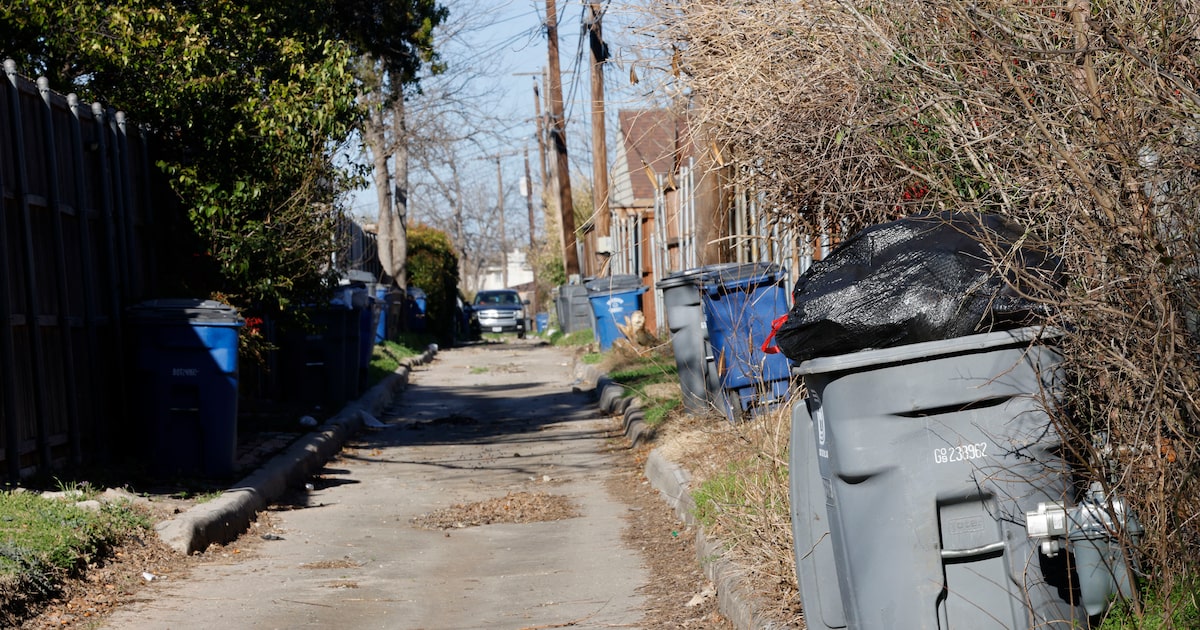
For the last few months, we have been working with a growing coalition of people around the city to prevent what we believe is a huge disservice to tens of thousands of Dallas residents — the proposed plan to eliminate alley trash pickup.
As we researched the issue and reviewed the proposed costs and benefits of eliminating this long-standing service, we felt strongly that a potential option exists that could save the city money and provide more efficient sanitation services to all of Dallas, while also preserving alley pickup.
What if the city outsourced trash collection to a private operator, as cities across the country have done? It would likely improve service quality, provide some relief to the city’s budgetary pressures and potentially give sanitation workers better training and benefits than they currently receive.
The city’s plan, as proposed, would transfer much of the consequences of deferred maintenance and operational challenges onto residents, forcing them to reconfigure properties, haul bins to the street and navigate safety hazards on narrow, congested roads. We do not believe this is the correct solution to long-standing underinvestment in alley infrastructure and lack of consistent code enforcement.
Opinion
Switching collection to a private waste management firm could relieve Dallas of many of the budgetary and logistical challenges public collection causes. In North Texas, municipalities such as Allen, Addison, Fort Worth, Highland Park, University Park, Lancaster, Richardson and dozens more all use outsourced trash service. In Houston, a recent opinion piece in The Houston Chronicle advocated for just such a solution, given that city’s budget concerns and operational challenges.
Outside of Texas, other large municipalities have made the switch to outsourcing with success. In 2011, Toledo, Ohio, took collection private, and the city saved $6 million annually, according to officials. Republic Services bought the city trucks, and most sanitation workers were hired by the company. Service complaints dropped from 300 to 500 per month to just a handful.
Charlotte, N.C., offers an interesting hybrid model where private contractors bid alongside the city, driving efficiency and accountability. They divided the city into quadrants and put each quadrant out for bid to private contractors with the city sanitation department providing its own bid. The effort helped improve efficiency at the sanitation department as private contractors kept the city honest about cost and efficiency.
In terms of safety, the data also supports outsourcing. Private firms like Republic Services and Waste Management report OSHA injury rates of 2.8 and 3.08, respectively, in 2023, well below the industry average of 4.4, according to industry website wastedive.com. These companies invest in training, safety technology and performance monitoring. Rather than eliminating alley service in the name of safety, Dallas could partner with companies that specialize in doing it safely.
Outsourcing also introduces performance-based contracts, which incentivize responsiveness and customer satisfaction. If a provider fails to meet standards, the city can hold them accountable or seek alternatives, leverage that it doesn’t currently have over its own operations.
Outsourcing would also shift direct employee costs, equipment maintenance and liability risks off the city’s books. Eliminating city-provided pensions for sanitation workers would also be a major cost benefit to using third-party providers, an urgent concern given Dallas’ ongoing pension challenges. Private contractors provide competitive salaries and benefits, complete with health insurance and 401(k) plans with ongoing training and options for career advancement for workers.
Most important, service would likely improve. Curbside-only collection disproportionately burdens seniors, people with disabilities and residents without driveways or front access. Forcing these residents to drag heavy bins to the street each week is not only inconvenient, it’s also inequitable. Preserving alley service through outsourcing ensures fair and accessible service for all.
Before dismantling a system that works for 95,000 Dallas households, the city should conduct a formal, independent analysis comparing in-house and outsourced alley collection. This should include:
• Cost comparisons, including capital and operational expenses.
• Safety data from both city and private haulers.
• Service quality benchmarks and customer satisfaction metrics.
• Equity impacts on vulnerable populations.
The more we studied it, the more convinced we became. Dallas should open up its residential trash collection process for private bids. If the city thinks it can cost-effectively compete with the private operators, it should make its own bid as part of the process. If it can’t compete on price, and is worried about liability, safety concerns and pensions, why does the city continue to operate its own solid waste collection? We believe the solution isn’t getting rid of alley service but going with a more cost-effective model.
On a positive note, our group recently met with Dallas City Manager Kimberly Bizor Tolbert and her staff to discuss these issues and received positive feedback to our suggestions. While no formal decision has been made, city staff indicated outsourcing was one of the solutions under consideration. We support those efforts and strongly believe utilizing third-party providers will yield better safety, cost visibility and operational efficiency to alley waste collection.
Dallas is a city of innovation, resilience and community pride. We don’t have to settle for false choices between safety and service, or between fiscal responsibility and resident well-being. By embracing outsourcing as a strategic tool, not a last resort, we can preserve what works, fix what doesn’t, and build a smarter, fairer future for all.
James Collet and Jeff Helfrich lead the Keep Alley Trash Neighborhood Coalition.