
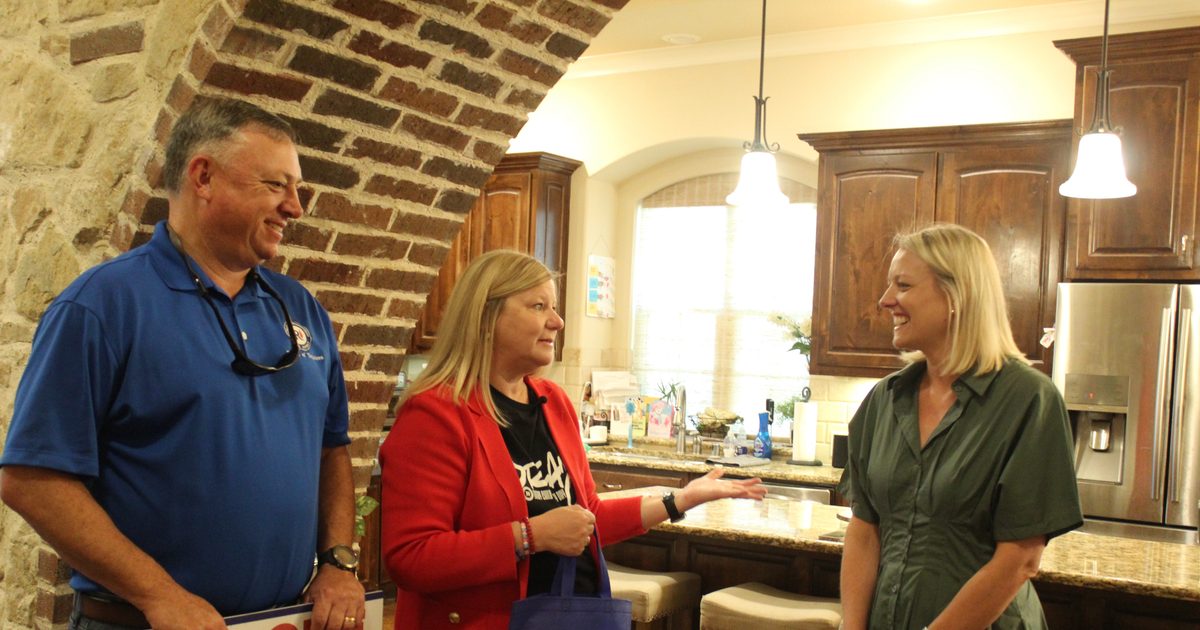
In August, Richardson ISD leaders visited the homes of over 200 families who enrolled for the 2026-27 school year through open enrollment, offering welcome materials and information.
Superintendent Tabitha Branum said the welcome visits are part of a recruitment approach that prioritizes the relationship families have with RISD as the district works to combat declining enrollment.
“How do we go the extra inch so that the family knows, ‘There’s nowhere else I could even imagine taking my child’?” Branum said.
The big picture
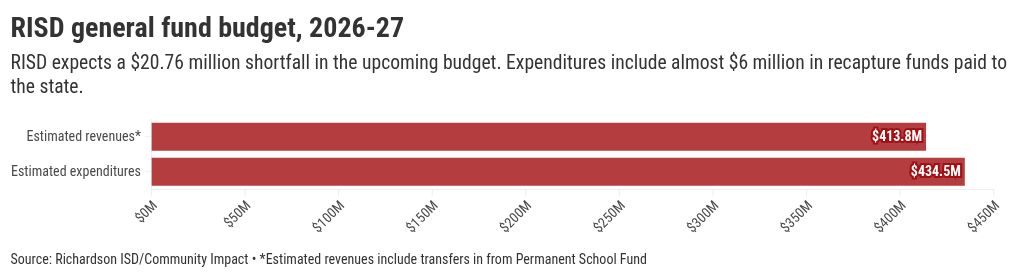
Richardson ISD approved a $20.8 million shortfall budget in June for the 2026-27 school year, the sixth year in a row that the district will operate at a deficit.
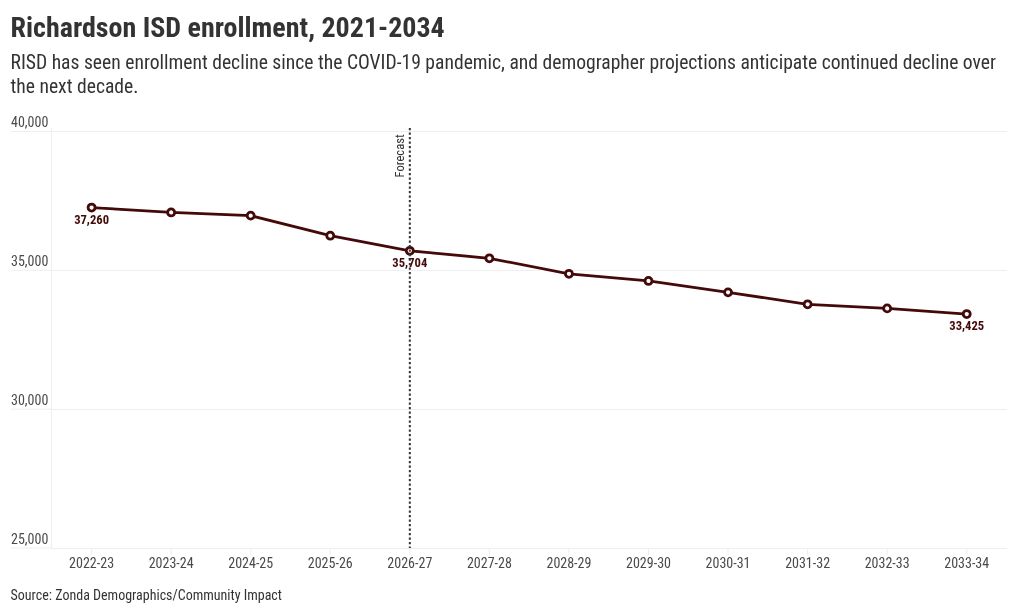
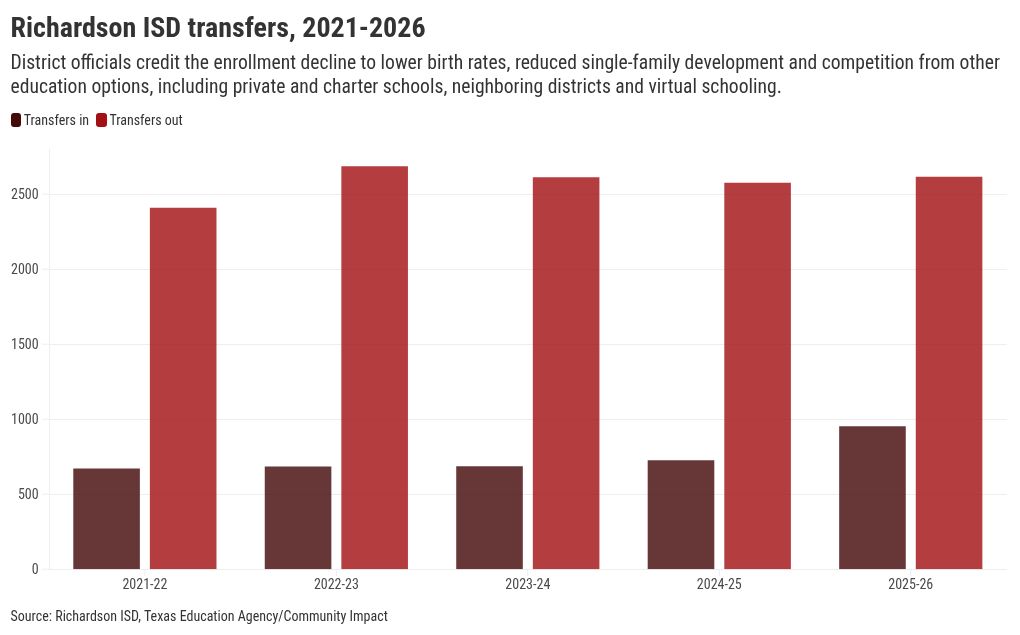
Like many districts across the state, RISD is facing declining enrollment as budgets become increasingly determined by student numbers—Texas public schools receive state funding based on student attendance, so enrollment declines mean less available funds. To work towards a more balanced budget, RISD officials aim to grow enrollment while finding further budget efficiencies.
RISD began offering open enrollment in the 2025-26 school year, allowing families from outside district boundaries to apply for a place in RISD.
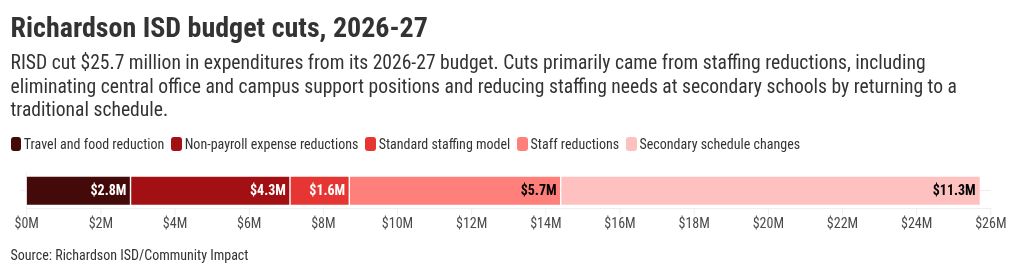
The district has also cut close to $42 million from its budget over the last three years, Branum said, including $25.7 million in staff reductions and other efficiencies from the current budget.
“Unfortunately, it’s not a one-and-done,” said Amanda Brownson, deputy executive director of Texas Association of School Business Officials. TASBO supports school business and operations professionals statewide.
When districts are facing declining enrollment patterns, right-sizing the budget is an ongoing effort, Brownson said.
RISD’s 2026-27 operating budget also includes a transfer of $9 million from the district’s permanent school fund—a “rainy day” account—to cover district-wide raises for teachers and staff.
About two-thirds of the district’s operating budget comes from local taxes generated through the maintenance and operations tax rate, which is expected to remain unchanged this year. This tax rate is distinct from the interest and sinking tax rate, which supports construction and capital improvement bond projects, like the middle school transformation, and cannot be used for operating expenses.
Diving deeper
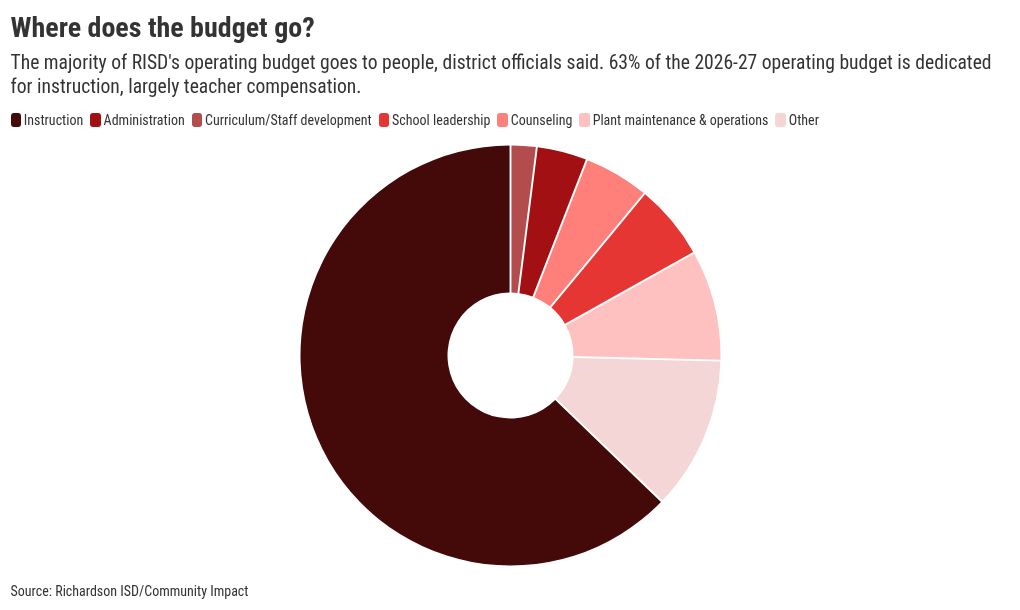
Per the district website, nearly 85% of RISD’s operating budget funds compensation for teachers and staff. Cutting spending on staffing is the primary avenue to cut down budget expenses, Brownson said.
“The vast majority of funding is tied up in people,” Brownson said. “It is very hard to make a meaningful impact on that budget without looking at staffing.”
The majority of the $25.7 million in budget efficiencies that RISD approved this year aimed to cut spending on staff. 95 full-time central office and campus support positions were eliminated and the district also ended block scheduling at its secondary schools.
The transition back to a traditional schedule rather than block periods will require less sections for classes and will therefore reduce staffing needs at high schools, middle schools and junior highs, offering $11.3 million in savings.
RISD’s forecasted enrollment decline is spread across the district, making it difficult for the district to take significant cost-saving measures like collapsing a class or consolidating a campus, Branum said at a past school board meeting.
By the numbers
The approach
Increasing enrollment is the “most important way that we can generate revenue,” Branum said.
Since launching open enrollment ahead of the 2025-26 school year, RISD has enrolled more than 500 out-of-district students over two school years.
Amid increasing competition from other districts and private and charter schools, RISD’s school board approved a $200,000 marketing investment for this year and a partnership with an outside agency to recruit, retain and recover students.
“Public education is no longer a monopoly,” Branum said.
RISD does not have a targeted number of families to recruit this year, Branum said, but the district is focused on “organic” marketing that communicates RISD’s mission and values.
“We are not out there trying to just convince every parent [to come to RISD],” Branum said. “We really are wanting to just communicate effectively, ‘Here’s who we are. This is what we believe we do.’”
In early August, RISD leaders and volunteers visited the homes of over 200 out-of-district families who enrolled through open enrollment, offering welcome materials and district information. Branum said that personal touch was important to build a relationship with new families as they transition to RISD.
“You are not just a student number,” Branum said. “You are a family that we care about.”
Other strategies include enhancing communication within the district, using geofencing software to guide targeted marketing and reaching out to families who did not re-enroll at RISD.
Looking ahead
Branum said district staff will begin work on “identifying the next round of [budget] efficiencies” in September, with the goal of cutting $20 million from the 2027-28 budget.
The district has tried to keep cuts away from the student experience, but officials have warned at past school board meetings that may not be possible next year.
Last year, the Texas Legislature passed House Bill 2, sending $8.4 billion to public schools to increase educator salaries, expand special education resources and increase per-student funding, although some leaders said the increases fell short of what is needed to keep up with inflation.
“We always hope that the legislature will find ways to invest in public education,” Brownson said. “We also think districts have to take their fate into their own hands and work on right-sizing those budgets.”