
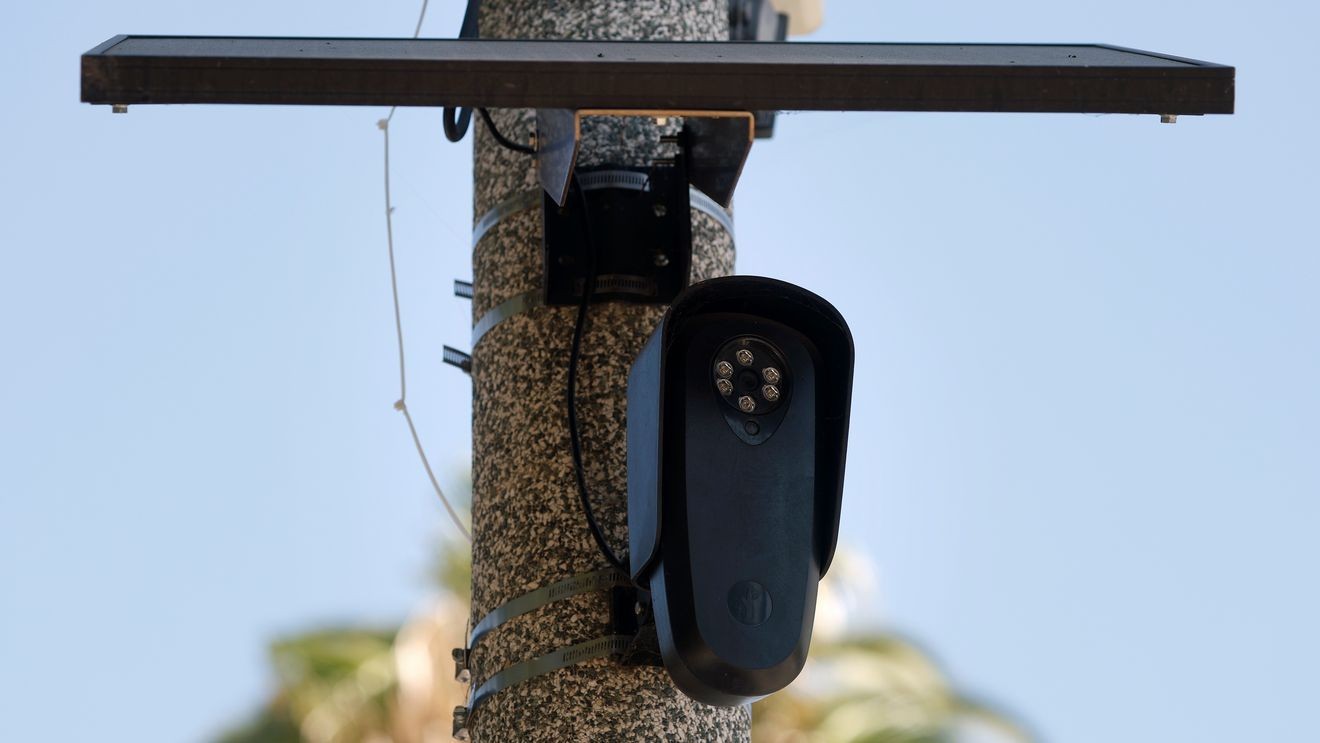
AUSTIN, Texas — Austin transportation officials are weighing license plate-reading cameras as a way to respond to thousands of parking-related complaints each month, but a key city commission is holding off on a recommendation to City Council for related technology as it awaits more information about police technology and compliance with the city’s surveillance rules.
Austin Transportation & Public Works says the proposed system would use cameras that take still photos, not video, and that each photo would be reviewed by an employee for verification before any citation moves forward.
“Our parking enforcement team gets about 5,000 customer service requests each month,” Joseph Al-Hajeri with the city’s Transportation and Public Works Department said. “I can’t have an officer at every single corner watching when a violation occurs.”
The department is exploring vehicle-mounted license plate readers, as well as cameras attached to posts for commercial loading zones, as part of a newly proposed curb management plan. Al-Hajeri said the process would mirror how parking enforcement is handled now, with documentation sent for court review.
“It’s no different than an officer walking the street and seeing a car in violation. They go write it a citation. They take a picture of the vehicle that’s in violation, and then that gets sent to the court for processing,” Al-Hajeri said.
Under the proposal, citation information would be sent to municipal court for review.
Questions about privacy and data-sharing remain central to the discussion. The city did not renew its contract with Flock Safety last year amid privacy and data-sharing concerns, and City Council has previously rejected Flock cameras.
ALSO| How could Tesla Cybercabs impact Austin first responders protocols?
Al-Hajeri said the parking-focused technology differs from Flock-style systems in how it captures and retains information.
“In the parking industry, we use LPR, which is a more static version of that. Typically, it’s a bunch of pictures, not a video camera, and it only retains pictures of things that are in violation,” he said.
Austin City Councilmember Krista Laine, who represents District 6, said many of her constituents are against Automated License Plate Reading cameras, such as the ones produced by Flock Safety. If the proposed system is considered surveillance technology under the city’s TRUST Act, City Council would generally have to approve it before it could be implemented.
“I would not anticipate, based on what I’ve heard from our community and from our council, that there is appetite for license plate readers as we currently think of them, like Flock cameras,” Laine said.
If the proposed system is considered surveillance technology under the city’s TRUST Act, City Council would generally have to approve it before it could be implemented.
Meanwhile, the Austin Public Safety Commission postponed its approval of a recommendation to City Council on surveillance technology and data sharing while commissioners wait for a report detailing the technology Austin police use and whether it complies with the TRUST Act.
“We want something as strong as possible, but we also don’t want to confuse the process the city is trying to work out,” said Commissioner Timothy Ruttan.
Transportation & Public Works has not said who else, if anyone, could access the photos under a final policy, and the department has not started looking for a camera company. The department said it would work through the TRUST Act process before implementing the technology.