
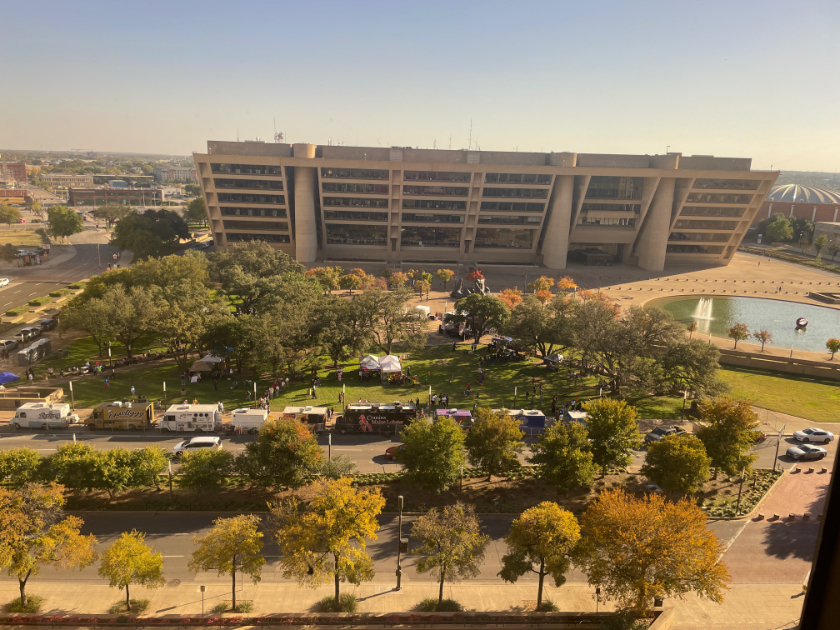
Dallas City Council will have a number of recommendations to consider on Wednesday when it sets a new schedule for parkland dedication fees, and it seems some officials are more gung-ho than others to incentivize multifamily housing construction.
According to a new state law, cities can require developers to dedicate up to 10% of their project’s land area for park use, pay a fee, or both. The fees are meant to help pay for new parkland or improve existing parks near the development site.
Earlier this year, staff worked to draft an ordinance amending the Dallas City Code to bring the city into compliance with the new law, and their proposed schedule was heard by the City Plan Commission. Much to the chagrin of park enthusiasts and officials at the Dallas Park & Recreation Board, CPC recommended cutting staff’s fee rates for multifamily in half to make it cheaper for developers to build apartments.
 Christian Chernock
“Today, what’s being asked of us is a 42% increase on an impact fee that’s going to increase the cost of construction that gets passed through to the renter and potentially buyer, but most likely a renter,” District 1 CPC Commissioner Christian Chernock said at the time. “At the end of the day, [staff’s proposed fee schedule] moves the needle in the wrong direction on the backs of renters who are already squeezed to the limits, and we have an opportunity to do something about it right now.”
Housing affordability has been top of mind for many in Dallas, and the go-to strategy has been to facilitate density and incentivize multifamily construction. There are costs to that, however, as some single-family neighborhood activists will claim, but the latest one could be parks if CPC’s proposal gets adopted.
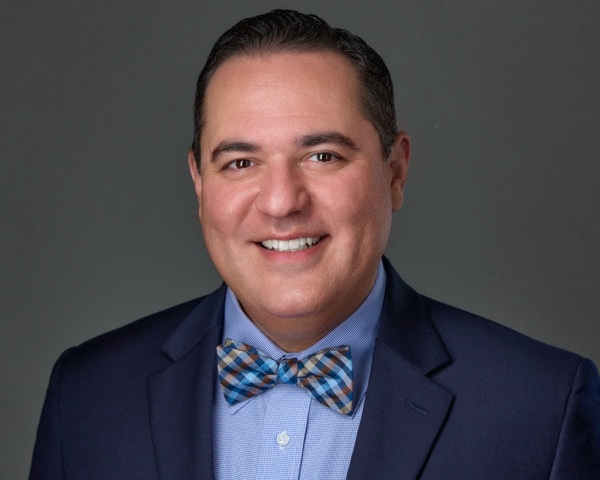 Rudy Karimi
“Density alone is a burden. But density with proper investment in public amenities like our parks? That becomes an opportunity,” said Rudy Karimi, District 14’s park board member, speaking with CandysDirt.com. “Build your density in places that make sense, but do not shortchange the public amenities that make living here so great.”
Karimi said he supports a rate of 2% of the Dallas median family income, the maximum allowed under the new law.
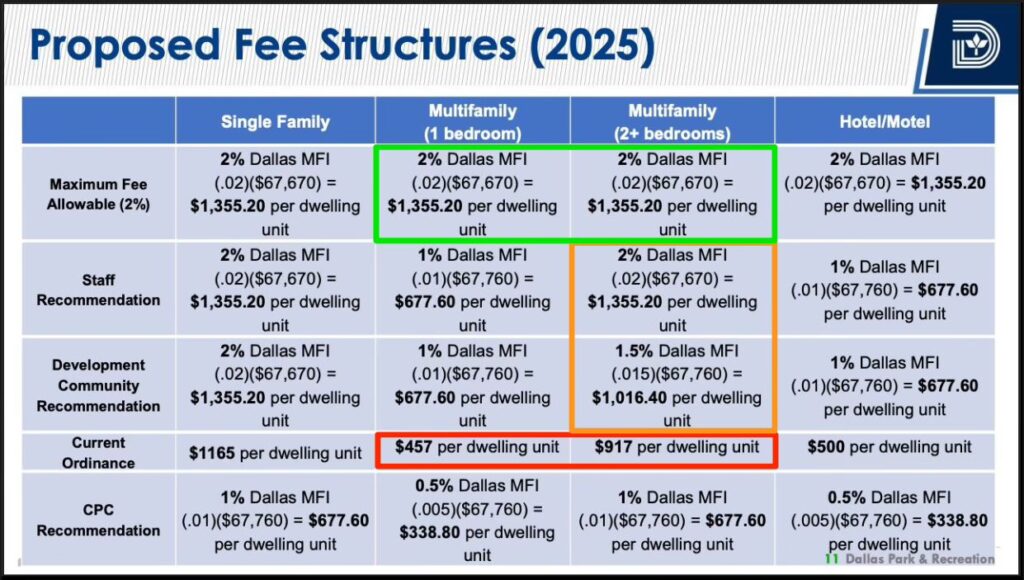
Under the current ordinance, developers pay a flat fee of $457 per one-bedroom unit and $917 per two-bedroom unit. Staff’s recommendation would set a rate of 1% of Dallas MFI, which bumps the yield up to $677.60 for a one-bedroom and $1,355.20 for a two-bedroom. CPC recommends a rate of 0.5% Dallas MFI, which would yield $338.8 for a one-bedroom and $677.60 for a two-bedroom — less than the existing ordinance.
During a meeting of the Parks, Trails & Environment Committee last week, some committee members discussed reducing staff’s recommendation for two-bedrooms down to what The Real Estate Council (TREC) suggested (a difference of a few hundred dollars) to incentivize the construction of units with two or more bedrooms.
Karimi explained why he thought such a change wouldn’t be effective from a development perspective in a Facebook post published the day after the meeting. He also suggested officials might be losing the plot some.
“It’s incredibly disappointing to hear committee members debate a few hundred dollars per unit instead of ensuring we’re not shortchanging the parks and trails that make urban life more livable,” he wrote.
Parkland dedication fees are refunded if they’re not spent within 10 years of payment, and they have to be spent in the same park zone where the development is located. At a lower rate, it’s possible insufficient funds would accrue within the window in certain parts of town where housing construction is lacking. Additionally, little money for parkland acquisition was put into the 2024 bond program because of the presumed fee schedule.
“We will probably have to strongly consider including meaningful land acquisition dollars in future bond programs because we won’t really be able to rely on this funding mechanism,” said Park & Recreation Assistant Director Ryan O’Connor earlier this year.
The city’s star has been rising on the park front, with Dallas parks inching up in a national ranking the past five years in a row. Even still, rents have been outpacing wage growth for years now, with apartment units actually getting smaller on the whole. Meanwhile, prohibitively high home prices have more residents competing in the rental market.
It’s worth noting CPC’s recommendation is lower than TREC’s, something Karimi pointed out.
“The development community is more in line with the Park Department than they are with the CPC, and I just found that amazing. I found that absolutely stunning that our CPC is just so far detached from what makes sense,” he said.
Karimi said he thinks a majority of the city council will end up opting for staff’s recommendation, but he’s still going to show up Wednesday to argue for the maximum allowable rate schedule during public comment.
“I want us in the city of Dallas, despite all our head scratching, the disagreements that we have with one another, I want us to look at one thing and say we’re doing this to the best of our ability. And what is that? Our investment in public parks,” he said.