
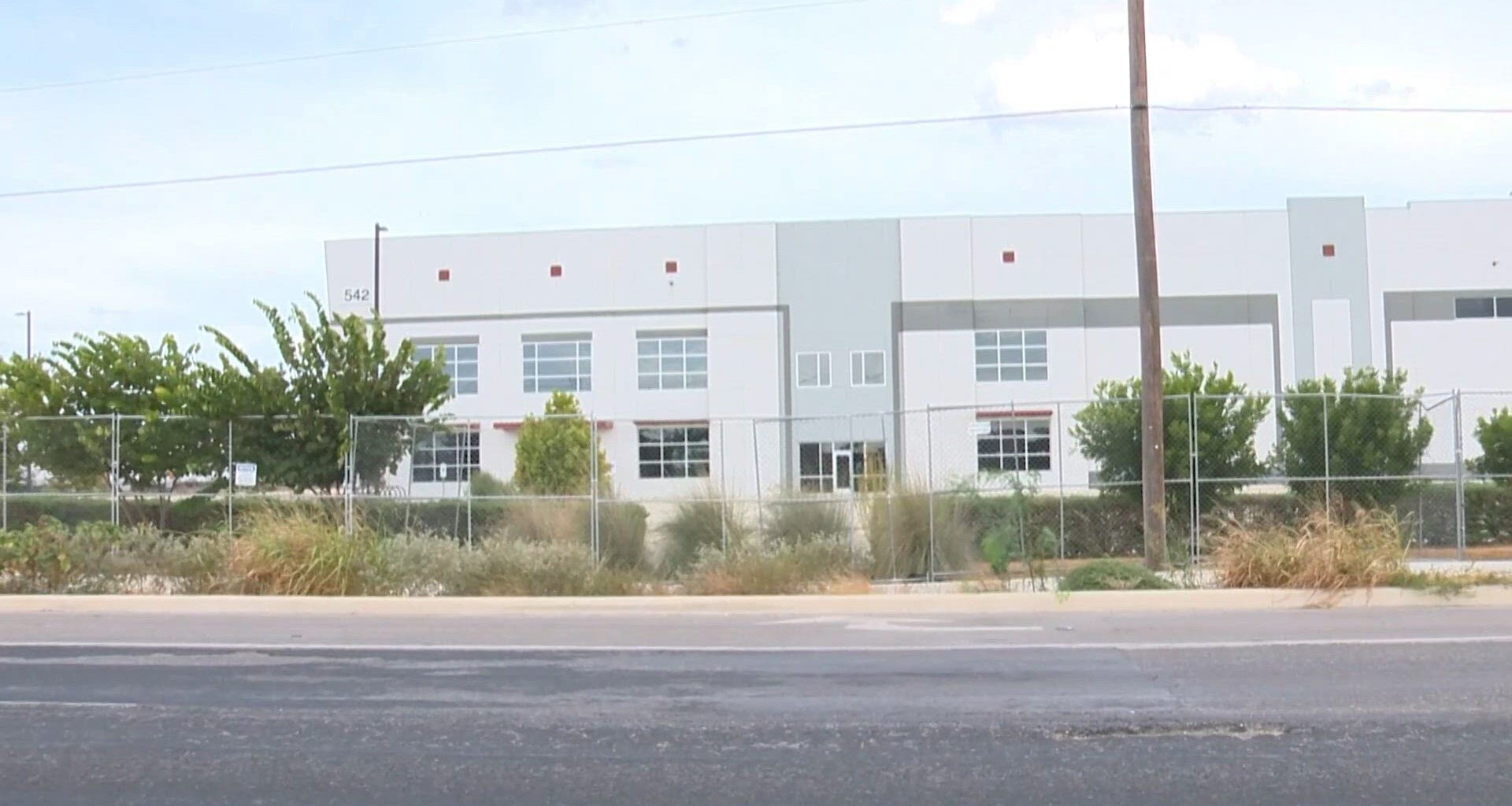
A proposed ICE detention facility in San Antonio faces scrutiny as U.S. Rep. Joaquin Castro and local officials raise concerns about its impact and infrastructure.
SAN ANTONIO, Texas — A proposed Immigration and Customs Enforcement detention facility on San Antonio’s East Side is moving forward after the Department of Homeland Security awarded GardaWorld Federal Services a contract to renovate the warehouse and provide services for the facility.
The initial reported contract amount is $17.3 million which has a potential completion date of Aug. 25, 2027.
The facility is expected to house between 1,000 and 1,500 people daily and is planned to operate as an immigration processing and detention facility.
GardaWorld Federal Services is a Canadian security services company that has been involved in operations at Florida’s controversial “Alligator Alcatraz” detention facility.
That connection is drawing scrutiny from U.S. Rep. Joaquin Castro, D-San Antonio.
“I was shocked that the Trump administration would give another big contract to the same company that set up Alligator Alcatraz that had all of these human rights abuses, a lot of fraud, a lot of waste, reportedly, and also was ultimately shut down by the governor of Florida,” Castro said.
ICE has said it is committed to providing safe, secure and humane environments for people in its custody, regardless of the type of facility where they are housed.
The agency previously said the San Antonio facility would serve as a processing center and help meet growing demand for bed space at other ICE detention facilities.
Local leaders question infrastructure impact
As the project moves forward, local officials are also raising questions about how a facility of this size could affect infrastructure on the East Side.
District 2 Councilman Jalen McKee-Rodriguez filed a City Council consideration request seeking independent assessments from the San Antonio Water System and CPS Energy.
The request calls for information about the facility’s potential energy demand, water and wastewater needs and possible impacts on current and future utility rates for San Antonio customers.
SAWS and CPS Energy are expected to present information related to the requested assessments at an upcoming Governance Committee meeting next week. CPS Energy says it cannot disclosed any specific customer information, but has an obligation to provide electricity to any home or business that requests a connection within its service territory. SAWS has not returned KENS 5’s request for information.
Councilman McKee-Rodriguez says he will use every tool available by law to scrutinize, stall or stop the proposed ICE facility in his district.
“I have requested our public utilities, San Antonio Water System and CPS Energy, conduct a thorough review of the impact this facility might have on our infrastructure, the surrounding community’s access to water and electricity, as well as any impact to our utility rates,” he said in a statement.
“In addition, I have asked our city manager to report any use of our city’s police resources for federal immigration activities. Our community deserves to know how these requests to our police department might affect police officers’ ability to respond to our community’s calls for service.
Our city council will be receiving these reports soon, and they will be made available to the public. As always , my goal is to make sure every resident feels safe and welcome in our city.”
Castro also questioned the potential impact of the facility’s size on the surrounding community.
“It’s the equivalent of about six Walmarts. And so it’s going to be a massive facility that’s going to house 1000 to 1500 people. And so, you know, all these efforts at economic development, at improving the neighborhoods and the community there, this is really going to harm that. It’s going to it’s going to be hurtful to the east side of San Antonio,” Castro said.
Castro is also calling on ICE leadership to visit San Antonio and assess the potential impact of the facility.
“The first thing is that I would challenge the ICE director to come to San Antonio and take a look at what this massive facility, the harm that it’s going to do to the East Side community and to San Antonio generally,” Castro said.
KENS 5 reached out to DHS officials for a response to concerns raised by Castro and other local leaders but had not received a response as of publication.
Calvert calls for legal and administrative review
Bexar County Precinct 4 Commissioner Tommy Calvert, who represents the area, was unavailable for an interview but provided KENS 5 with a statement opposing the project.
Calvert pointed to legal challenges involving proposed ICE detention facilities in other parts of the country and argued that San Antonio and Bexar County should examine whether federal agencies followed required environmental, infrastructure and public-safety review processes.
Here is Calvert’s full statement:
“The Trump Administration has attempted to go around US law and we are not going to let them get away with it.
Salt Lake City and Salt Lake County challenged an ICE Detention Center citing that the administration didn’t abide by the federal Administrative Procedure Law and the National Environmental Policy Act (NEPA). San Antonio and Bexar County have similar claims to uphold in court. The administration took short cuts on environmental review, local consultation, infrastructure and public-safety impacts. New Jersey and Roxbury Township sued under NEPA, the Administrative Procedure Act, the Intergovernmental Cooperation Act and the Immigration and Nationality Act over impacts to water, sewer, traffic and emergency services; DHS later abandoned that detention plan as well. Arizona sued under NEPA and secured an agreement stopping ICE from converting a warehouse in Surprise, AZ until the required environmental review is completed. Michigan and the City of Romulus challenged another warehouse under NEPA and the Administrative Procedure Act, and ICE ultimately abandoned the project. A federal judge stopped a similar warehouse detention project in Maryland after finding failures under the National Environmental Policy Act. Similar legal challenges have also been brought in California. The pattern is clear: when communities across America justifiably raise legal cases over whether ICE followed the law, ICE abandons its plans.
Salt Lake City is especially important for us in Texas because it demonstrates that municipal and county governments do not have to simply surrender when federal immigration policy has the support of Republican leadership at the state and local level. Local government still has authority, responsibilities and legal tools to protect its residents. If ICE took administrative shortcuts in so many other cities, we need to determine whether those same shortcuts were taken here in San Antonio, including violating the Department of Defense’s procurement laws.
From everything I can see when our legal counsel at the county and city said there was nothing we could do, that was incorrect and horrible legal advice.
I am also deeply concerned that GardaWorld Federal Services, the company selected for this operation, was involved in detention operations at Florida’s ‘Alligator Alcatraz.’ Our community deserves answers about conditions, accountability and how detainees will be treated before anyone is placed behind these walls.
This is first and foremost a human rights issue. But my constituents are also asking what this means for property values, traffic, utilities, public safety, and the future of the surrounding East Side neighborhoods. A federal contract does not erase those concerns, and it does not silence the people.
That is why we are marching peacefully on October 3 and why I am reviewing every legal and administrative option still available. If the federal government expects citizens to follow the law, then the federal government must follow the law too.
We have successfully fought this kind of battle before. I helped block proposed immigration detention facilities in Universal City and San Antonio in the past, and I am not going to stop asking questions simply because ICE has now awarded a contract.”
Calvert has previously raised concerns about the proposed facility and has called for Bexar County to examine potential legal options related to the project.
Facility expected to open in 2027
ICE said it expects the site to become operational in 2027, with previous reporting placing the target around mid-2027.
Meanwhile, another public march against the proposed detention facility is planned for Oct. 3.