
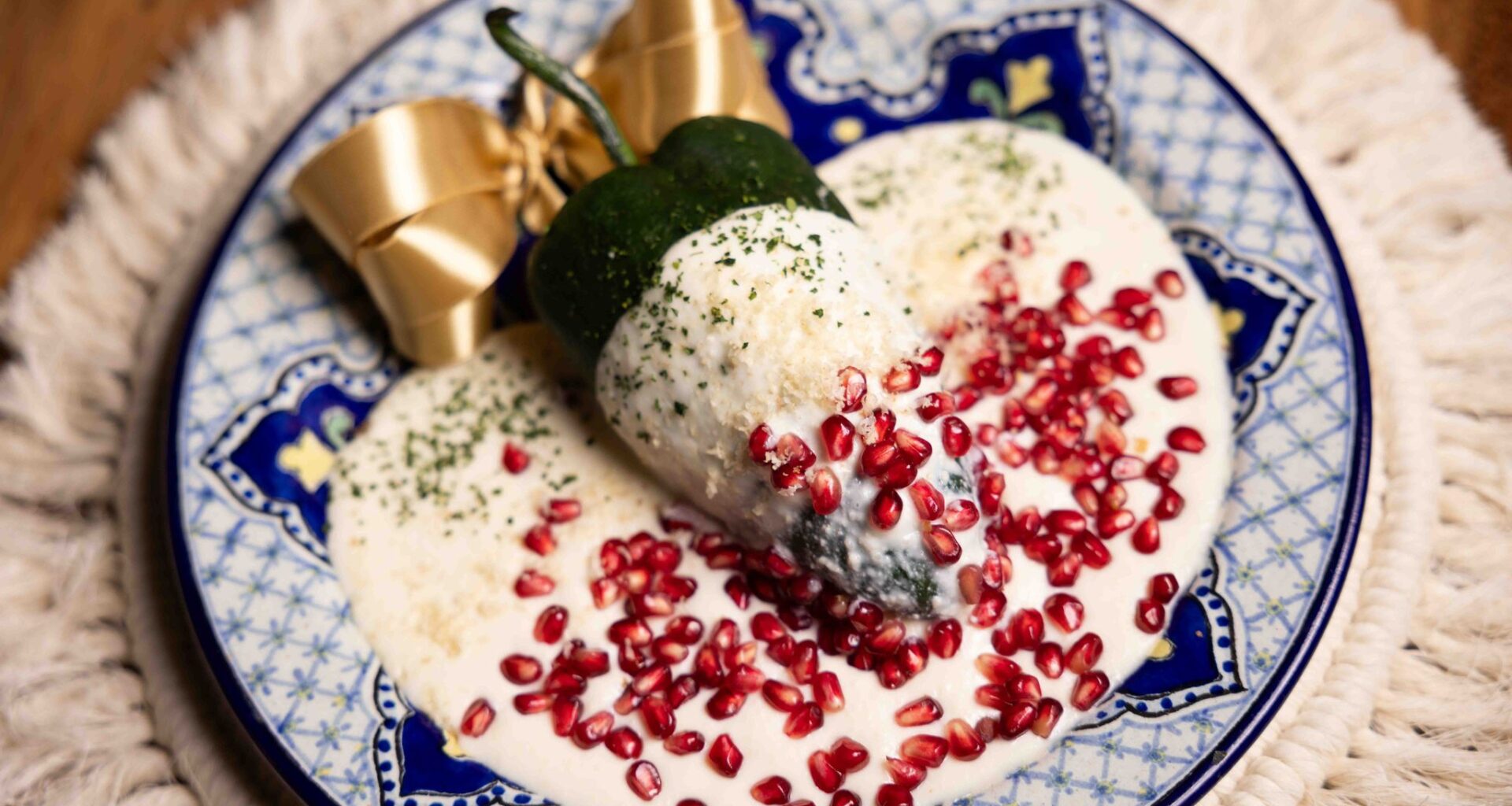
Chiles en nogada, a staple dish from Puebla, prepared at Don Artemio in Fort Worth. The colors on the plate represent the Mexican flag.
Juan Figueroa/Staff Photographer
If there’s one dish that screams Mexico, it’s the chile en nogada.

In Mexico, chile en nogada is one of the country’s most traditional and beloved national dishes, not only because it features the colors of the Mexican flag, but also because its production season coincides with September, the month when Mexico celebrates its independence.
In D-FW, one of the places serving this traditional dish is Don Artemio in Fort Worth, which is offering its chile en nogada season from Sept. 8 through Oct. 19.
Article continues below this ad
The dish consists of a roasted poblano pepper stuffed with minced pork and beef, seasonal fruits, raisins and almonds, and topped with a creamy walnut sauce known as “nogada.”
Chef Rodrigo Cárdenas prepares chiles en nogada, a staple dish from Puebla, at Don Artemio in Fort Worth.
Juan Figueroa/Staff Photographer
The preparation is finished with pomegranate seeds and parsley, re-creating the green, white and red colors of the Mexican flag. At Don Artemio, the dish is served with a glass of champagne.
For Rodrigo Cárdenas, executive chef at Don Artemio, preparing the dish is a way to preserve and share Mexican culture in Texas.
“It fills me with Mexican pride. It fills me with pride to be Mexican and to create this dish and have people abroad, in other countries, get to know it,” Cárdenas said. “Whether they’re Mexican or foreigners, anyone anywhere in the world can get to know our roots and our culture.”
Article continues below this ad
The chile en nogada has a history dating back about 200 years and is traditionally linked to the finalizing of Mexico’s independence in 1821. The best-known story says the dish was prepared by the nuns of the Santa Mónica convent in the city of Puebla in honor of Agustín de Iturbide, one of the heroes of Mexican independence.
The chile en nogada is featured at Don Artemio restaurant in Fort Worth in honor of Mexican Independence Day.
Fernando Gomez Carbajal
The dish’s colors are also part of its gastronomic magic.
“I don’t know if it was a coincidence or not, but it’s cooked right during pomegranate season, in August, September and October,” Cárdenas explained. “So you have the green chile, the white walnut sauce and the red pomegranate, just like our flag.”
Behind what might appear to be a simple presentation, the dish is a process that can keep someone busy for an entire day. During chile en nogada season, Don Artemio has staff members dedicated exclusively to preparing the dish throughout the day.
Article continues below this ad
One of the most labor-intensive parts is making the nogada. The walnuts must be carefully cleaned to remove their skins before they are processed into the sauce. The chiles also require special preparation so they can be cooked without losing their texture and shape.
Chef Rodrigo Cardenas holds a plate of chiles en nogada, a staple dish from Puebla, prepared at Don Artemio in Fort Worth.
Juan Figueroa/Dallas Morning News
“It’s an extremely artisanal, very labor-intensive process,” Cárdenas said. “The chile has to be cooked perfectly so it doesn’t become overcooked. It needs to retain that crunch, and then it’s cleaned and deveined so it can receive the meat and the sauce”
Cárdenas learned the recipe from chef and Mexican gastronomy researcher Ricardo Muñoz Zurita and later adapted it with the Don Artemio team.
“He taught it to me, and we gave it our own touch, but yes, it’s a very old recipe,” he says.
Article continues below this ad
The restaurant serves the dish on Talavera plates brought from Puebla, adding a gold bow to complete the presentation.
Don Artemio is at 3268 W. 7th St., Fort Worth. donartemio.us.