
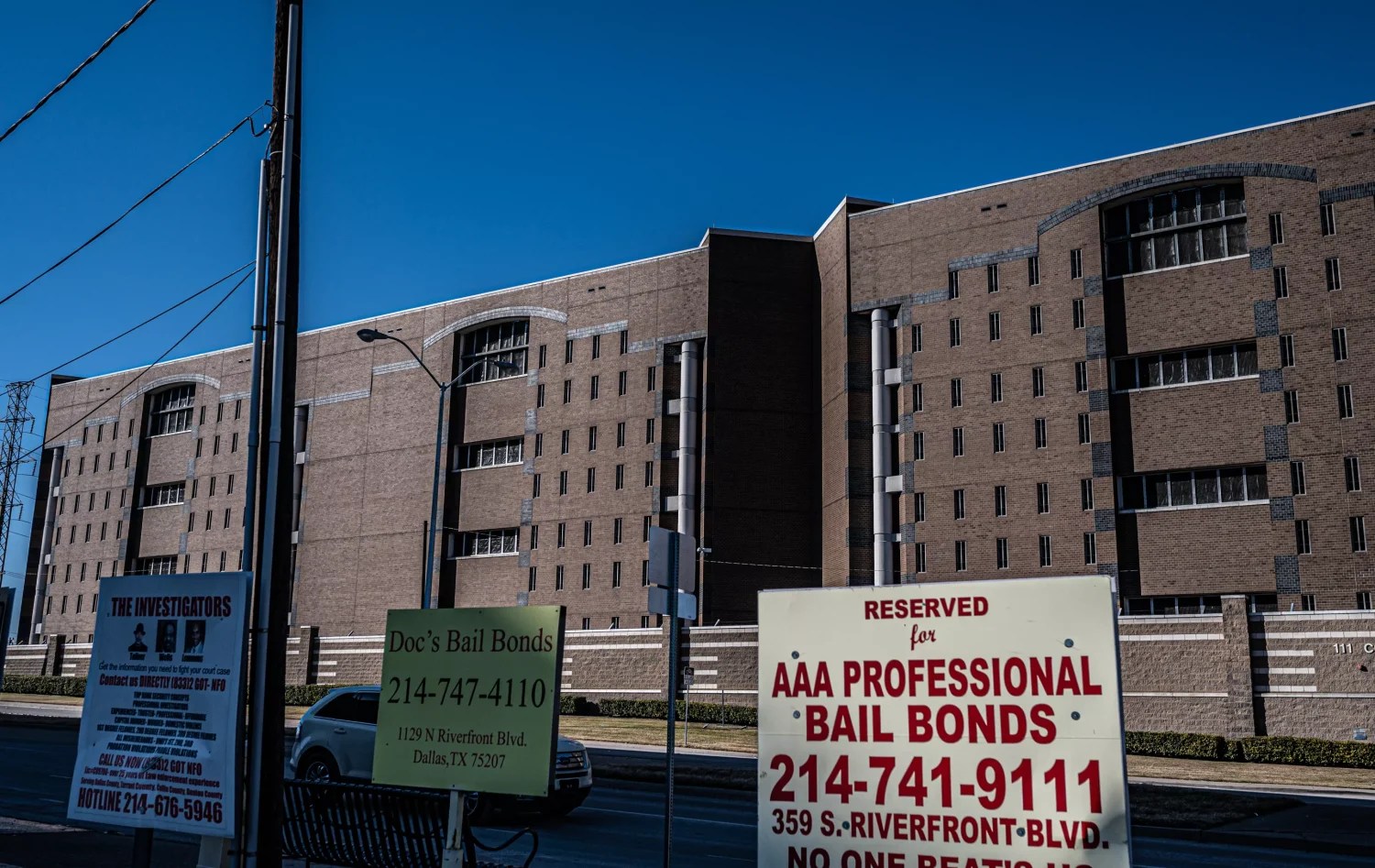
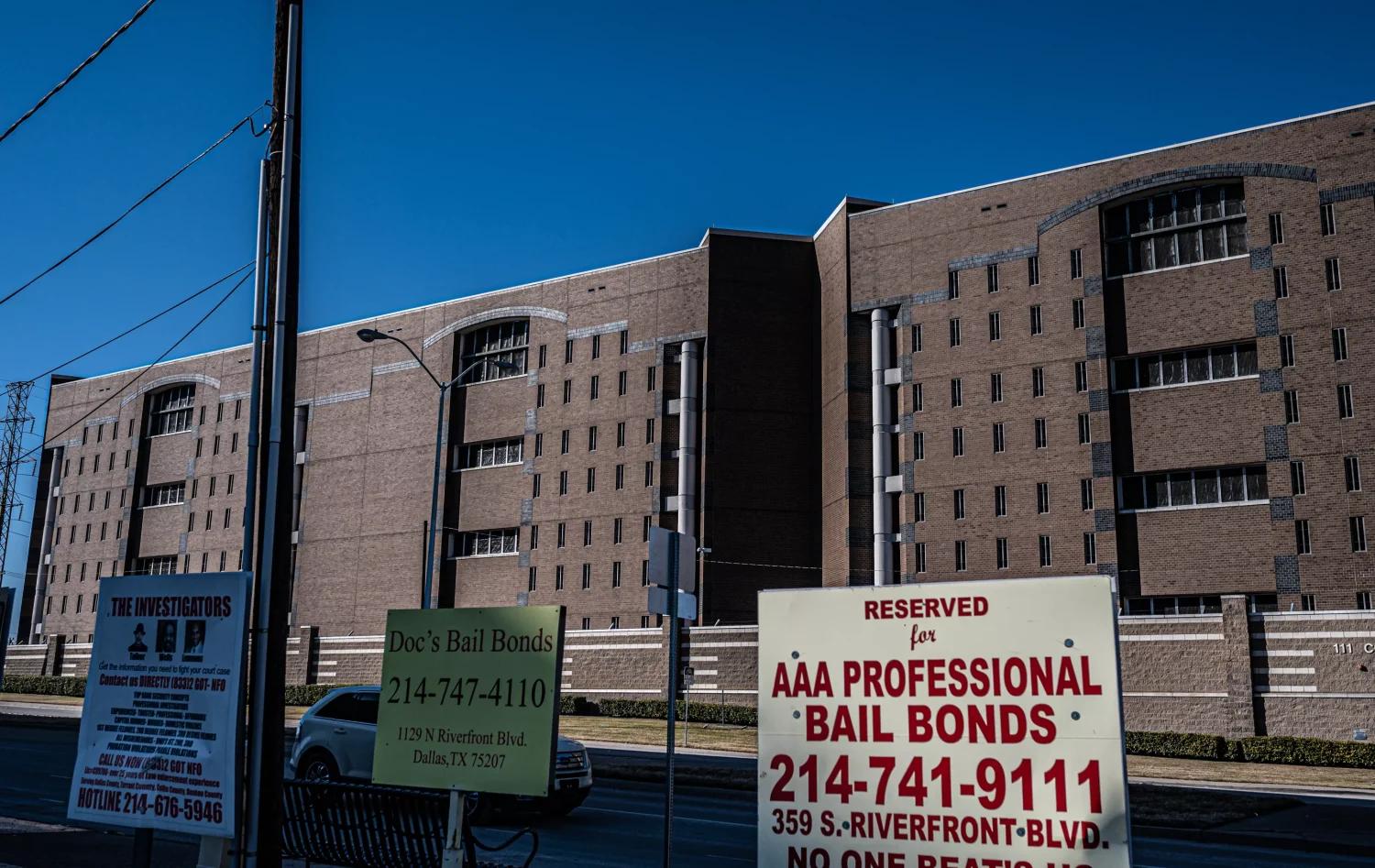
The Dallas County Jail near downtown.
Mike Brooks
The Human Rights Defense Center (HRDC) is suing Dallas County, Sheriff Marian Brown and Chief Deputy Shane Sowell for allegedly violating free speech and due process rights.
The lawsuit alleges the jail’s current rules and procedures surrounding access to physical books, magazines and periodicals amount to a near-total ban and violate the Constitution’s First and Fourteenth Amendments, as well as the Texas Constitution.
“For incarcerated readers, materials like HRDC’s publications provide life-changing access to education,” the lawsuit, filed on Sept. 4, says.
HRDC is a nonprofit organization that advocates for the rights of people in detention facilities. The organization has multiple publications, including Prison Legal News and Criminal Legal News, designed to educate and inform incarcerated individuals about their legal rights.
Sign up for the This Week’s Top Stories newsletter to get the latest stories delivered to your inbox
THANK YOU!
You’re all set.
CLOSE
“Each of HRDC’s publications provides information about important legal issues, such as access to courts and counsel, disciplinary hearings, prison conditions, court opinions, excessive force cases, mail censorship, jail litigation, visitation, access to telephones, religious freedom, sexual assault, and the death penalty, among other topics,” the lawsuit says.
The lawsuit states the HDRC materials are not accessible on jail-issued tablets, which incarcerated people use instead of physical reading materials.
“We have tablets that are issued to inmates and books are available on those tablets each and every day,” Brown said in a video statement on Facebook on Aug. 27.
Brown said the department removed access to physical books from inmates because some were using the materials to “compromise the security operation of the doors.” She said inmates still have access to physical books in the jail libraries.
The Dallas County Sheriff’s Department declined to comment on ongoing litigation.
In April, the Texas Department of Criminal Justice cracked down on hardcover books entering its prisons because of an uptick in narcotics. TDCJ said there was a rise in contraband, as books containing or soaked in narcotics were entering prison mailrooms. At the time of the policy change, 385 books had been identified to contain drugs – a number representing a fraction of the books entering correctional facilities.
The April policy change raised concerns about access to literature, a sentiment echoed by HRDC’s new lawsuit. The suit also says the organization “attempted to work with” the county and sheriff’s office before taking legal action.
“HRDC brings this action to stop Defendants from censoring protected speech with incarcerated persons and to obtain due process in challenging the denials,” the lawsuit says.
Prison Legal News, a publication from HRDC, sued Dallas County in 2007 for free speech violations. The complaint targeted then-Sheriff Lupe Valdez’s newspaper and magazine ban designed to “eliminate clutter.” Dallas County ultimately settled, allowing Prison Legal News as permitted mail-in materials.
Almost 40 years earlier, a group of inmates sued the county for overarching poor conditions such as overcrowding, censorship and inadequate medical care. In the 1971 case, a judge ruled jail officials were prohibited from destroying physical media like books and magazines unless they posed a safety hazard.
HRDC has won most of the challenges it’s raised against similar policies in other jails and prisons.