
With about 1,200 residents, the Central Texas town of Lexington has an economy that revolves around cattle, both living and dead.
Every Saturday at noon, folks flock to the sale barn, trying to snag a deal on a heifer, steer or the occasional goat. Then, they make the short trip down Main Street to Snow’s BBQ – widely regarded as one of the best barbecue joints in the state – hoping they’re not already sold out.
Texas Municipal Power
The Lone Star State is home to 72 municipally-owned electric utilities , according to data from the Texas Public Power Association.
In the Austin and San Antonio, the following cities all operate municipal electric utilities:
Austin-area municipal utilities
Austin
Bastrop
Burnet
Flatonia
Fredericksburg
Georgetown
Giddings
La Grange
Lexington
Llano
Lockhart
Luling
Mason
San Marcos
Schulenburg
Smithville
San Antonio-area municipal utilities:
Boerne
Castroville
Cuero
Floresville
Gonzales
Hallettsville
Hondo
Kerrville
Moulton
New Braunfels
San Antonio
Seguin
Shiner
Waelder
Yoakum
“On Saturdays, our population grows quite a bit,” Mayor Allen Retzlaff said of the crowds that converge for brisket.
Lexington, about 50 miles east of Austin, is not exactly flush with cash, Retzlaff, the city’s chief administrator, said.
As costs rise and the town’s tax base plateaus, revenue from the city’s municipally owned electric utility has become a lifeline for the city budget, helping to keep critical services like the police department afloat while staving off a large budget shortfall at City Hall each year.
But last month, Gov. Greg Abbott pitched a plan that would take away Lexington’s ability to use electric revenues to bolster the budget – a move Retzlaff said would “really hurt us.”
For the coming fiscal year, Lexington has budgeted to move about $180,000 from its utility fund – which also covers water, sewer and trash – to the general fund. The city’s general fund pays for things like elections, police salaries, street repairs, park maintenance and supplies for the city’s volunteer fire department.
Lexington’s property and sales taxes generate relatively little revenue and the city’s utility fund serves as an insurance policy of sorts in case those fluctuating tax collections aren’t sufficient to cover the city’s expenses, Retzlaff said.
“A lot of times you wind up robbing Peter to pay Paul and hope you get through the next year,” the mayor said. “Electricity is how we survive.”
Should the governor’s proposal become policy, the impact would extend far beyond the small Lee County town.
Abbott’s plan
At a San Antonio news conference last month, Abbott said he would require municipal power systems in Texas to enter the state’s competitive electric market.
Texas has 72 municipally owned electric utilities, according to the Texas Public Power Association. Thirty-one serve communities in the Austin and San Antonio areas, including utilities in Lexington, Bastrop, Georgetown, Lockhart, New Braunfels, Seguin and San Antonio.
The governor called out only Austin Energy and San Antonio’s CPS Energy, but his campaign confirmed Abbott plans to enforce the mandate across all the city-owned electric utilities in Texas.
Abbott said a move away from public power would save ratepayers money by breaking up what he called “city monopolies” and forcing them to compete. It would also keep cities from using electric revenues for what he characterized as wasteful government spending.
Abbott has said customers in cities such as San Antonio could save as much as 13% under the proposal, though his campaign has not explained how it calculated that estimate.

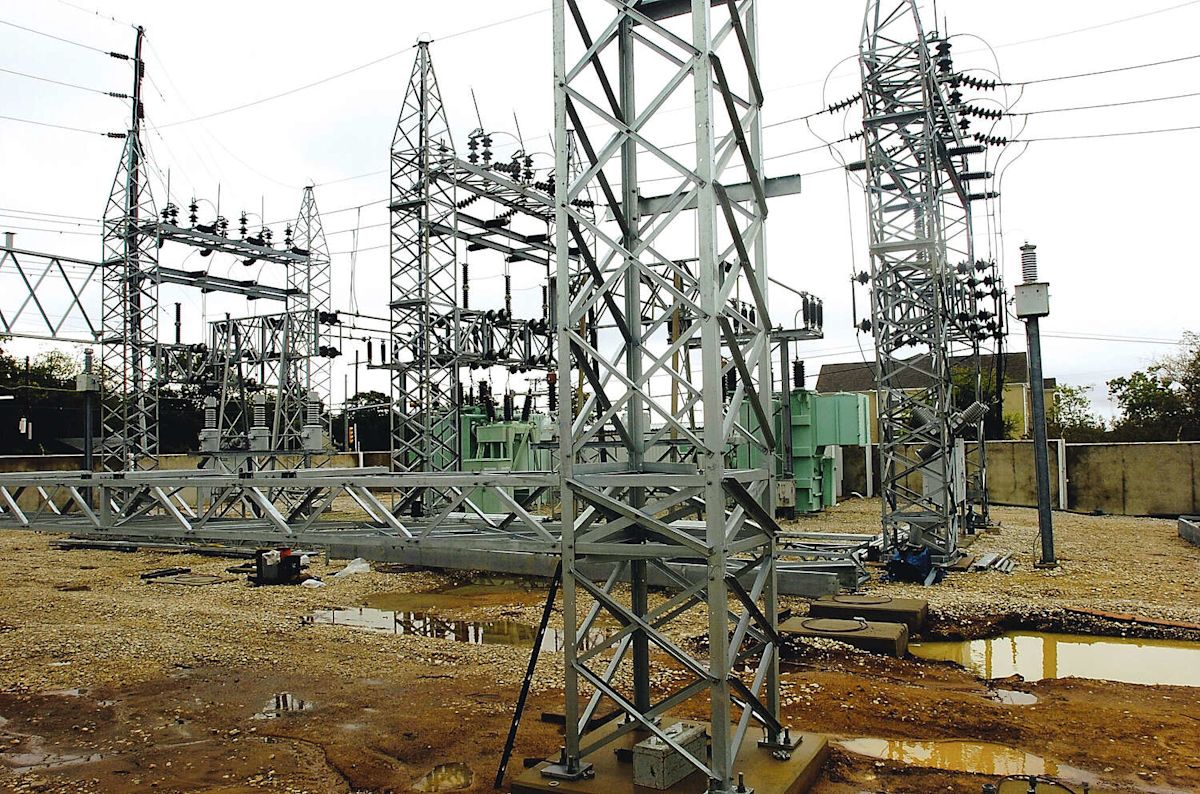
Gov. Greg Abbott has proposed requiring Texas’ city-owned electric utilities to enter the state’s competitive electric market, a move officials say could threaten a key source of city revenue. Denton Municipal Electric, whose substation is seen here, is among 72 such utilities across the state. (Dallas Morning News file photo)
But the governor’s campaign pointed to the 2024 San Antonio city budget, which used a CPS Energy surplus to fund a number of programs including emergency mental health response and a “reproductive justice fund.” It also cited a recent Austin American-Statesman investigation that found some Austin City Council members donated taxpayer funds to nonprofits and spent big on pet projects.
“If a city has built its budget around overcharging families on their electric bills, the answer isn’t to protect the monopoly,” campaign spokesman Eduardo Leal said in a statement. “City-owned utility cartels should stop using ratepayers as a piggy bank to fund unnecessary social programs.”
Retzlaff took issue with Abbott’s characterization. It is unfair, he said, to lump small towns like Lexington in with large metropolises like Austin and San Antonio.
The city of Lexington supplies power to about 600 customers in a 2-square-mile service area. Austin Energy, by contrast, serves about 575,000 customers across 437 square miles. CPS Energy is even larger, serving nearly 1 million electric customers.
And Lexington’s problems are vastly different from San Antonio’s and Austin’s, Retzlaff said. Abbott’s campaign highlighted Austin’s millions in spending on the city’s homelessness programs, which have faced scrutiny in recent years.
“In the last eight years, I can think of one or two homeless people here, and usually we work with them and try to get them to some other place or to a shelter,” he said. “That’s probably a big issue for Austin. We don’t have that problem here.”
Given its financial situation, Retzlaff is adamant the city of Lexington simply cannot join the competitive market.
“I don’t see how we as a city can do it and be able to survive,” he said.
Other cities
It’s not clear if lost revenue would be replaced by other means and a change could pose other potentially costly challenges for some cities.
Utilities in parts of Texas that are not connected to the grid operated by the Electric Reliability Council of Texas would have to connect to opt into the competitive market – a technically complex and expensive proposition – because of Texas’ unique regulatory landscape, according to Texas A&M law professor Felix Mormann.

A Lubbock Power & Light electrical substation is seen in 2022. (Texas Tribune file photo)
In Lubbock, the city spent years and more than $100 million connecting to ERCOT before opening its retail electric market in 2024, said Matt Rose, a spokesman for Lubbock Power & Light. That kind of investment could prove prohibitive for many smaller municipal utilities. The upfront costs included ending an existing power contract and deploying smart meters across the city.
And for small communities like Lexington, Mormann said, operating in the competitive market may pose additional challenges because of the nature of the market itself. Forcing a city into the competitive market would not necessarily require retail providers to serve that city, he said.
“It’s worth recognizing the history behind the municipal utility movement, which in many cases is rooted in the fact that privately owned, investor-owned utilities didn’t see the profit margin and were not interested in bringing electricity to some of these smaller, more remote communities,” Mormann said. “To what extent that’s changed now for some of the smaller localities remains to be seen.”
Experts warn such a change would impact not only cities’ budgets but those of their customers, who now pay rates that are “consistently below the state average,” according to the Texas Public Power Association.
Choice does not guarantee savings, said South Plains College government professor Drew Landry, who lives in Lubbock.
“All that’s really going to do is that’s going to raise their rates, and it will be noticeable,” he said.
A year after the city’s move to competition, Lubbock had the highest average electric bills in Texas, according to the Lubbock Avalanche-Journal.

The Electric Reliability Council of Texas, ERCOT, manages the flow of electric power to most of Texas. Lubbock is joining the grid under a plan made in 2015. (Austin American-Statesman file photo)
Rose said that customers who actively shop for plans can sometimes save on their bills but overall rates have generally tracked what customers would have paid under the city’s former rates.
“With deregulation, yeah, you have choices, but the choices haven’t really brought down any sort of prices,” Landry said. “It just gets more and more complicated for the average citizen who’s used to something.”
In Lexington, Retzlaff said he hopes Abbott will slow down and look at each utility affected on a case-by-case basis, deferring to local control.
“Think real hard about it before you try to put it on all cities,” Retzlaff said he’d tell Abbott. “I think cities across the board should be able to make their own decision on stuff like that, unless there’s a blatant case of gouging.”
This article originally published at Abbott says competition could reduce electric bills. Small Texas towns see risks..