
COLLEGE STATION, Texas (KBTX) – Just a day after the Sept. 11 terrorist attacks, while the world watched in disbelief, a small team of scientists, engineers, and military specialists headed straight toward the smoldering ruins of the World Trade Center with experimental technology never before tested in a real-world disaster.
Among those given a formal invitation to Ground Zero was Dr. Robin Murphy, a Texas A&M professor emeritus of computer science and engineering and a pioneer in what was then the brand-new field of disaster robotics.
“We were there the next day. We drove straight through. So, we were on the pile on the 12th,” Murphy recalled. “It’s just so overwhelming to see that level of destruction, the smoke rising, the smells…”
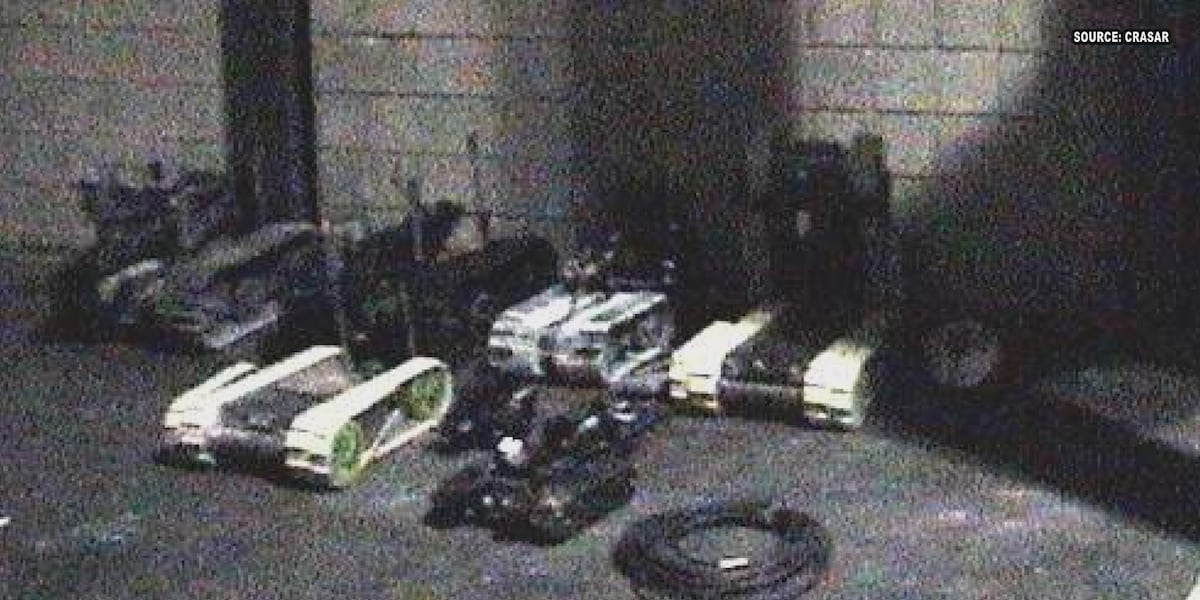
At the site, Murphy and the team deployed 17 robots into the hazardous rubble. Some were shoebox-sized crawlers designed to navigate unstable voids and tight crevices where human search crews and rescue dogs could not safely go.
“Anything going more than about 10 feet into the rubble was considered a huge win… because if there were any survivors, they would be in the basement,” Murphy said.
While public perception often measured success solely by finding living survivors, Murphy explained that the robots served a different, crucial role: finding safe shortcuts and assessing structural integrity.
“A dog can tell you if there’s a live person; the robots can help you find where exactly it is and what does that structure look like… is there anything fixing to collapse,” Murphy said.
She said the small machines were pushed to their limits.
“Basically, they were used until the robots died. You just ran them until they broke,” Murphy said.
Ultimately, the robotic deployments helped locate more than 10 deceased victims and were able to successfully eliminate routes that were deemed unsafe for first responders.
But Dr. Murphy said perhaps one of the true successes of the deployment was that for the first time people took the idea of disaster robotics seriously.
“9/11 jump-started disaster robotics,” Murphy said.
Over the past 25 years, those tiny ground-crawlers evolved into the aerial rescue drones we see today at major disasters. Dr. Murphy was a pioneer in that field as well.
“In 2005, I led the first team to ever use these small quadcopters and fixed wing for a disaster and that was hurricane Katrina,” Murphy said. “Now if you go to a disaster and you don’t see drones somewhere around, you’re kind of wandering what the deal is.”
Today, those drones are able to collect a mountain of emergency data as they fly across widespread devestation.
Dr. Murphy said the challenge now isn’t the robots themselves, but using Artificial Intelligence to quickly understand all of the data they collect.
“You can’t make good decisions about disasters if you don’t have good information,” Murphy said.
Even with rapid advancements in AI and autonomous systems, Murphy stresses that the technology exists to support emergency personnel, not replace them.
“They are these important tools that the responders use and they amplify and extend the responders,” Murphy said. “They don’t replace them, and they don’t really save lives directly—that’s what the responders are doing—but how these tools are used, that’s the real win.”
Just a week prior to 9/11, Dr. Murphy and Lt. Col. John Blitch launched the Center for Robot-Assisted Search and Rescue (CRASAR), a nonprofit dedicated to proving that unmanned systems can assist in saving lives during real-world crises.
Since that initial mission at Ground Zero, Murphy has deployed robotic systems to more than 30 major disaster sites and was recently named to the 2026 Forbes 50 Over 50 list.
Dr. Murphy’s journey into rescue robots began following major disasters like the 1995 Oklahoma City bombing and the Kobe earthquake, inspiring her to direct advanced research toward real-world emergency management.
To learn more about her ongoing research, field operations, and academic publications, visit the Dr. Robin Murphy Official Website.
Copyright 2026 KBTX. All rights reserved.