
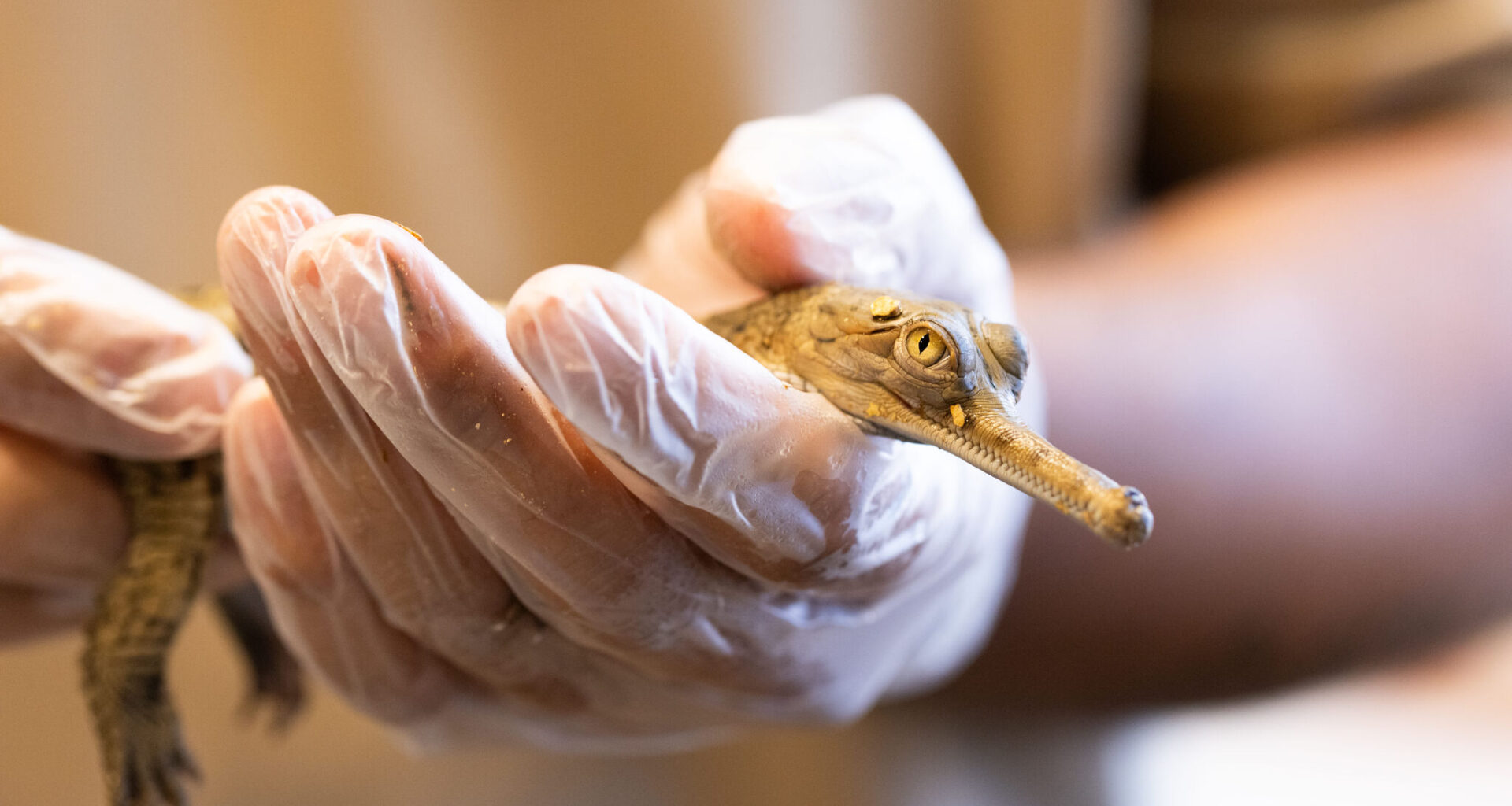
These are no ordinary eggs. They make noise. They also hold crocodiles.
Gharials, a kind of croc with a long, thin snout, call to each other while in their eggs to coordinate hatching.
They then start tearing apart the inner membrane of the egg and the outer shell using a tiny, sharp bump on the tip of their snout. This movement, which causes their snout to poke through, ends with them “exploding” out of the shell, said Vicky Poole, an associate curator at Fort Worth Zoo.
Article continues below this ad
This is what happened between June 3 and 26 at Fort Worth Zoo, where a pair of 46-year-old female gharials, Snaggletooth and Raani, welcomed eight hatchlings with the 45-year-old breeding male, Big Boy.
This marks the zoo’s fourth consecutive year successfully hatching gharials, one of the most critically endangered species in the world.

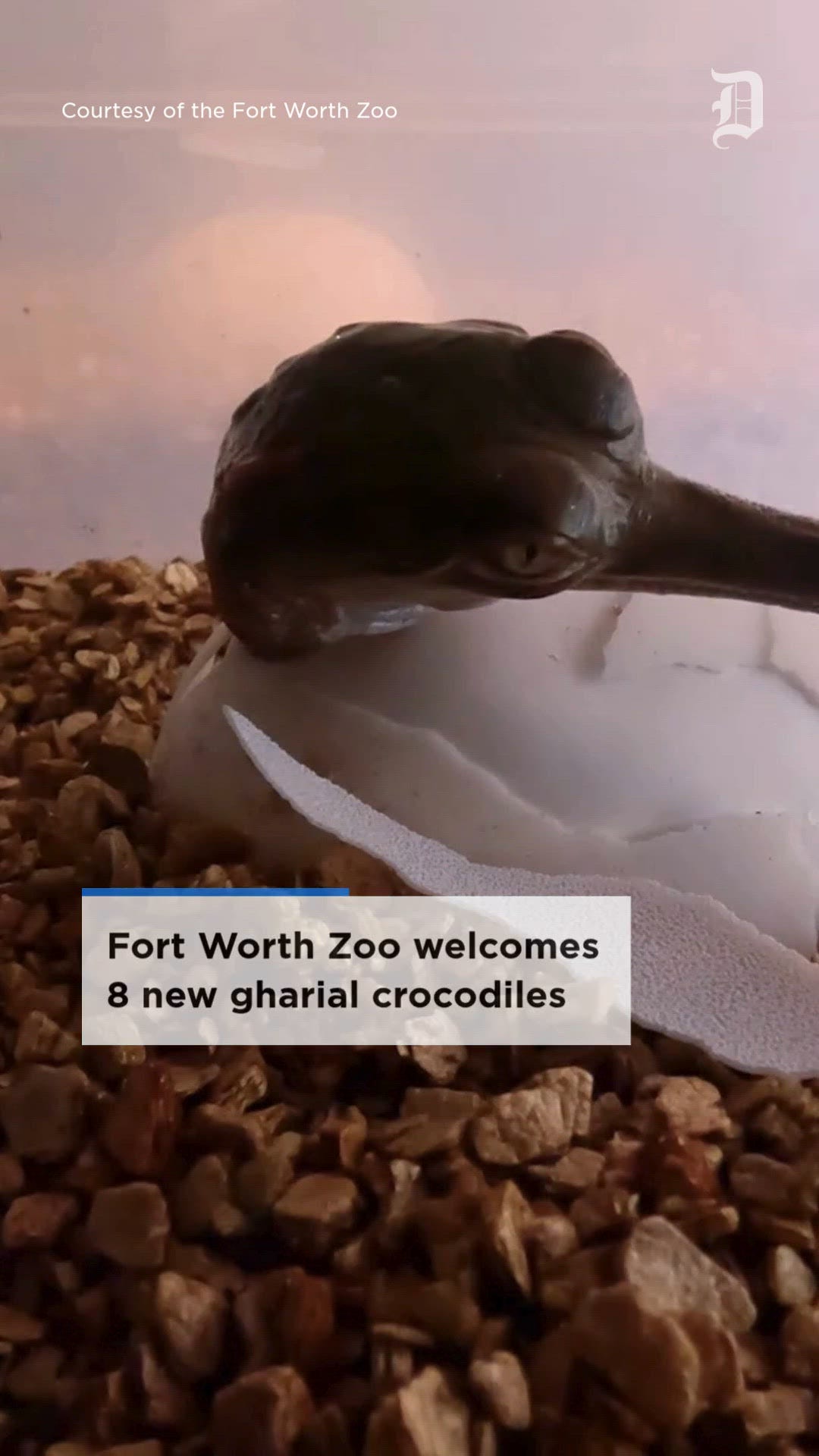
The Fort Worth Zoo welcomed eight new gharial crocodiles this summer, marking its fourth straight year of hatching one of the world’s most endangered species.
Fort Worth Zoo
What are Gharial crocodiles?
Gharials are among the largest crocodilian species, with males growing up to 16 feet long and weighing nearly a ton. They are known for their distinctive snout, which makes them skilled at hunting and eating fish.
Article continues below this ad
These crocodiles are native to the rivers of India and Nepal, though only around 1,000 gharials remain in the wild, according to the International Union for the Conservation of Nature.
Two gharial crocodile hatchlings.
Fort Worth Zoo
Gharials are critically endangered because of the damage to the river systems where they live from construction, pollution and water extraction.
But there is a glimmer of hope. IUCN reports a growing population size, with stewardship programs in India and Nepal helping increase gharial populations since the 1970s. Global conservation programs, such as the one at Fort Worth Zoo, have also proven successful in raising gharial numbers.
Fort Worth Zoo’s conservation efforts
The Fort Worth Zoo’s success in gharial conservation is the result of over 15 years of dedicated efforts, which began in 2010 with the construction of the zoo’s herpetarium, the Museum of Living Art.
Article continues below this ad
When building the herpetarium, the zoo wanted to include another big crocodilian species alongside its saltwater crocodiles, said Poole. It decided on the gharial because of a lack of public focus on the species.
Texas has similar temperatures to the gharial’s native Indian and Nepalese environments, allowing them to stay outside here all year. “They’re out basking every day, even when there’s snow and ice on the beach,” Poole said. “It’s just a good environmental fit here.”
To make it an even better fit, the zoo drops the temperature of their habitat during the winter months to mimic changes caused by glacial melts in their natural habitats near the Nepalese mountains.
The zoo’s habitat also has several features meant to encourage breeding, including temperature-regulated waters and heated nesting areas. The zoo has also modified its husbandry efforts to better its breeding success, such as adjusting incubator temperatures, all with the goal of expanding the species’ population and diversifying its gene pool.
These modifications are working, as the eight hatchlings this year are more than what the zoo has had in recent years, Poole said.
Article continues below this ad
These hatchlings will stay behind the scenes for now to ensure proper growth and development. Once more mature, Poole said, these gharials will likely be used for breeding programs to further conservation efforts.
Niamh Ordner is a science reporting fellow at The Dallas Morning News. Her fellowship is supported by the University of Texas at Dallas. The News makes all editorial decisions.