
Corpus Christi is scaling back its neighborhood street paving program next year, a move that will mean fewer roads getting completely rebuilt and less work for contractors.
The city paved about 40 miles of rough, pothole-riddled neighborhood streets this year. Under the planned program for next year, that number will drop to about 18 miles.
The reduction is not expected to be popular with residents who have been waiting for their streets to be repaved.
“It’s not lost on us that they are irate and some of them are looking forward to getting their street or residential street on the list,” Interim Assistant City Manager Ernie De La Garza said. “With our future projections based on the new planned amount of 18 miles, we’re going to have to recalculate.”
The change will also affect contractors who have relied on city paving projects.
De La Garza said the city plans to handle more street work with its own crews instead of hiring outside contractors.
“Instead of hiring a contractor, we can do the work in-house,” De La Garza said. “That’s the benefit to us. Actually, more impacts are going to be felt by the contracting industry because we’re going to contract less work.”
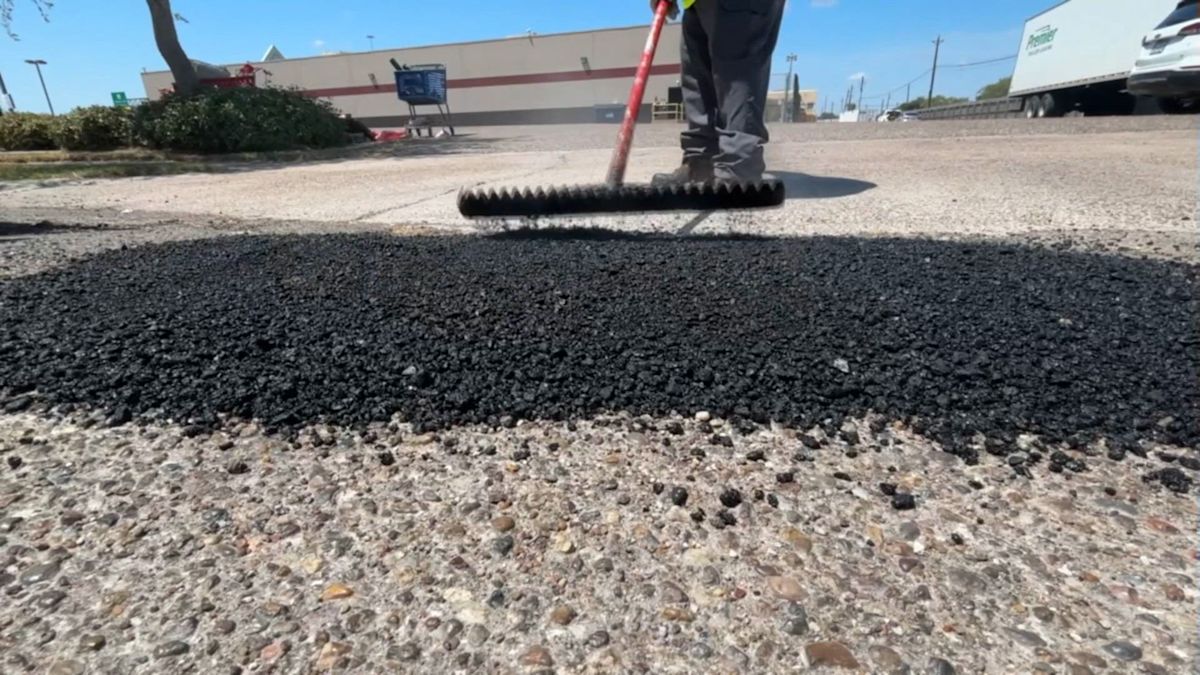
While the amount of street reconstruction is being reduced, the city is continuing its pothole repair operation.
De La Garza said city crews are tracking about 2,500 potholes a week, with each repair costing about $20.
Public Works crews recently worked in the Mount Vernon and Prinston areas in 94-degree heat, using asphalt heated to about 300 degrees to patch potholes.
Public Works Tech 1 Daniel Trevino said crews understand the importance of getting the repairs done quickly.
“We have got to keep the customers happy and try to keep the potholes as much as we can from y’all not getting hurt in your vehicles and all that,” Trevino said. “That’s why we try to be productive and hurry in this kind of job.”
Residents who find a pothole can report it by calling 311, allowing the city to send a crew to make a temporary repair.
But with the neighborhood paving program being reduced by more than half next year, more streets could remain in need of major repairs for longer periods of time.
For residents dealing with deteriorating neighborhood roads, the difference is significant. The city plans to pave 22 fewer miles of residential streets next year, while continuing to spend money patching a yearly total of around 120-thousand potholes.