
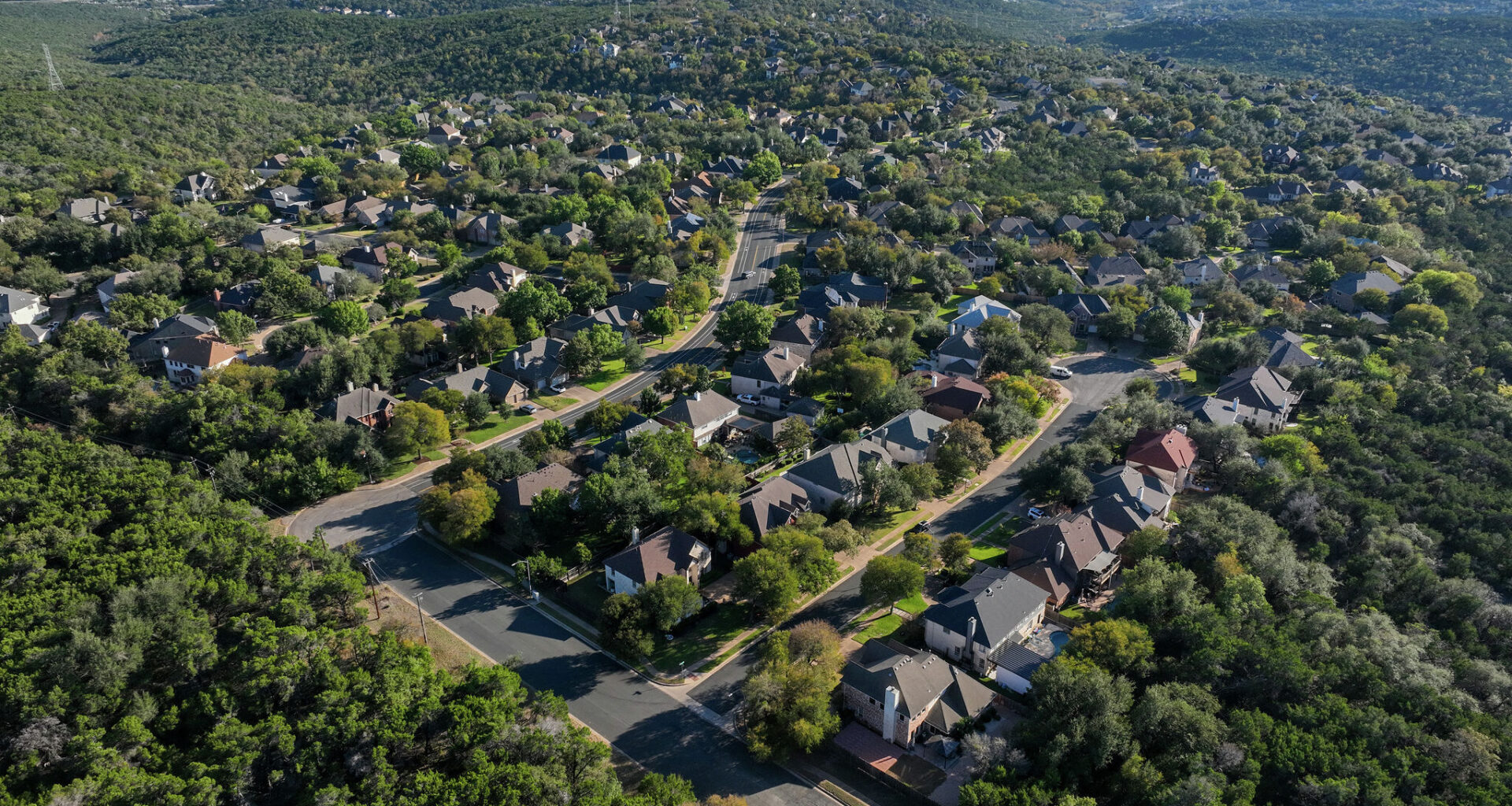
Jester Estates in Northwest Austin, shown Friday, Nov. 7, 2025, faces increased wildfire risk because of limited access.
Jay Janner/Austin American-Statesman
Jeff Shapiro strolls his lakeside property along scenic Lake Austin, pointing out the ways he has fireproofed his limestone home.

Within the 5-foot “home ignition zone,” there’s nothing that can burn — not even decorative landscaping. Tree limbs are trimmed well away from the roof, and gutters stay clear of leaves and debris.
Article continues below this ad
Jester Estates in Northwest Austin, shown Friday, Nov. 7, 2025, faces increased wildfire risk because of limited access.
Jay Janner/Austin American-Statesman
Jester Estates in Northwest Austin, shown Friday, Nov. 7, 2025, faces increased wildfire risk because of limited access.
Jay Janner/Austin American-Statesman
“There are really no significant ember ignition risks to this house,” he says on a sunny autumn morning. “Nothing here that’s going to burn significantly.”
Nestled at the base of rolling hills, Shapiro loves the beauty of his five-acre property. But as a national fire safety consultant, he also understands the tradeoff.
“There’s a lot of personal responsibility on people who live in an area like Austin,” he said, “to recognize that there is a risk of wildfire and to do what they can to reduce that risk to themselves and their property.”
Article continues below this ad
Shapiro’s home west of Austin carries another danger: It’s located in a neighborhood with limited evacuation routes, meaning there are few ways in and few ways out. This set-up could spell disaster during a major wildfire as residents try to escape and first responders try to get in.
The community is one of hundreds now at the center of a citywide push to prepare for the inevitable next wildfire. Using new mapping tools, Austin and Travis County officials are beginning a series of neighborhood meetings to underscore the one-way-in, one-way-out risk and educate residents about how to protect their homes and plan for emergencies.
An American-Statesman analysis of mapping data from Austin Fire Department’s Wildfire Division identified 275 communities with limited access that are at particular risk. Those areas were home to roughly 52,500 dwellings and other structures with about 81,000 residents as of 2022, according to the analysis, which focused only on communities with at least 30 structures.
Search our map below to find out if your home is in a limited access area.
Article continues below this ad
At-risk areas include several neighborhoods off Cuernavaca Drive west of Austin; three neighborhoods off Jester Boulevard and RM 2222, including Jester Estates; and others such as Long Canyon and River Place.
Almost 40% of the at-risk communities are within city limits and include an estimated 19,500 people.
Using new mapping tools, Austin and Travis County officials are beginning a series of neighborhood meetings to underscore the one-way-in, one-way-out risk and educate residents about how to protect their homes and plan for emergencies.
Article continues below this ad
The effort comes as Central Texas faces heightened wildfire danger following one of Austin’s hottest, driest Octobers on record. Experts say a rainy July fueled vegetation growth that has since dried out — creating perfect fuel for fire.
Austin’s long, hot relationship with wildfire
Austin has always been vulnerable to wildfire. Its lush vegetation, rugged Hill Country slopes and sprawling neighborhoods built deep into fire-prone zones create a volatile mix. Studies by private wildfire analytics firms rank Texas third nationally for the number of homes at high to moderate wildfire risk. Among U.S. cities, the Austin area ranks fifth for both number of homes and total reconstruction value at risk.
Those rankings — along with the devastating 2011 Bastrop County fire that destroyed more than 1,600 homes and 23 in Steiner Ranch — spurred officials to create the Austin/Travis County Wildfire Protection Plan, a blueprint for regional coordination and shared firefighting resources.
Article continues below this ad
“It’s not a question of if another major wildfire will hit us — but when,” the plan warns.
More recent disasters — including the January wildfire in Los Angeles County that destroyed 16,000 structures, caused billions in losses and killed at least 31 people — have renewed Austin’s urgency.
Because of the sheer number of at-risk homes, officials are focusing first on neighborhoods with limited access. Many were built before zoning rules required multiple exits or were constructed when no such rules existed.
Grassroots fire prep
Jester Estates in Northwest Austin, shown Friday, Nov. 7, 2025, faces increased wildfire risk because of limited access.
Jay Janner/Austin American-Statesman
Fred Richardson, president of the Austin-area Firewise Alliance, said 24 neighborhood groups — including some with limited access — have joined forces to prepare for potential wildfire.
Article continues below this ad
Education efforts include teaching residents how to evacuate early, what essential documents to grab, and how coordinated neighborhood efforts can stop flames from spreading.
“In some neighborhoods, there’s quite a bit of activist energy,” Richardson said. “If we’re smart and take action collectively — at both the house and neighborhood level — we’ll be much better prepared.”
Officials emphasize that a strong partnership between residents and first responders is key.
In October, the city hosted its first neighborhood meeting for residents along City Park Road and RM 2222. Topics included emergency alerts, evacuation planning and identifying neighbors who may need extra help.
Article continues below this ad
Jim Redick, Austin’s emergency management director, said the city also wants to fold resident feedback into official evacuation and shelter plans.
“We’re creating these documents not just for the community, but with their input,” he said. “That way, when the outreach begins, it’s a campaign of readiness.”
Back at Lake Austin, Shapiro has thought through not just fireproofing but also escape.
Article continues below this ad
“Most people in Austin don’t have that option,” he says with a smile. “But it’s our plan. This is our best way out.”