
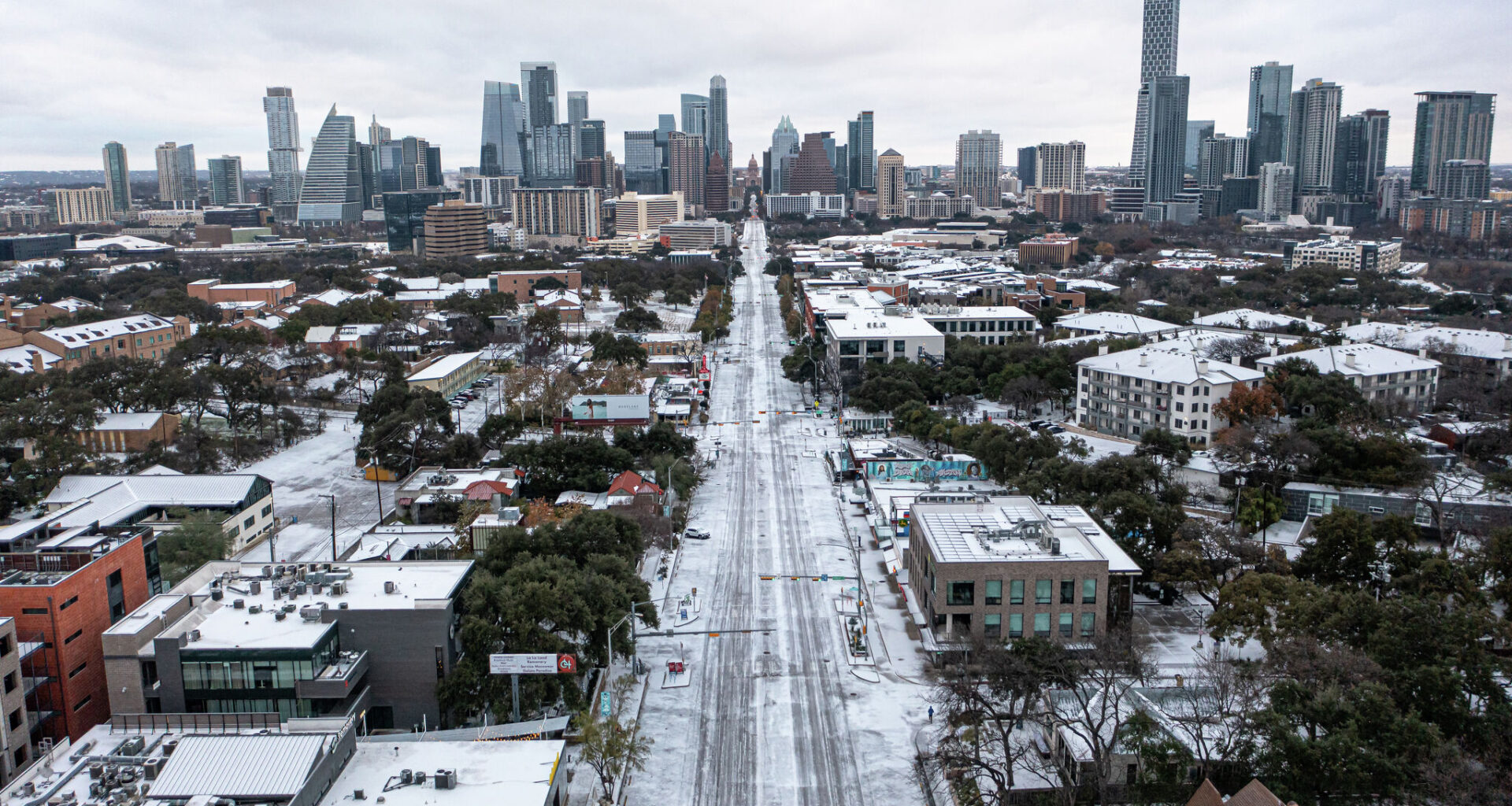
The Old Farmer’s Almanac released last month its 2026 and 2027 winter weather forecast, which is forecasting the possibility of a colder and wetter than usual winter season in Texas. That’s due to an El Niño spurred by unseasonably warm waters in the Pacific Ocean that can shift subtropical jet streams further south to Texas, in turn possibly bringing with it winter storms to the region.
“This is a climatological guide rather than a forecast for one particular storm,” the snowfall report read in part. “Elevation, latitude, nearby bodies of water and the weather pattern in a particular year can move the first snow considerably earlier or later.”
For those who dislike wintry weather, fear not: There’s still plenty of time for Texans to pull out the winter coats and boots. The first snowfalls in the United States often arrive in the Northern Rocky Mountains during August and September, with the Rockies, Northern Plains and Upper Midwest tending to record first snowfalls in October or early November.
For the Great Lakes and portions of the Northeast, November marks the arrival of snow, while the Central and Mid-Atlantic United States tend to experience snowfall in late November or December.
The Deep South and Gulf Coast regions tend to be a lot more unpredictable, with the December and January timeframe the most likely arrival point — if at all.
“Rather than having a dependable annual first snow date, many southern locations simply have periods of winter when atmospheric conditions are most favorable for a rare snow or ice event,” the report added. “When southern snow does happen, however, it can be particularly memorable because communities encounter it so infrequently.”