
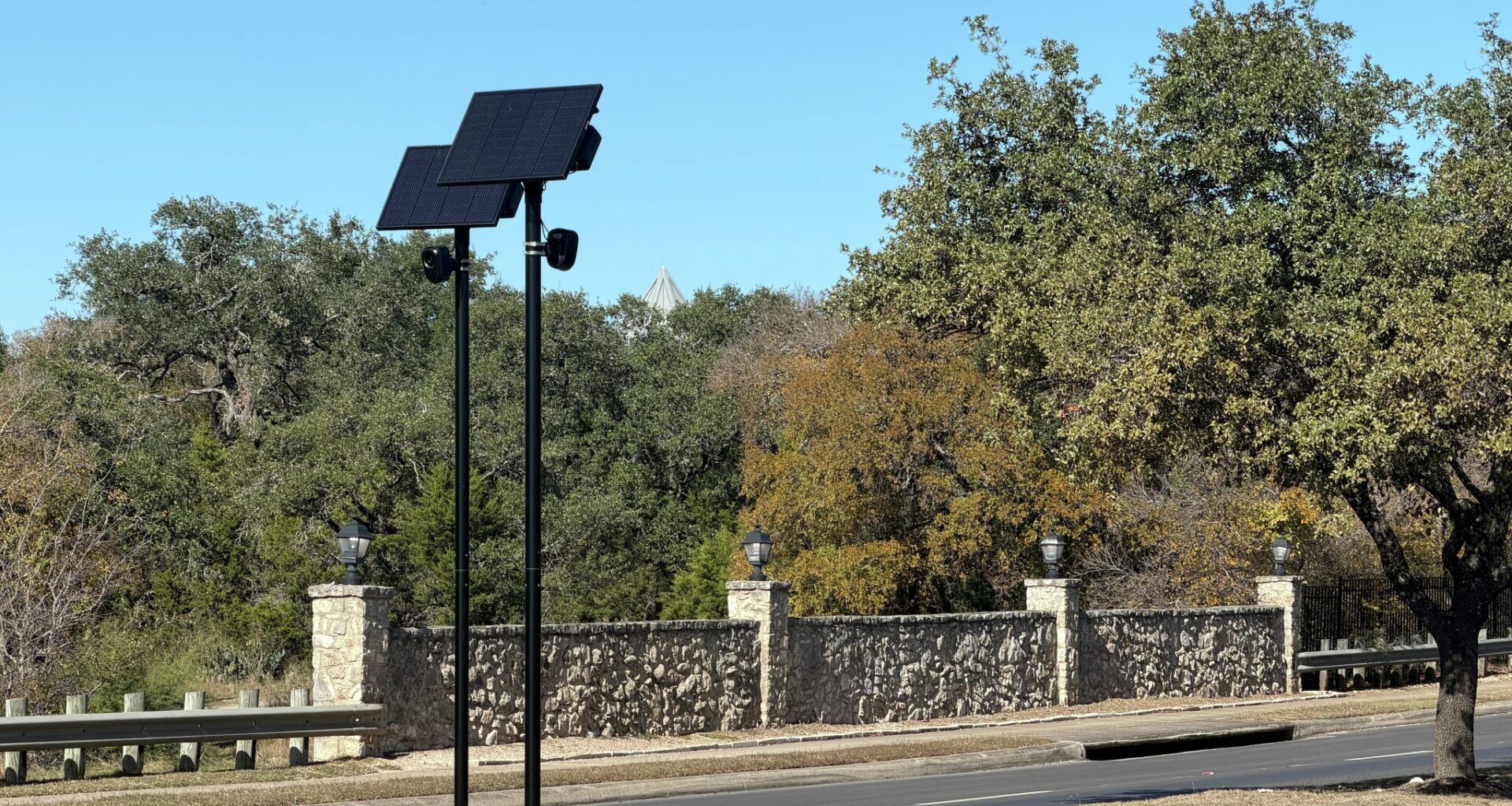
Surveillance has been top of mind for Texans as peculiar black poles donning cameras and solar panels have popped up at alarming rates along roads, in parking lots and in neighborhoods. Flock Safety cameras are at the very core of this debate.
What could’ve easily been dismissed as a far-out conspiracy theory spouted by enthusiastic typers wearing tin foil hats has quickly become a major political divide. After years of spending state dollars on Flock Safety cameras and license plate scanners, Texas’ top official called an audible to divest dough from the controversial monitoring equipment. The move came after several years of wary citizens sounding the alarm.
And Texas Gov. Greg Abbott – who recently barred state agencies from using public funds for Flock Safety cameras – isn’t the only leader taking a stand.
“Public safety and public trust have to go hand in hand, and recent revelations about the Flock system have fueled concerns throughout the community; we can’t engage with organizations we can’t trust,” Pflugerville Mayor Doug Weiss said in a public statement last month before staff in the suburban city outside Austin began physically shrouding the cameras in place.
But really, this new surveillance system, blanketed in vague uses and unclear explanations about who can access the data, has created a chasm that doesn’t seem to follow the contours of the political party divide.
“These grants increase the likelihood that car thieves will be caught sooner meaning that your stolen car is less likely to be used to commit other serious crimes such as human trafficking, robbery, and other violent crimes,” Dallas Police Lt. Julio Gonzalez wrote back in a 2022 press release outlining numerous cities receiving state grants to invest in license plate scanners.
It’s a sentiment echoed by Bexar County Sheriff Javier Salazar at a public safety town hall early last month. Salazar touted the benefits of having Flock compile a list of vehicles matching the description of a stolen vehicle his deputies are seeking. While many law enforcement agencies are investing in plate readers, some local governments are doing the opposite, taking them down.
But it’s the amount of data being stored –– license plates, vehicle make, model, color, and design –– and who can access it that sparks the biggest concern among critics. In the early days of Flock Safety’s rapid Texas expansion, local offices vowed that the data was kept in a closed system accessible only to law enforcement.
But numerous reports have since emerged that data has been accessed far outside the scope originally promised, a reality that has contributed to several municipalities tearing down the cameras.
According to this database:
With the growing number of misuse reports and heightened awareness of the widespread access, residents across the state are becoming more fearful as they spot these cameras pointed at neighborhood swimming pools, mall parking lots or even along residential roads, with no agency claiming responsibility for them.
Flock Safety is also often mum about its contracts and deals. It’s a private company that works heavily in public safety. Flock has said it doesn’t disclose specifics about camera locations or contracts with agencies, individuals or HOAs. In San Antonio, this led to a mysterious Flock Safety camera cropping up on a public street, with no agency claiming it.
“Since we live in a big brother world, I thought it important to share this with others. The cameras are being deployed and aren’t secure. We should all be discussing these cameras and getting them out of our city,” one local posted online – a message that drew dozens of comments with varying levels of concern.
Currently, Flock Safety is facing a class-action lawsuit in California. A federal court in Virginia previously ruled in favor of law enforcement when it comes to searching license plate scanner databases without a warrant. But the outcome of the California case could further shape the privacy debate.