
Touching grass isn’t just slang for getting a reality check. A new Rice University report says Houstonians may have an actual problem with not getting outside enough.
Houston-area residents made the fewest visits to greenspaces in 2021 among nine of the country’s largest metro areas, according to research published earlier this year in Frontiers in Public Health and highlighted Tuesday by Rice University’s Kinder Institute for Urban Research.
The study also found an association between more greenspace visits and better mental health, with the Houston metro area showing the strongest relationship among the regions studied.
Is it really that serious?
That does not mean a walk through Memorial Park is a cure-all. The study does not establish that park visits directly cause better mental health.

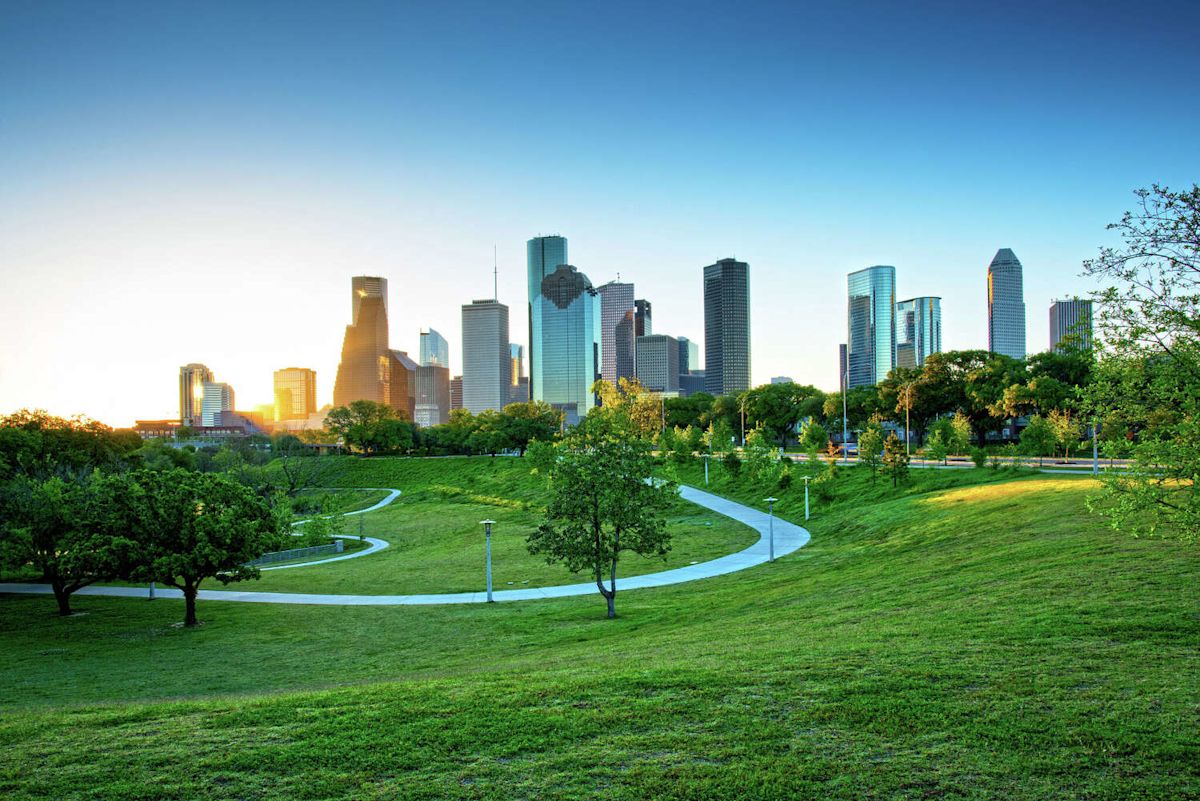
Houston residents may need to touch more grass. A Rice University report found the region had the fewest greenspace visits among nine major metros. (MStudioImages/Getty Images)
“It’s extremely important to understand that nature is not a cure-all solution to our health,” Sarayu Mouli, a research fellow at Houston Methodist Academic Institute and co-author of the journal article, told the Kinder Institute. “But it can support us with psychological restoration, physical health, stress, increase our physical activity and reduce loneliness.”
Researchers used anonymized cellphone location data to measure actual greenspace visits by residents across 13,152 census tracts in nine major metro areas. They also used 2023 Centers for Disease Control and Prevention estimates of poor mental health, defined as 14 or more days of frequent mental distress in a month. Tourists and other visitors were excluded from the analysis.
Houston stood out twice-and not in a good way.
The region’s median number of greenspace visits was 11.5, roughly one-third the number of visits by residents in Washington, D.C., which had the highest total, according to the Kinder Institute. Houston also had the highest median rate of poor mental health at 18.7 percent, while Washington, D.C., had the lowest at 12.9 percent.
The Houston link was also stronger than elsewhere. In the Houston area, each greenspace visit was associated with a 0.113-percentage-point lower prevalence of poor mental health, roughly triple the overall association across the nine metro areas, according to the Kinder Institute.
“What’s really surprising is that some of the other cities, like Philadelphia, didn’t seem to have that much of a strong effect as we see in Houston,” Mouli told the Kinder Institute. “We would like to know more about why that is.”

A new Rice University report found Houston-area residents made the fewest greenspace visits among nine major U.S. metro areas. (florent_dartora / 500px/Getty Images/500px)
But Houston has plenty of parks
The issue isn’t simply whether Houston has parks. It’s whether residents can realistically use them.
Prior research suggests proximity, transportation access, safety concerns and park amenities can all affect whether people actually visit greenspaces, according to the Kinder Institute.
“It’s important to have nature in our city, but it’s even more important to measure who has access to it, who uses it and who has transportation to it,” Mouli said.
Houston’s park system has also struggled in national rankings. Chron previously reported Houston ranked 69th among the 100 largest U.S. cities in the Trust for Public Land’s 2026 ParkScore ranking, behind Dallas, Austin, San Antonio and several other Texas cities.
The real problem
The same ranking found that low-income Houston residents had access to 35 percent less park space per person than the average Houston neighborhood resident. Residents in neighborhoods of color had access to 21 percent less park space per person than residents in white neighborhoods, according to previous Chron reporting.
The greenspace findings also land in a city already facing uneven mental-health access. Chron previously reported a University of Houston study found some of Houston’s most economically distressed neighborhoods had fewer than two licensed mental-health providers serving an entire ZIP code, with several north and east Houston neighborhoods having no practicing mental-health professionals.
Still, Houstonians appear to want more greenspace nearby. A 2023 Kinder Institute parks and greenspace survey of about 5,000 Harris County residents found nearly 4 in 5 residents said their neighborhood needed more parks and greenspace. About 70 percent said they would be willing to pay $2 per month to help improve parks and greenspaces, while half said they would pay $5 per month.
More News
Schools | ‘Sexist’ dress-code fight erupts at Houston-area middle school
Rants | Texas Republican goes off on AI, data centers, immigration and elites
Politics | Ted Cruz, Dan Patrick talk Texas ‘crazies’ before 2026 election
| $9.5M of drugs found in trailer at Texas border crossing
For the latest and best from Chron, sign up for our daily newsletter here.
This article originally published at Houston does not touch grass enough, Rice study suggests.