
This doctoral student is transforming the first-semester experience for students who
struggle with acclimating to college.
CREATORS


Iliana Anaya is scheduled to defend her dissertation in couple, marriage, and family therapy,
but her real education in belonging started years earlier.
She earned her Bachelor of Arts in psychology from Texas Tech University in 2020 and her Master of Science in marriage and family therapy in 2022, learning the clinical frameworks for understanding how people connect. She
chose to stay with the College of Health & Human Sciences for her doctorate, where she could study what she’d learned firsthand: how to create
space for people who feel like outsiders.
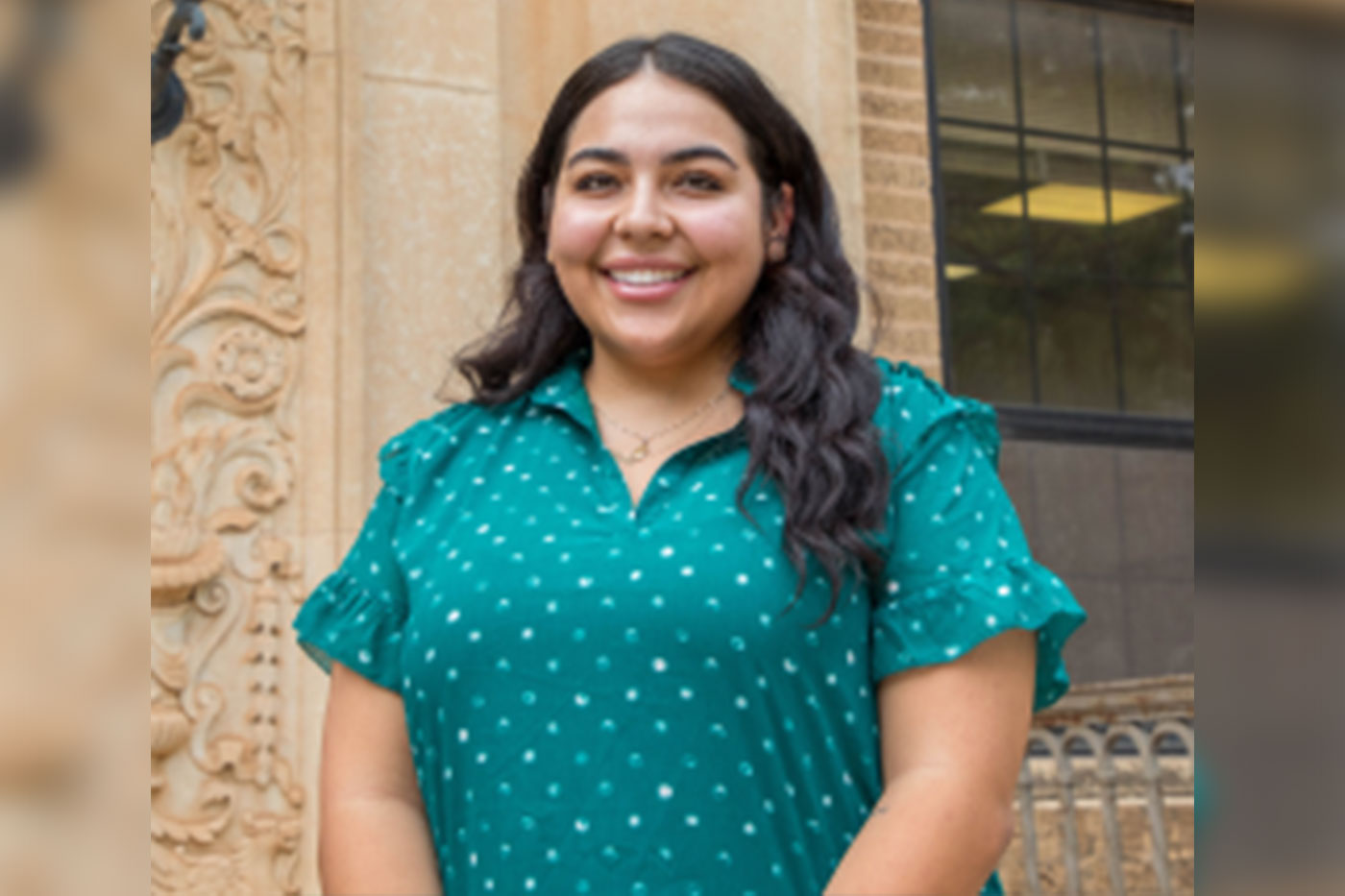 Iliana Anaya
As a licensed marriage and family therapist associate in Texas, she spent six years
at the Lubbock County Juvenile Justice Center, putting theory into practice with young
people that society had written off. Now she’s bringing that experience into a new
challenge: teaching students how to build the sense of belonging she had to figure
out on her own through a new class – CARS 2310.
When she first arrived on campus as an undergraduate in fall 2017, none of that seemed
possible. She felt completely alone. She ended up in a single dorm, and no one from
her high school had chosen to come to Lubbock. For an introvert, this was a difficult
position to be in. The first couple of semesters became an exercise in persistence,
watching other students arrive with built-in connections while she had to work twice
as hard to find a way in.
When homesickness hit, her parents took what seemed like a stern approach: no coming
home except for major holidays. At the time, it felt harsh, but looking back, Iliana
recognizes it as the push she needed. The choice became clear. She could keep feeling
sorry for herself, or she could stop waiting for Texas Tech to feel like home and
make it one.
She chose the latter.
What she learned during those difficult first semesters would shape everything that
came after – belonging doesn’t happen automatically. It requires intentional effort,
knowing where to look and having the courage to reach out. Texas Tech had resources
and community waiting for her, she just had to learn how to find them and build the
connections herself.
Finding Her Purpose
Growing up in New Mexico, Iliana saw what many communities face: mental health struggles
that nobody seemed equipped to address. Substance abuse, violence and homelessness
were visible symptoms of deeper problems people lacked the language or resources to
treat. She saw people who needed help but didn’t know how to access it. By high school,
she knew what she wanted to do. She wanted to be the person who could help bridge
that gap.
But wanting to help and knowing how to get there are two different things. Despite
growing up in a household that valued education, navigating graduate school for mental
health counseling was uncharted territory for Iliana. The clarity came during her
first graduate advising meeting with Kristy Soloski, when Iliana’s question tumbled out, “Do you think I can even get a doctorate? Do
you think I’m qualified?”
Soloski didn’t hesitate. She told Iliana she would unequivocally support her pursuit.
That moment changed everything. It wasn’t about the title or the prestige anymore.
It was about becoming the person she needed when she first started this journey, someone
who could help others see possibilities they couldn’t see in themselves, who could
actively create space for people to belong.
“I wanted to be someone who people could look up to and think, ‘I can do it. I can
be in higher education. I have a space here, and I’m wanted,” Iliana explains. “That
was the biggest thing for me. I wanted to pave the path for anybody who may not feel
they have the opportunity or the drive to do it. You can. It takes a lot of work,
but it’s definitely worth it.”
Finding Her Path Through Service
During her graduate program, the opportunity arose to do an externship at the Lubbock
County Juvenile Justice Center. People are often scared to work there, uncomfortable
with the reality of teenagers in orange jumpsuits who wear shackles and handcuffs,
who have mug shots and lengthy sentences ahead of them. But when Professor of Practice
Nicole Piland mentioned the opportunity, she offered a challenge that stuck, “If you can give therapy
to incarcerated youth, you can give therapy to anybody.”
Iliana took the opportunity, even though it pushed her outside her comfort zone. What
she found surprised her. These kids were some of the smartest, funniest individuals
she’d ever encountered. They’d just been dealt an extraordinarily difficult hand.
She stayed at the juvenile justice center for six years, working throughout her graduate
education. The experience taught her how to think quickly, meet people exactly where
they were without judgement and intentionally create space for people who felt like
outsiders. For Iliana, creating that space meant modeling calm, consistency and respect
in settings that often lacked those qualities. She used techniques like systemic reframing,
helping youth see their reactions not as “bad behavior” but as learned survival responses
within their family and environmental contexts. She prioritized collaborative language
(“we,” “let’s figure this out”) and nontraditional engagement tools like creative
journaling or brief mindfulness exercises that fit the facility’s structure while
fostering trust and autonomy.
One of the most meaningful moments in her time there came through a goodbye letter
from a resident, who wrote, “What you have done for me means a lot. You are the best
counselor I’ve ever had. I always feel safe and comfortable around you… you really
are like a big sister to me.”
That message captures what Iliana strives to bring into every setting she works in
– authenticity, warmth and the active work of making people feel like they belong.
It’s what she learned to do for herself at Texas Tech and what she’s spent her career
doing for others.
Teaching Philosophy: Making Space to Learn
Now, as an instructor with the College of Health & Human Sciences, Iliana’s approach
centers on what she calls “freedom to fail.” Whether working with incarcerated youth
or teaching undergraduates, she wants students to feel secure enough to take risks
without the crushing fear that a single misstep will tank their future. She remembers
what it felt like as a first-year student, terrified of doing something wrong, of
reaching out and being rejected.
“Too many students operate in constant fight-or-flight, so terrified of failure that
they never stretch themselves or grow,” she observes. “That fear doesn’t just make
learning harder. It halts growth.”
Her focus is on practical life skills. She wants students to learn how to navigate
stress and difficult emotions, set boundaries and have hard conversations while moving
through challenges with intention instead of desperately flailing to stay afloat.
These are the tools that will matter five, ten, twenty years down the line, the same
tools she wishes she’d developed more consciously during her own undergraduate years.
Iliana also recognizes that teaching is a two-way street. Her students teach her constantly,
offering perspectives she’s never considered. That mutual exchange keeps her engaged,
and it’s why she aspires to become the kind of professor students recommend to future
generations – the kind of mentor Soloski was for her.
But no one can give what they don’t have. Teaching requires taking care of oneself
first, which is why Iliana is intentional about self-care. She walks her miniature
dachshund Jimmy Dean regularly, tends to her ever-growing plant collection (she jokes
that while other grad students hoard cats, she hoards plants) and makes time for Texas
Tech football and basketball games even when her schedule feels impossibly packed.
Her message to students mirrors her practice – self-care doesn’t have to be expensive
or time-consuming. Sometimes the most restorative act a person can do is simple. It
could be taking a 10-minute nap, sitting outside in the sunshine, walking barefoot
through grass or wandering around campus noticing what’s beautiful. The important
thing is doing something that fills a person’s reserves.
The TechThrive Class: Bridging the Gap
Now Iliana is helping develop Texas Tech’s new TechThrive CARS 2310 course, and everything she’s learned – from her own struggle to find her
footing as a first-year student, to her clinical work with marginalized youth, to
her years of teaching – is being woven into its design. The course is designed to
give students what she eventually found at Texas Tech, but more quickly and systematically,
a clear roadmap to the abundant resources available on campus, and practical tools
for using them effectively.
Working alongside Jaclyn Cravens Pickens, an associate professor and coordinator for the TechThrive initiative, Iliana is
building a class that breaks away from traditional lecture-heavy formats in favor
of something more experiential. The course is hands-on and exploratory. There are
no papers, just reflections about students’ own lives and active participation in
activities that get them exploring campus.
“If you show up and give 100%, there’s no reason you shouldn’t do well in the class,”
Iliana explains.
Students will visit University Recreation to see what programs and activities are offered, attend sporting events already included
in their tuition and meet guest speakers from across campus who explain what services
they provide and how to access them. The course tackles something that troubles many
college students: how to balance social life, academics and personal time. Students
learn when to say yes to opportunities and when to protect their energy, how to have
difficult conversations and set boundaries.
These aren’t textbook skills, but they make all the difference between students who
thrive in college and those who just survive. They’re the skills Iliana had to learn
through trial and error, now systematically taught so students don’t have to figure
it out alone.
What Iliana wants most is for students to understand that the light at the end of
the tunnel isn’t as far away as it feels during difficult first semesters. Four years
can feel overwhelming, but it becomes manageable with the right tools and support,
and Texas Tech has both in abundance if a student knows where to look.
“I want them to be able to apply this to real life,” she says. “I want them to look
back 10 years later and say, ‘I learned that in Iliana’s class, and I’m still using
it.”
The lessons taught in CARS 2310 aren’t about becoming a perfect student or maintaining
a flawless GPA. They’re about becoming a functional, resilient human who knows how
to navigate challenges without completely falling apart and how to actively build
the sense of belonging that makes everything else possible.
Full Circle
Iliana’s journey at Texas Tech has taken her from struggling to find her place as
an undergraduate to actively helping shape how future students find theirs. But the
arc of that journey reveals something deeper, her early isolation wasn’t a detour
from her calling. It was preparation for it. Learning to build belonging for herself
taught her how to create space for others who feel like outsiders.
The isolated first-year student who had to work twice as hard for every social connection
developed skills she now brings to every setting: the ability to reach out even when
it’s uncomfortable, to create community intentionally rather than waiting for it to
happen and to help others see possibilities they can’t yet see in themselves. Those
lessons now form the foundation of a course designed to make the process less lonely
and increasingly guided for the next generation.
Students who complete the course will earn the “Mindful Matador” designation and receive
a special graduation cord, tangible reminders of the work they’ve put into their growth
and wellbeing. But more important than any designation is the shift Iliana hopes to
see – young people who know that Texas Tech has resources waiting for them and who
know how to access those resources; students who can navigate challenges without spiraling,
who understand that taking care of themselves isn’t selfish but necessary, and who
know that belonging is something they can actively build.
“You can’t pour from an empty cup,” she says.
It’s become a personal mantra, a lesson that grounds everything she teaches and everything
she’s learned through years of clinical work and her own journey toward belonging
at Texas Tech.
About CARS 2310
CARS 2310 is open to all Texas Tech students looking to build practical life skills,
discover the wealth of resources their tuition pays for and create meaningful community
connections.