
Twelve honorary doctorates fill one UT professor’s office walls from universities spanning Italy, Greece and Belgium.
Nicholas Peppas, pharmaceutical researcher and Cockrell Family Regents Chair in Engineering, is now making space for one more.
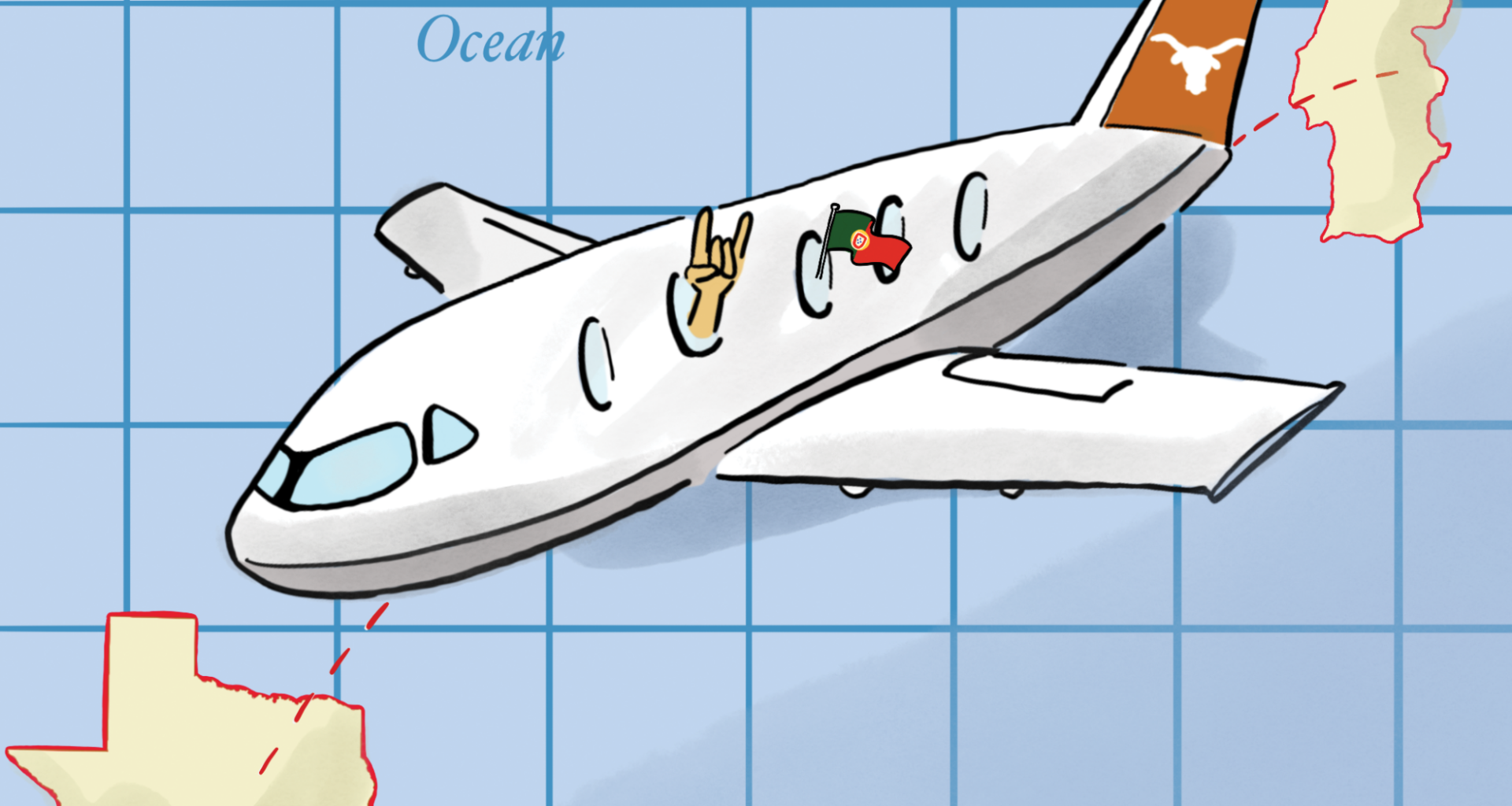
Due to his work with the UT Austin Portugal program as a researcher and mentor over the past 14 years, the University of Coimbra in Portugal, one of the oldest European universities, chose him as the recipient of another honorary doctorate to be bestowed in November, said Peppas.
UT Austin Portugal is a science-based partnership between the University, the Portuguese Foundation for Science and Technology and is supported by the Portuguese government. The goal of the program is to create collaborative research and entrepreneurship opportunities for faculty and students alike while furthering an international partnership between Portugal and the University.
“Everything we do is — we use a word in English: translational,” Peppas said. “Translational means it goes and helps the people. We don’t do just fundamental work for us to have a publication, okay, but it’s always to try to come up with new patterns, to come up with a new product to help the quality of life of our citizens and the quality of life of our patients.”
Since its inception in 2007, the program has previously hosted students for two to four months at a time. Now, the UT Austin Portugal program is hosting nine PhD students from Portugal for 6-to-12-month research stays at the University, beginning anywhere from early September to the end of the year. Each participant will have a faculty advisor at the University and will maintain contact with their institution in Portugal.
Brian Korgel, Rashid Engineering Regents Chair, helped direct nanotechnologies research and hosted students before the timing change, but he said three months usually wasn’t enough time for students to embed themselves in the program and the University. Korgel said the new program will allow deeper engagement between students in the lab and Austin overall.
“One-year stay really enables a really deep partnership to evolve, and it will also open up opportunities for students from UT to potentially … go to Portugal and continue these collaborations,” Korgel said. “So one year is going to be (a) really great opportunity for students to get the full experience of doing research at UT.”
When they arrive in Austin, the PhD students join labs to advance research directly connected to their doctoral work and related to the research topics proposed by the Portuguese government, said Marco Bravo, executive director of the UT Austin Portugal Program.
The University is one of four institutions that have strong partnerships with Portugal, alongside Massachusetts Institute of Technology, University of California Berkeley and Carnegie Mellon, Peppas said. As a Portuguese American, Bravo feels “blessed” to be because it combines his understanding of both cultures and promotes international research collaboration.
“The research done in this program can solve problems in cancer treatment, in satellite launches, in weather, climate,” Bravo said. “Things that are actually challenges for humanity, and so having small contribution(s) towards that and working with top-notch researchers (on) both sides of the planet is just very lucky.”