
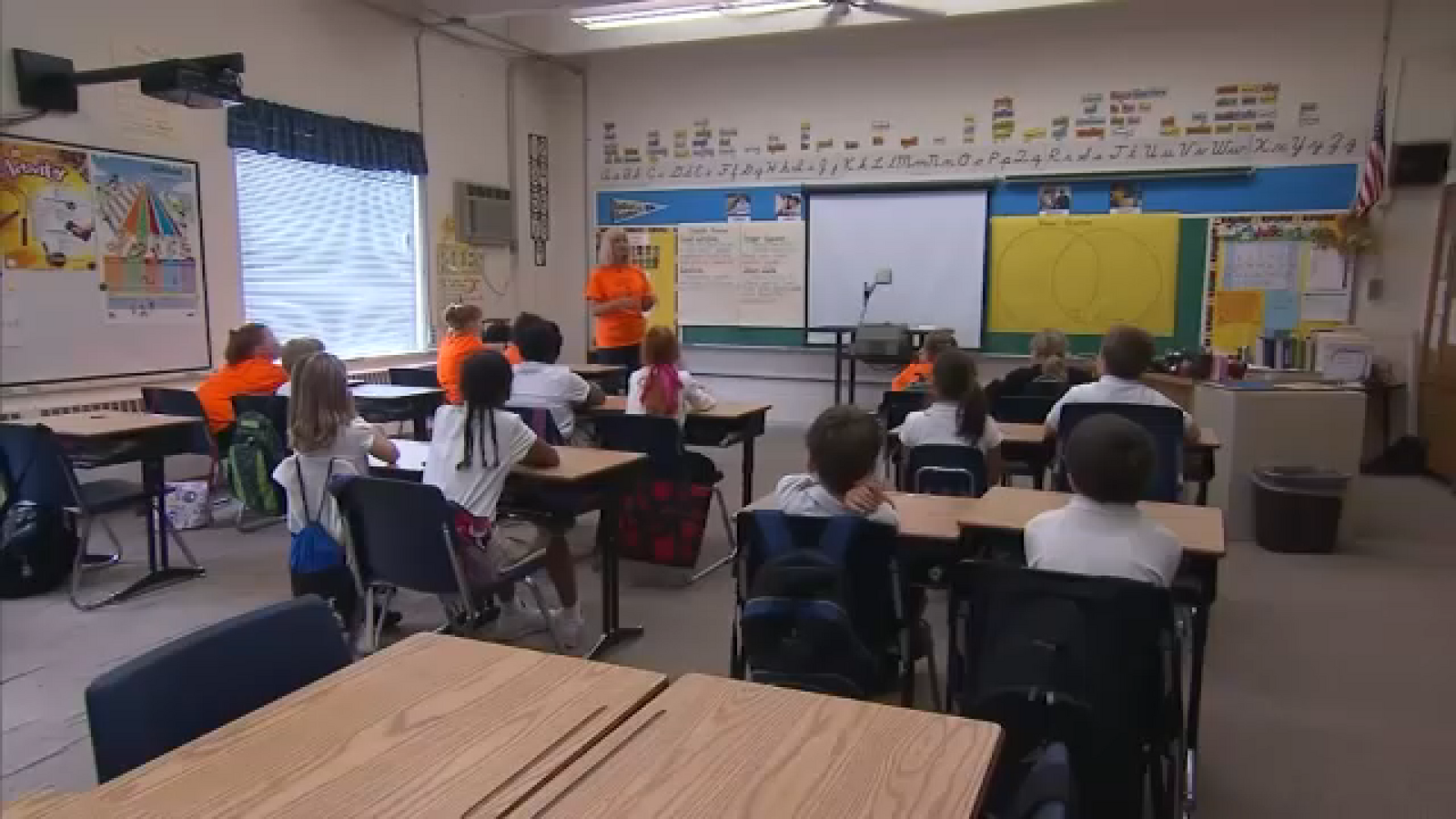
HARRIS COUNTY, Texas (KTRK) — School districts located in or partially within Harris County saw a combined 3% decline in enrollment over the past year, according to Texas Education Agency data.
The decrease represents more than 26,000 students across the 25 districts within or touching Harris County.
While the data does not show where those students went, experts say several factors could be contributing to the shift, including declining birth rates, affordability, and families choosing alternatives to traditional public schools.
Bill King of Rice University’s Baker Institute for Public Policy said combined enrollment in the districts fell below 900,000 students for the first time since 2013.
“Public schools are facing a confluence of issues; all of them are negative,” King said. “First, you get lower birthrates; secondly, there are alternatives: there are charter schools. Home schools. Vouchers.”
According to TEA data, 18 of the 25 districts saw enrollment declines over the past year.
Among the districts with some of the largest decreases were Aldine ISD, Alief ISD, Pasadena ISD, and Houston ISD. Aldine ISD’s enrollment declined by about 7.5% in one year, according to the data.
At the same time, some suburban districts are seeing enrollment growth.
Eight of the 25 districts have experienced enrollment increases over the past five school years. Waller ISD saw one of the largest increases, with enrollment growing by about 30% over that period, according to TEA data.
Top Stories

King said the enrollment changes reflect a broader population trend.
“Last year, according to the Census Bureau, 95% of population growth took place outside of a city of a million or more,” King said.
Jackie Anderson, president of the Houston Federation of Teachers, said she has also seen families and educators move toward suburban communities, in part because of housing costs.
“We’ve found that many of our teachers don’t even live in Houston, because they can’t afford it,” Anderson said. “So they move into these areas and these younger families. They put their children in these schools.”
Anderson said enrollment changes can have significant consequences for school districts because funding is tied in part to attendance.
“We’re having to do more with less. This is a big strain on our school systems,” Anderson said. “We’re funded by attendance, and we don’t have the money to do what we need to do.”
The enrollment data reflects changes between the 2024-25 and 2025-26 school years.
Copyright © 2026 KTRK-TV. All Rights Reserved.