
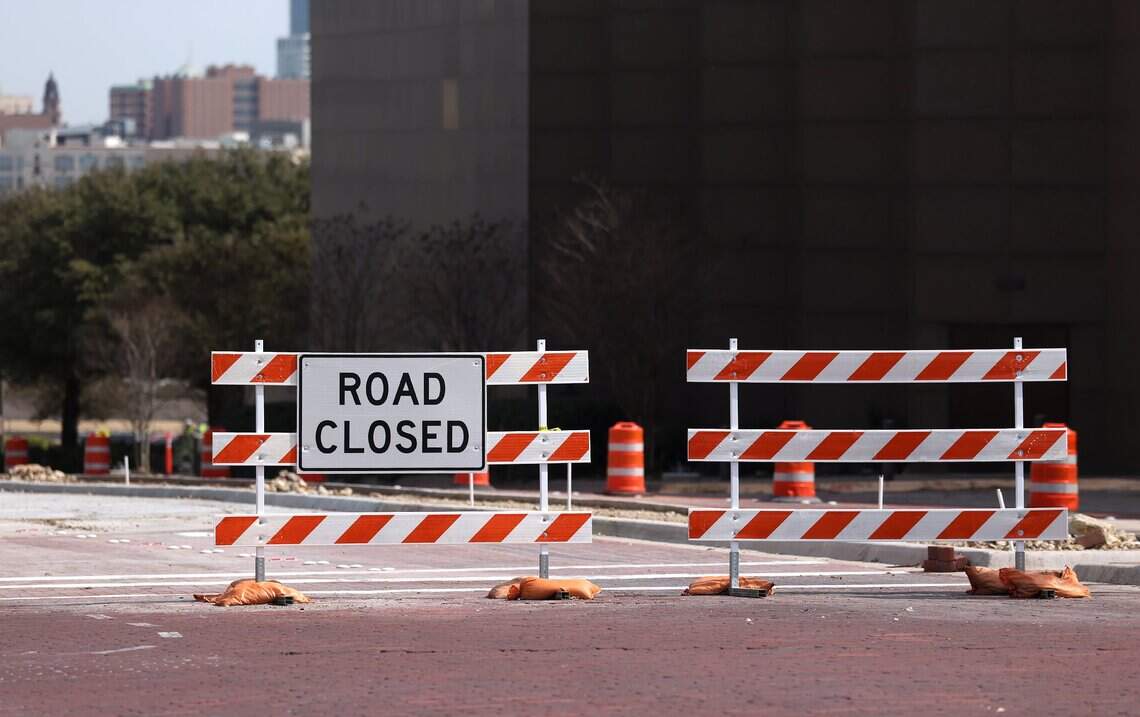
Starting in 2028, Fort Worth households will get a new fee tacked onto their monthly water bill, money that will go towards fixing city streets.
Among the new fees approved by the Fort Worth City Council in addition to the city’s $3.3 billion 2027 budget is a “pavement management fee” that is expected to generate $27.4 million for heavy maintenance projects and citywide preservation projects.
The city has a $66 million funding gap to address problems with its 8,600 miles of streets and roadways, according to a report from city staff. The fee will close 40% of that gap.
The money made from the fee, a document outlining the proposal says, will help the city avoid $125 million per year in future full street reconstruction costs.
The fee will also support a 50% increase in heavy maintenance projects, the city said, such as concrete panel replacements and asphalt resurfacing.
How new fee will work
The program is expected to begin in February 2028, with public notices to be given ahead of that date. The Fort Worth Water Department will collect the fees.
Single-family homes will pay $3 per month. Residents who live in multi-family homes, as well as schools, offices, retail establishments, warehouses, restaurants, or other businesses will be charged “based on specific factors germane to the use and property size.”
City scrapped prior plans for fee
The new fee is similar to a “Street Maintenance Fee” that was proposed — and scrapped — in 2024 over concerns about increased costs to residents. That fee would have added $9.22 to residents’ monthly water bills.
The new proposal was shown to City Council members during a work session meeting in May.
It was council member Michael Crain who moved for approval of the fee during the budget meeting — even though Crain was against the previous proposal.
Crain changed his mind about the fee, he told the Star-Telegram, because he believes the city is now better equipped to implement it.
Crain’s move for approval of the fee came with an amendment to require that, among other things, the fee must include language specifying that revenues from it will be used exclusively for pavement preservation and maintenance (along with some administrative costs).
“If you’re not taking care of basic infrastructure, then it leaves a question about what else are you not taking care of,” Crain said. “Streets and roads are probably our most recognizable feature in the city because everybody uses them at some point.”