
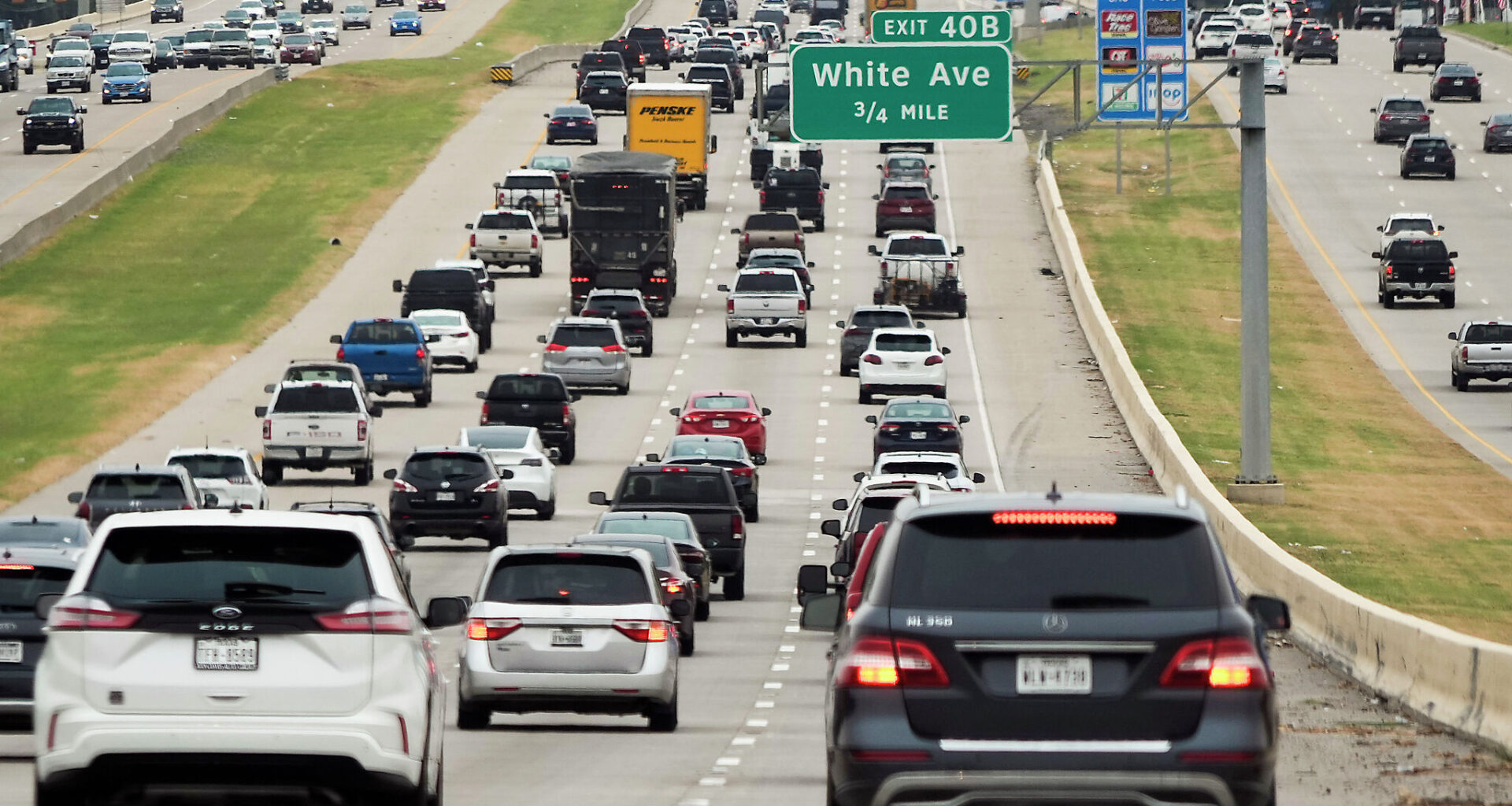
Traffic backs up in the northbound lanes of U.S. 75 on Friday, Aug. 29, 2025, in McKinney.
Smiley N. Pool/Dallas Morning News
In Collin County, the principles of fiscal conservatism have collided with the reality of explosive growth.

In the last decade, the county’s spending grew slower than the growth of population and inflation, according to the conservative think tank Texas Public Policy Foundation.
Collin County added more people than all but one county in America this year, spelling increased needs for public services and infrastructure maintenance.
Article continues below this ad
That has pushed leaders to consider raising property taxes — even as lowering rates has been the norm for over a decade in many of the county’s boomtowns.
Related: As protesters gather outside, life inside a Plano mosque carries on
J.H. Cullum Clark, an economist at the George W. Bush Institute, said local governments face a mix of ongoing inflation and “explosive population growth.” Property values are not going up in many cases, and support from the federal government is waning, he said.
“The fiscal situation of localities everywhere has gotten worse,” he said. “Local governments only have two choices … [to] raise tax revenues by one means or another, or to reduce spending.”
Plano, Frisco and McKinney all voted to keep their tax rates flat for the next fiscal year, rates which are still expected to bring in more revenue as the region grows. But leaders say they won’t be able to keep rates this low forever and are cutting costs.
Article continues below this ad
“The state wants us to kind of stay within the same revenues that we have now,” said Teodoro Benavides, professor at The University of Texas at Dallas and former Dallas city manager. At the same time, “you don’t want to be raising your rate because you want to stay competitive.”
The pressure has pushed some local governments to break from tradition: Collin County commissioners recently voted to raise the property tax rate for the first time in more than 30 years.
Plano’s warning
In 2025, Plano raised the tax rate for the first time in 16 years, citing slowing growth, pressure from proposed state legislation that would make it harder for local governments to raise taxes and rising costs of maintaining aging infrastructure.
Article continues below this ad
Plano’s budget director, Karen Rhodes-Whitley, said this summer that raising the tax rate “helped us tremendously,” especially as Plano voters passed a bond election that has put pressure on the city’s debt.
While the Plano City Council voted to keep the rate steady this year, officials warned of what’s to come.
“We can get by this year with holding the tax rate firm,” said Plano City Manager Mark Israelson at a council meeting in August. “But in the future … there will likely be more than one need to adjust the tax rate.”
Breaking decade-long records
Collin County commissioners said the tax increase for the upcoming year was necessary to fund staff to maintain infrastructure and avoid a backlog at courts and county offices. Commissioner Darrell Hale gave the example of the jail, where detainee healthcare costs tripled to $24 million in the last decade.
Article continues below this ad
“We were digging for every dollar we could,” Hale said of the budget.
Related: Fast-growing Collin County calls $817.5 million bond election for November
County Judge Chris Hill, the sole member of the five-member commissioners court to vote no on the increased tax hike, proposed keeping employee salaries flat to maintain the existing rate. But other officials said uncompetitive salaries would jeopardize employee retention, a headache the county can’t afford as it grapples with growing demand for services.
McKinney and Frisco cut costs, avoid hike
McKinney and Frisco leaders decided to keep the current property tax rate in the upcoming fiscal year, going against the recommendation of city staff to raise it. In McKinney, officials cited a decline in average home values in the argument to raise the rate. Frisco officials emphasized inflation and property tax exemptions that were eating into the city’s revenue.
Article continues below this ad
It was the first time in a decade that McKinney did not lower the rate while Frisco avoided what would have been the city’s first tax rate hike in 18 years.
Related: 7 months apart: McKinney teacher’s husband remains in ICE detention
In order to maintain the existing tax rate, McKinney officials cut $1.2 million in costs — including some funding for equipment replacement and changes to operating expenses in city departments, but no layoffs. Frisco staff cut about $7.8 million in proposed spending including replacement vehicles and staff in the police, IT and human resource departments.
Frisco council member Angelia Pelham, who supported the higher tax rate, said she was concerned the revised budget represented an “unsustainable financial strategy.”
Article continues below this ad
“It’s getting tougher in localities all over the country,” Clark said. “You’re just seeing a whole lot of mayors … dealing with really significant fiscal crunches these days.”