
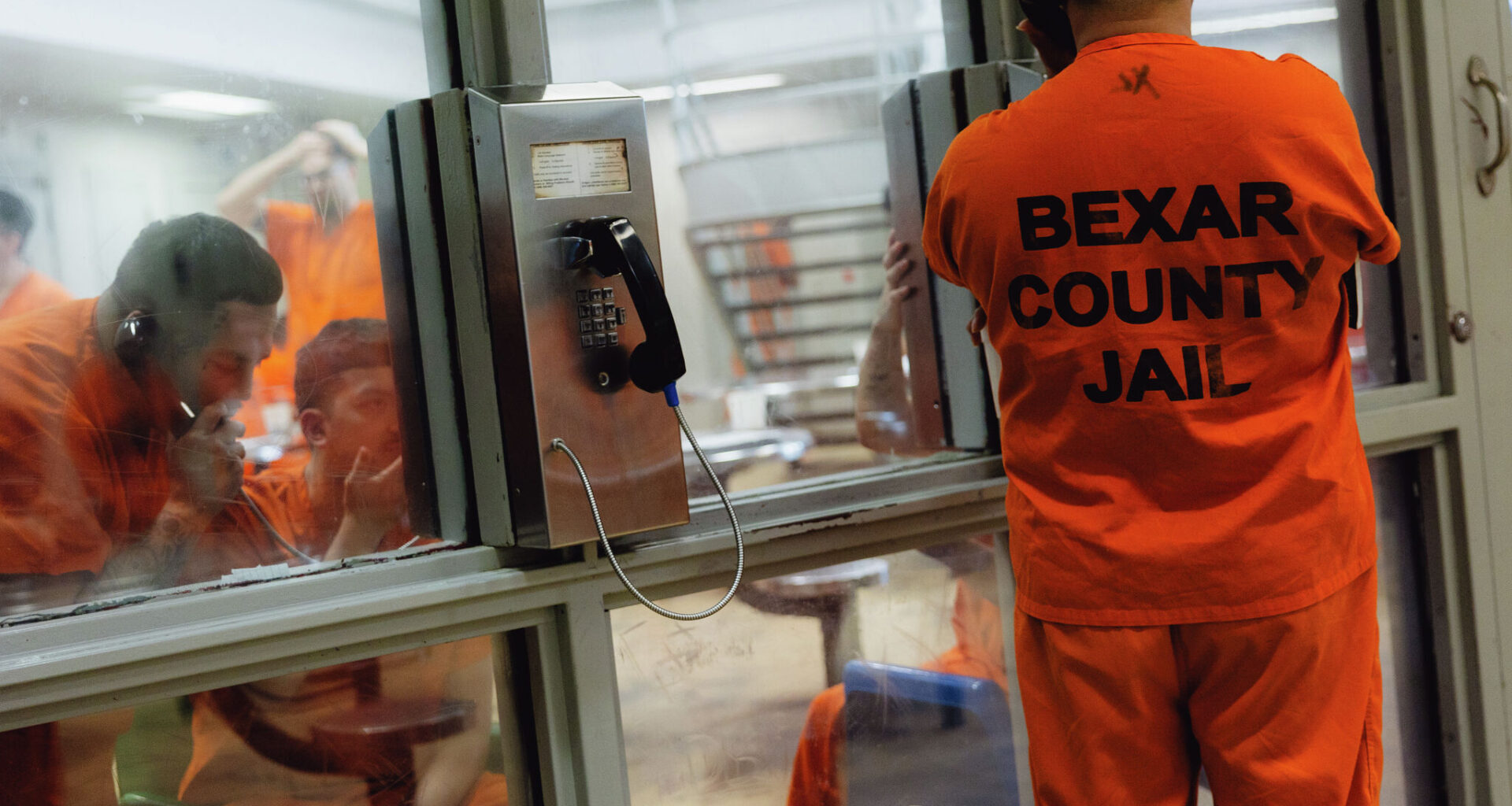
Inmates in the general population unit at the Bexar County Adult Detention Center, where 92 people have died since 2020. This summer, Bexar County officials made promises to the public about fixing the jail. They must honor these promises.
Christopher Lee/Staff Photographer
It’s not breaking news that candidates and elected officials sometimes make promises they don’t keep. We’ve almost become used to it, and we often don’t hold them accountable.

But when officials are dealing with matters of life and death, keeping their word matters more than ever.
Article continues below this ad
On July 29, LULAC Concilio Zapatista 4383 hosted a community forum on in-custody deaths at the Bexar County Adult Detention Center. It was a good-faith effort to understand the crisis and work toward solutions.
Since 2020, 92 people have died in Bexar County jail custody, according to the Express-News Editorial Board’s “Jailed to death” project. Our detention center has the highest per-capita death rate of any big city jail in Texas. As media and community groups have reported, many of those who died were never convicted.
The day before our forum, the Texas Jail Project, ACT 4 SA, and All of Us or None Texas released a “Care Not Cages” framework calling for timely screening, real treatment once a condition is identified, and rapid, honest communication with families when someone dies in custody. It’s a credible blueprint, and we thank them for it.
Article continues below this ad
Our forum built on that work with a short list of “quick wins” for each agency, where no budget cycle or vote would be required, chief among them a dedicated family liaison at the jail.
One main goal was the formation of a multi-agency task force to take a holistic approach to this crisis. The problem is multifaceted, and so are the fixes: ending the city-county duplicative booking system, creating a jail diversion program, building a real continuum of pre- and post-release mental healthcare and ensuring independent investigations occur for deaths are some of the pieces that have to move together.
A UT Health Houston School of Public Health study of jail operations also recommended an interdisciplinary task force.
Officials from the city of San Antonio, Bexar County, law enforcement, the district attorney’s office and the healthcare system were invited to our forum, including Mayor Gina Ortiz Jones, City Manager Erik Walsh, District Attorney Joe Gonzales, Precinct 2 Commissioner Justin Rodriguez and District 5 Council Member Teri Castillo. All commissioners were given the opportunity to submit written statements.
Article continues below this ad
Four leaders showed up: County Judge Peter Sakai, Sheriff Javier Salazar, University Health President and CEO Ed Banos, and Center for Healthcare Services President and CEO Jelynne Jamison. We were grateful for their attendance.
Each committed, on the record, to a multi-agency task force producing a public plan of action by Oct. 30. Salazar also committed to a family liaison, and Sakai committed to bringing the task force before the Commissioners Court.
Commissioners Court has met more than once since July 29: In early August, it approved funding for a jail intake screening room and directed staff to build a public dashboard, and on Aug. 18 it directed staff to scope out an independent audit of the Sheriff’s Office’s compliance with custodial-death investigation law.
Article continues below this ad
We acknowledge that work. But it is still piecemeal. We need a comprehensive approach and actionable plan.
The clock isn’t just running on Oct, 30. Sakai leaves office in January, and whatever structure exists when he leaves is what the next administration inherits, or ignores. We urge Sakai to bring the task force before the Commissioners Court now, and to set a first meeting within 30 days.
We strongly recommend District Court Judge Ron Rangel as the chair, given his extensive involvement in the ad hoc committee and understanding of these issues. His involvement is the surest way this work survives the change in county leadership.
In the meantime, the county and sheriff should follow through on the commitment to creating a family liaison.
Article continues below this ad
We have posted a video recording of the forum, along with every commitment made that night.
We invite Bexar County residents to view it and hold their leaders to account.
We are less than two months away from Oct. 30. These leaders committed to this deadline in public, before families who have already lost too much.
Article continues below this ad
Bexar County’s leaders ask for our trust. Trust is built, and lost, by how they keep their word.
Queta Rodriguez is the director of community & government affairs for LULAC Concilio Zapatista 4383.