
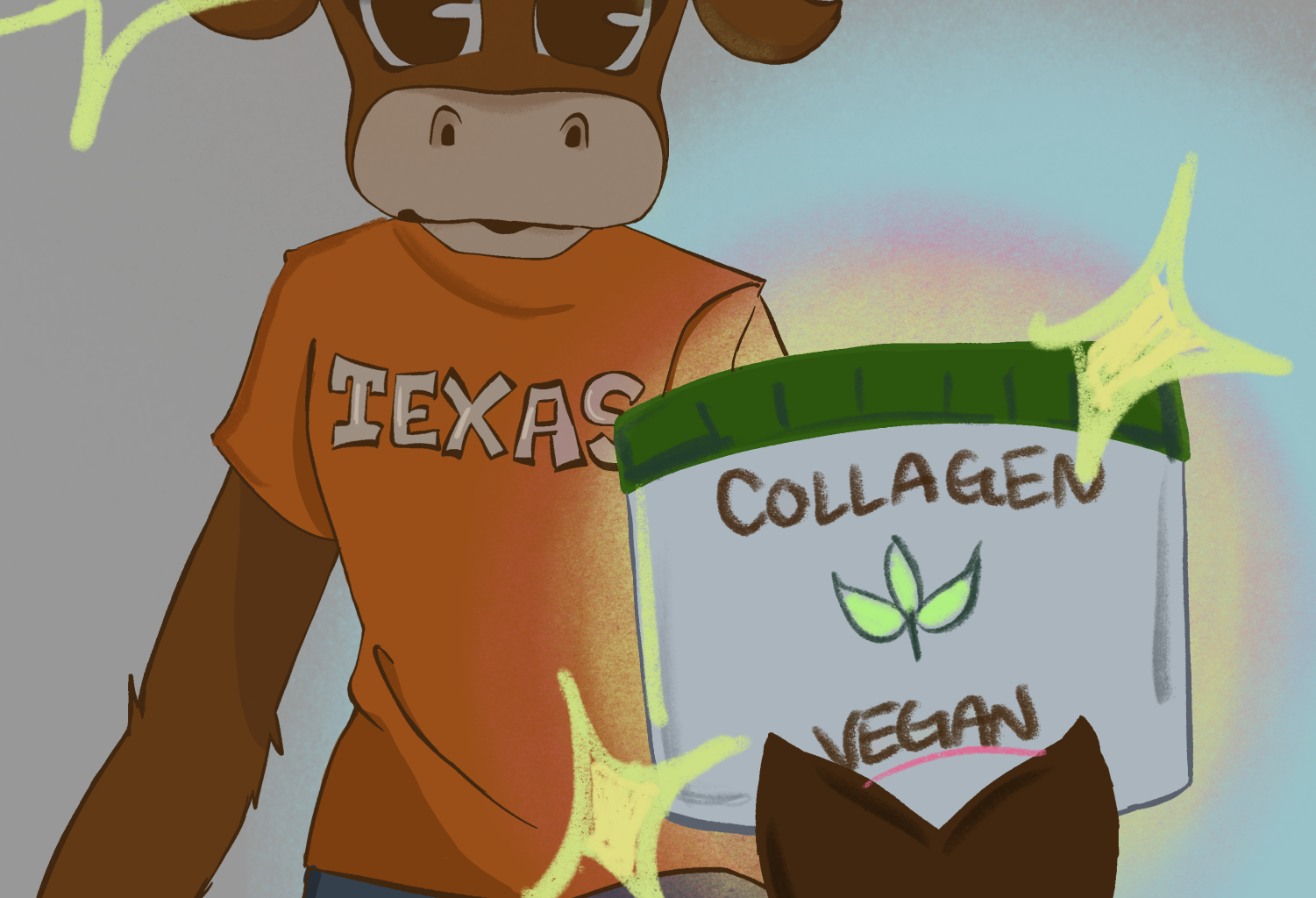
UT and the biomanufacturing company Manus have engineered strains of yeast with easier extraction of two compounds, according to a Sept. 9 Manus news release.
The discovery could unlock a new way to produce both without animal byproducts and easily extract the compounds for other commercial use. The commercial uses include medical, health and cosmetic products.
The project pairs chemical engineering professor Hal Alper and his lab, housed in UT, with Manus, the bioalternatives company. Both organizations co-applied to a grant from BioMADE, a nonprofit focused on advancing alternative-food manufacturing for their research. BioMADE received a seven-year, $87 million award from the Department of Defense in October 2020 “to establish long-term and dependable bioindustrial manufacturing capabilities for a wide array of products,” according to a Department of Defense news release.
Yeast is an organism that can be engineered to produce useful compounds such as collagen and omega-3 fatty acids that the researchers extracted. The organism can survive around 40 atmospheres of pressure before breaking open, said Joe Shaw, senior vice president of research and development at Manus.
Alper’s Lab engineered a yeast strain to produce collagen, while Manus engineered one to produce omega-3 fatty acids, both housed inside the yeast. Both have been working on ways to break down and extract collagen and omega-3 fatty acids.
“There’s a gap between doing work often in a laboratory setting and actually manufacturing it at a scale that can really have a positive impact on society,” Shaw said. “Unfortunately, one of the biggest challenges of industry is how do you bridge that gap?”
Sangdo Yook, former postdoctoral researcher in the Alper Lab who has since graduated from UT, designed the yeast that can break down to release the collagen from it, said Sung Gyung Lee, a doctoral student in the lab. Lee then worked on applying and working to commercialize the collagen.
The Alper Lab specifically engineered yeast that produces human collagen, which is a protein that usually can only be harvested from animals. It is found in health foods and cosmetic items. The strain they created uses no animal byproducts to create collagen, since they use yeast, which is a fungus.
“Being able to use … alternative methods for producing bio-based collagen would be really useful,” Lee said.
Lee visited a Manus biomanufacturing facility in Augusta, Georgia, to test the strain in a 165-liter bioreactor, which is like a big fermenter. This allows them to scale production of this yeast on a commercial level. Shaw said the partnership with UT helps Alper’s lab test its product commercially.
“Being able to actually commercialize and scale that up has its own challenges,” Lee said.
Shaw said the process to ensure the collagen produced by the yeast enters the market could take 10 to 20 years.
The researchers at the Alper Lab are currently writing the paper for this research and plan to complete it soon.
“I think it’s really cool that we can sort of engineer and modify and harness the power of biology to be able to do things that can benefit society, whether it be related to health or sustainability,” Lee said.