
HOUSTON – A Houston private school operator says Texas’ new school choice program has dramatically increased enrollment at his school, helping fuel an expansion into a new brick-and-mortar campus.
Andrew Green, founder of PSAT Academy, said the school’s enrollment has grown by about 200% since the Texas Education Freedom Accounts program launched.
“Our enrollment went up 200% just because of TEFA,” Green said.
PSAT Academy is an approved private school that accepts Texas Education Freedom Account, or TEFA, funding.
Green has been a vocal supporter of TEFA and traveled to Austin to advocate for the program. He also developed a relationship with state Rep. Brad Buckley, who chairs the House Public Education Committee that worked on the legislation that became the state’s new school choice law.
 Andrew Green founder of PSAT Academy, with State Rep. Brad Buckley, who chairs the Public Education Committee in the Texas House. (Family photo)
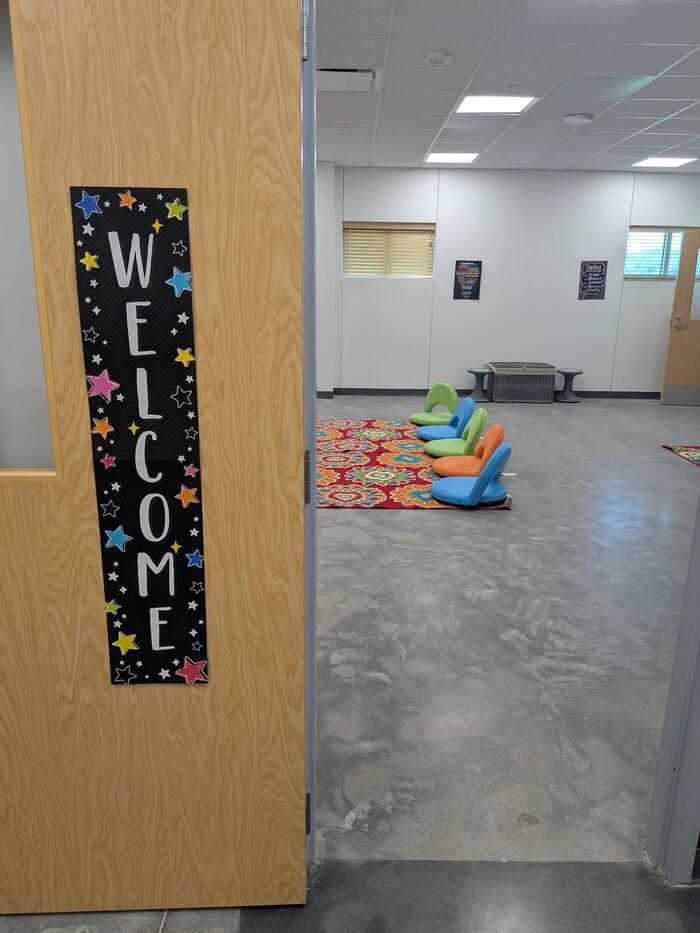
He said the growth comes as the school moves into its first true brick-and-mortar location in Houston.
Green said PSAT Academy operated out of a church two years ago before moving into a converted warehouse last year.
Now, he has reached an agreement with a nearby charter school that allows PSAT Academy to operate from its new space.
The school expects to have about 60 to 75 students attending classes in the building this school year, with another roughly 75 students being served online.
More than 70% of students receive financial aid
Green said the school’s growth is notable because a large majority of PSAT Academy students receive some form of financial assistance.
“More than 70% of them,” Green said.
He said most parents would not otherwise have the ability to afford private school.
But providing that financial assistance comes with a cost to the school.
Green said PSAT Academy does not have outside organizations covering the difference.
“It’s us just taking that loss in tuition,” he said, explaining that the school then has to find a way to make up the money needed for teacher salaries, supplies and other expenses.
“Usually that comes from me,” Green said.
Asked how the school is able to absorb those costs, Green said the school’s mission is part of the reason he continues to do it.
“Education is a ministry,” he said. “Just like pastors are used to making sacrifices, school administrators, teachers are used to making sacrifice.”
Green acknowledged that the school is effectively absorbing the cost of a large portion of its students.
“It’s a ministry,” he said.
Green says TEFA has been a “blessing” for some private schools
Green said TEFA is particularly beneficial for private schools that are willing to accept a broader range of students.
He said some private schools have chosen not to participate in TEFA because they want to remain selective about who they admit. But for schools with a model similar to PSAT Academy, he said the program has been significant.
“So, for those private schools that are more like us, this has been a blessing.”
Green said some private schools are struggling financially and could be at risk of closing.
His argument is that families facing the cost of private-school tuition are often forced to make difficult financial choices.
“Parents, I’ve got to pay my mortgage or pay tuition. I’m going to pay my mortgage,” Green said.
TEFA arrives as public schools announce closures
PSAT Academy’s expansion comes as school districts in the Houston area have announced multiple school closures.
That creates a broader debate about where taxpayer-funded education dollars should go at a time when some traditional public schools are closing.
Green was asked directly about criticism that TEFA sends taxpayer money to private-school operators while public schools are shutting down.
His response was that public, and private schools should focus on serving students well rather than competing over which model receives families.
“If what they are doing is working, they’re not concerned with us,” Green said. “If you do what you need to do for families, they’re not leaving,” he said.
He argued that schools that meet the needs of families will retain their students. Green said he wants public schools to succeed, too.
But he said he believes there are enough students who need different types of educational options.
“The truth of the matter is there are more students that need good schools, both public, private, and homeschool,” Green said. “Nobody has to worry about anything. Just do what you do best. Don’t worry about what somebody else is doing.”
Would PSAT Academy survive without TEFA?
Green was also asked what would happen to PSAT Academy if TEFA did not exist.
He said he believes the school would remain open.
“It probably will remain open for a while,” Green said. “It just might not grow as fast.”
Green said the program has accelerated the school’s growth in more than one way.
Before TEFA, he said, PSAT Academy had limited money for marketing, meaning many families simply did not know the school existed.
But being listed among schools’ families can search for through the TEFA program changed that.
“Not many people even knew about PSAT because we didn’t have a lot of money to put in marketing,” Green said.
“Then when we showed up in a list of schools that you could search for, now all of a sudden people are like, I didn’t even know this school existed.”
For PSAT Academy, Green says TEFA has introduced the school to families who otherwise might never have found it and helped accelerate its transition from a church and warehouse-based operation into a growing private school with a permanent campus.
At the same time, the school’s experience highlights one of the central questions surrounding the new program: whether taxpayer-funded education freedom accounts will primarily shift students and money toward existing private schools, or whether they will help expand access to private education for families who previously could not afford it.
Copyright 2026 by KPRC Click2Houston – All rights reserved.