
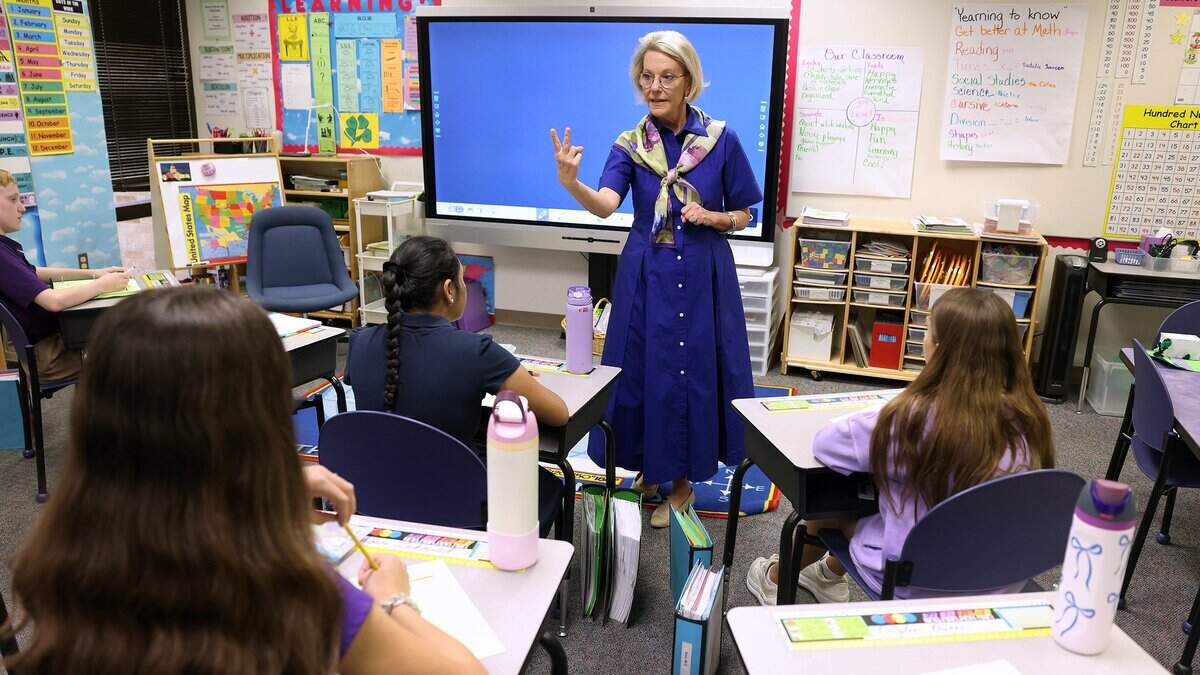
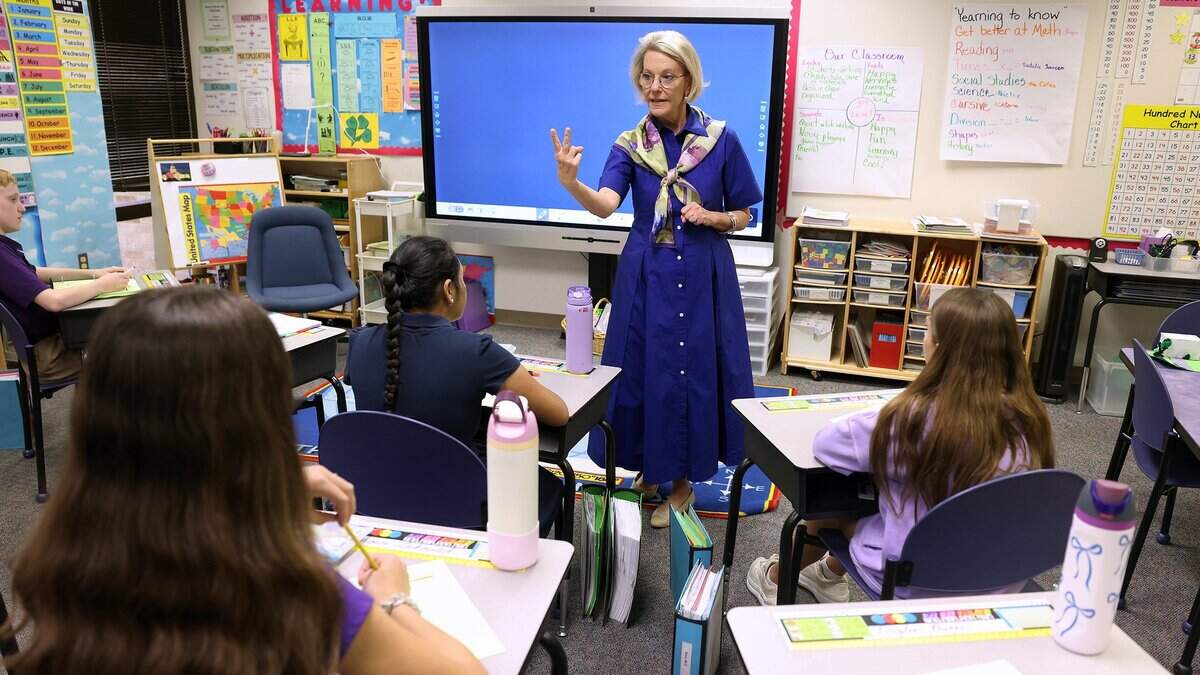
Starpoint School teacher Kimberly Payne leads a class through a reading exercise on Thursday, Sept. 17, 2026. Starpoint is a laboratory school located on the campus of Texas Christian University that serves students with learning disabilities.
Amanda McCoy
FORT WORTH STAR-TELEGRAM
A unique laboratory school in Fort Worth helps students with learning disabilities succeed in the classroom. It’s ingredients to success aren’t novel, but duplicating the model would require investment in Texas public schools.
The Starpoint School at Texas Christian University serves children with learning differences such as dyslexia, dysgraphia and Attention Deficit Hyperactivity Disorder, or ADHD. The ability to meet each student’s needs through small class sizes, small-group intervention and evidence-based reading instruction are the components driving student success, said Interim Executive Director Jan Lacina. The sense of community is also a notable factor, she added.
“It is the early intervention, the structured literacy program, (and) small classes, but it’s the loving care of the teachers that work with all of these children and the level of support they receive. Sometimes children can be lost in a really big school, where in this school, their needs are met because they’re receiving such small group intervention and just an overall community,” Lacina said.
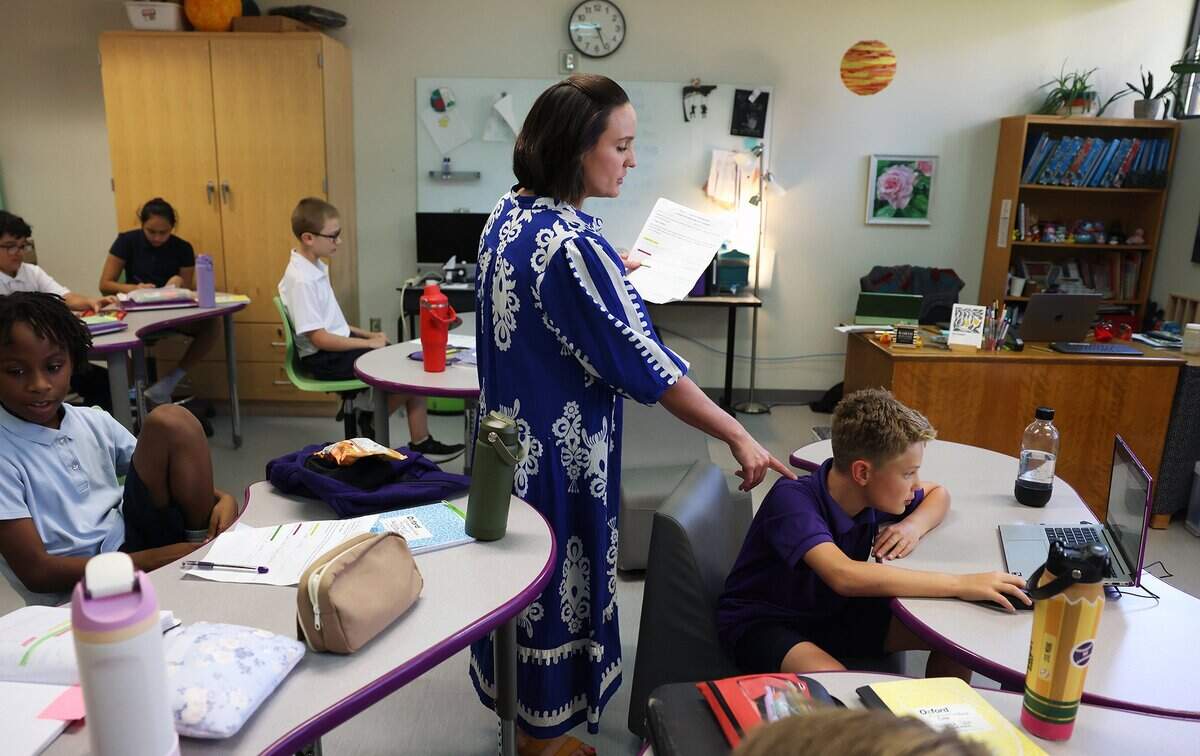 Starpoint School teacher Neely Douglas checks students’ homework during a science class on Thursday, Sept. 17, 2026. Amanda McCoy FORT WORTH STAR-TELEGRAM
“The majority of students score from average to well above average on the end-of-year assessment,” she added.
The private laboratory school, which has more than 50 students, focuses on ages 6-12 and identifies students through six “levels” based on their needs instead of traditional grade levels. Children who join at level one may have struggled in kindergarten or first grade, identified their learning difference as they were leaving first grade and then enrolled in level one at Starpoint rather than “second grade,” Lacina said. The goal is to avoid making students feel like they’re trailing behind their peers.
For Starpoint parent Yancy Diaz, the level system helped her 9-year-old son Christian adapt when he transferred to the school three years ago. Diagnosed with dyslexia and ADHD, his academic struggles impacted his confidence, but the school’s approach to meeting him where he was helped him turn a corner. Now, he’s eager to learn and dreads summer break.
“The school never made it a big deal. The school was like, ‘You’re where you need to be, and we’re going to take it from here,’” Diaz said. “Giving him that confidence that it was OK, that he’s not falling behind has really lifted his spirits when it comes to learning.”
The attention on individual students that Starpoint School can provide is possible to replicate in other educational settings, but it would require investment in evidence-based and individualized instruction, said Audrey Sorrells, director of the Alice Neeley Special Education Research and Service (ANSERS) Institute at TCU’s College of Education. The institute provides professional development to Starpoint teachers.
She noted how teachers in other settings may know the recipe to success for their students, but it’s a matter of capacity and support that’s available to them.
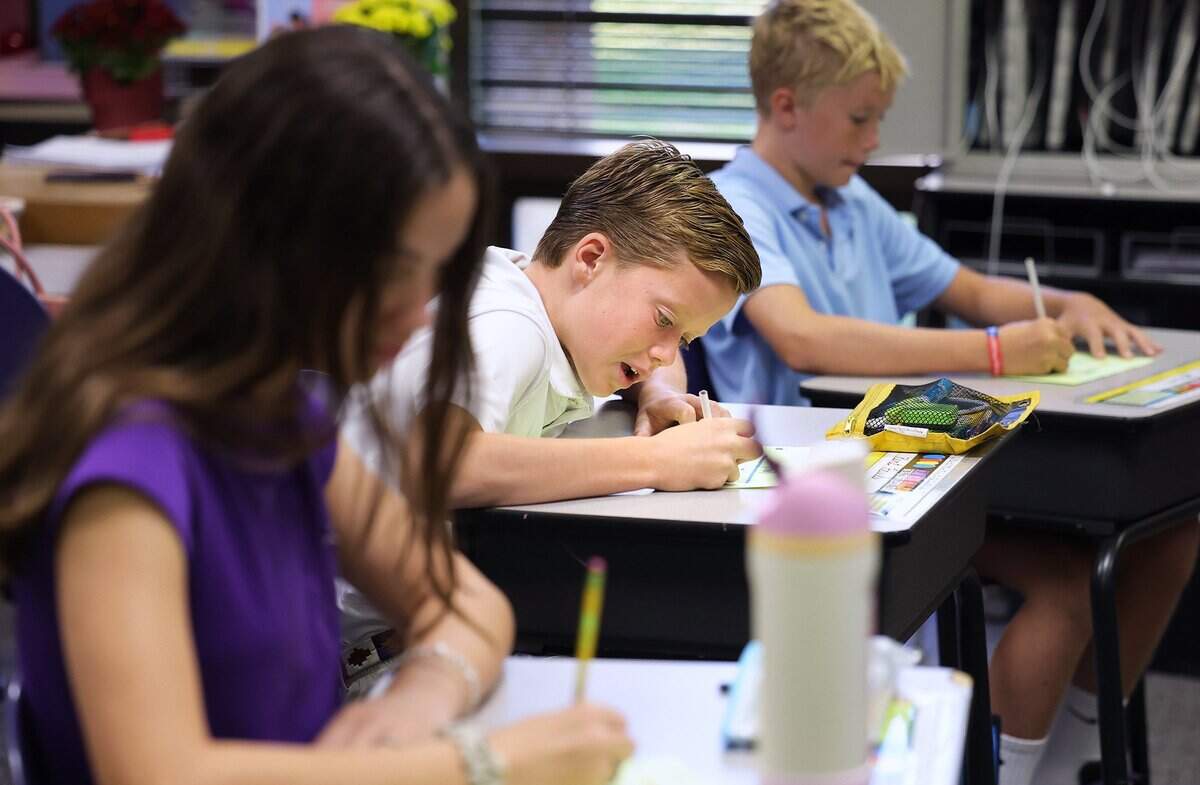 Students spell vocabulary words during class instruction at Starpoint School on Thursday, Sept. 17, 2026. Starpoint is a laboratory school located on the campus of Texas Christian University that serves students with learning disabilities. Amanda McCoy FORT WORTH STAR-TELEGRAM
“If you think about the blueprint of Starpoint School and whether it’s one that could be replicated in other settings — I think yes, that it could. But what would be needed, of course, would be intensive teacher training and ongoing support, along with our reality, which is a low student-to-teacher ratio,” Sorrells said.
Providing adequate special education services in Texas public schools can be complicated by teaching shortages. Graduate students at TCU College of Education help provide instruction, as the school also serves as an on-campus training site for students who will soon join the teaching workforce full-time.
Another obstacle for providing special education services in public schools is a lack of funding. There is a $2.2 billion difference between available funding and the true cost of providing those services, according to the Texas School Alliance.
Blair Moore, another Starpoint School parent, said her 10-year-old son Case had minimal access to special education services at a charter school prior to attending Starpoint, which she attributed to the larger class sizes. At Starpoint, services go “above and beyond.”
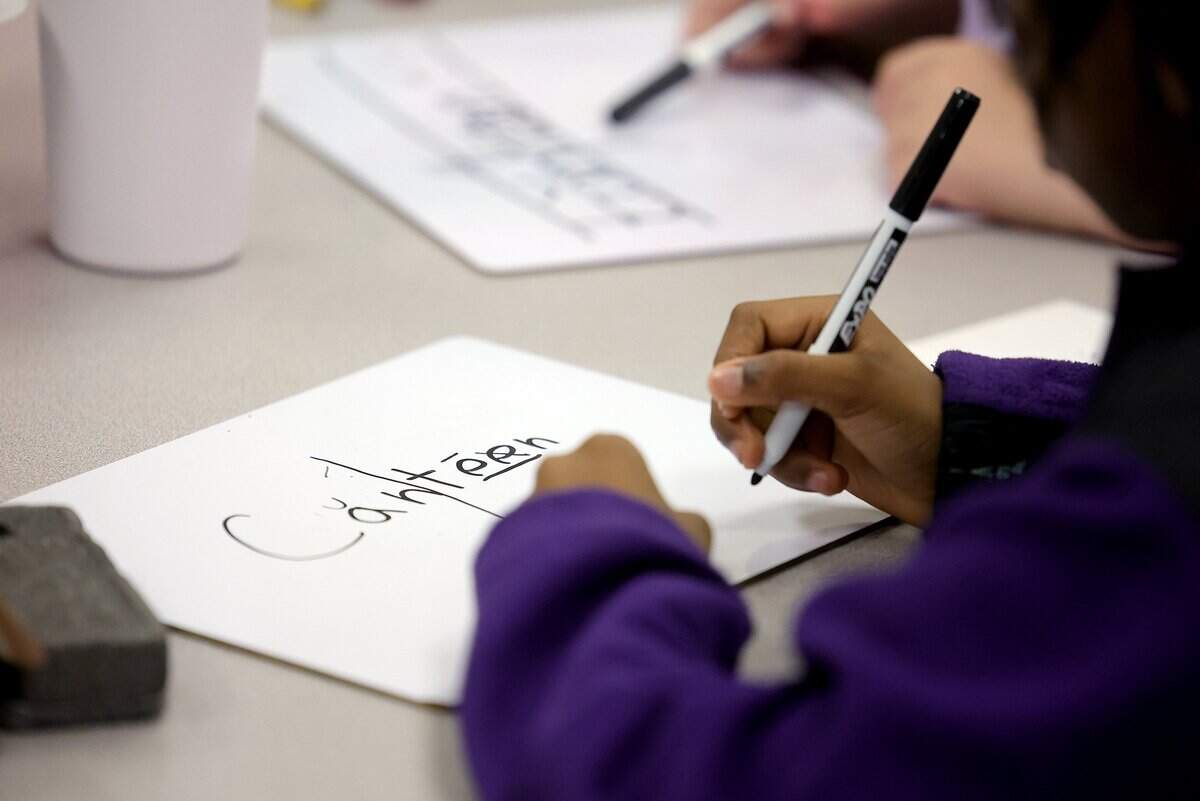 Students break down a word using the Neuhaus method during class at Starpoint School on Thursday, Sept. 17, 2026. Starpoint is a laboratory school that focuses on education for students with learning difficulties like dyslexia. Amanda McCoy FORT WORTH STAR-TELEGRAM
“You got 30 students in every class. They’re doing the best they can, but it’s like the minimum requirement,” Moore said of her son’s prior school. “When you’re doing the minimum versus going above and beyond, it just makes a huge difference.”
The access to the individualized instruction at Starpoint comes at a price. Although financial assistance is provided to almost one-third students, the tuition for the current school year is $19,460 plus a $600 supply fee.
Once students graduate out of the program and transfer to a different educational setting for middle school, the goal is to have them transition to a general education classroom.
What does the classroom, school day look like?
On a recent Thursday, Starpoint teacher Margarett Muncy facilitated a small-group intervention session, breaking down the words “canteen” and “computer” with four students in levels four and five. Each person had a small whiteboard and marker, dividing the word up into syllables and adding symbols that showed how to pronounce certain vowels and letters. After learning how to read and sound out each word, they defined what the words meant.
“Canteen. Have you heard of that word?” Muncy asked the students.
One student said they hadn’t heard of it. Another student gave the definition.
“It’s like a water bottle, and it has a hook,” the student said.
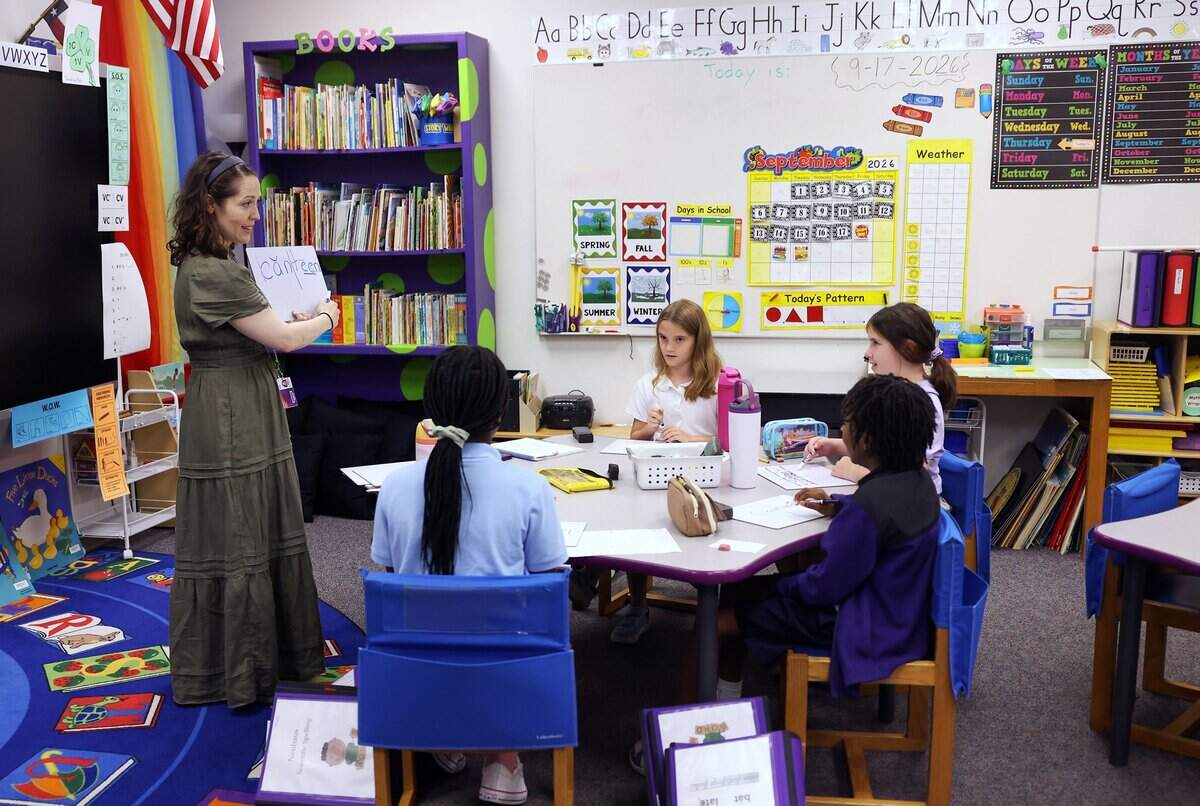 Starpoint School teacher Margarett Muncy leads a primary level class through a reading exercise on Thursday, Sept. 17, 2026. Starpoint is a laboratory school located on the campus of Texas Christian University that serves students with learning disabilities. Amanda McCoy FORT WORTH STAR-TELEGRAM
After the session, Muncy explained how breaking the words into parts and identifying the different sounds one vowel can make allows students to decode the word.
For example, the “i” in “hi” and “him” are pronounced differently. Once students identify which one makes a long sound and short sound by breaking up the word into syllables, they can sound it out. The open syllable, which ends with a vowel, gives the “hi” a long sound. The closed syllable, which ends with a consonant, gives the “him” a short sound.
“In a lot of schools, they want them to sound out the words, and we do too. But since vowels often make different sounds, those are the ones that we’ll really target,” she said. “It’s teaching them the little foundational pieces, so that then they can bridge them all together to read new words and tougher words.”
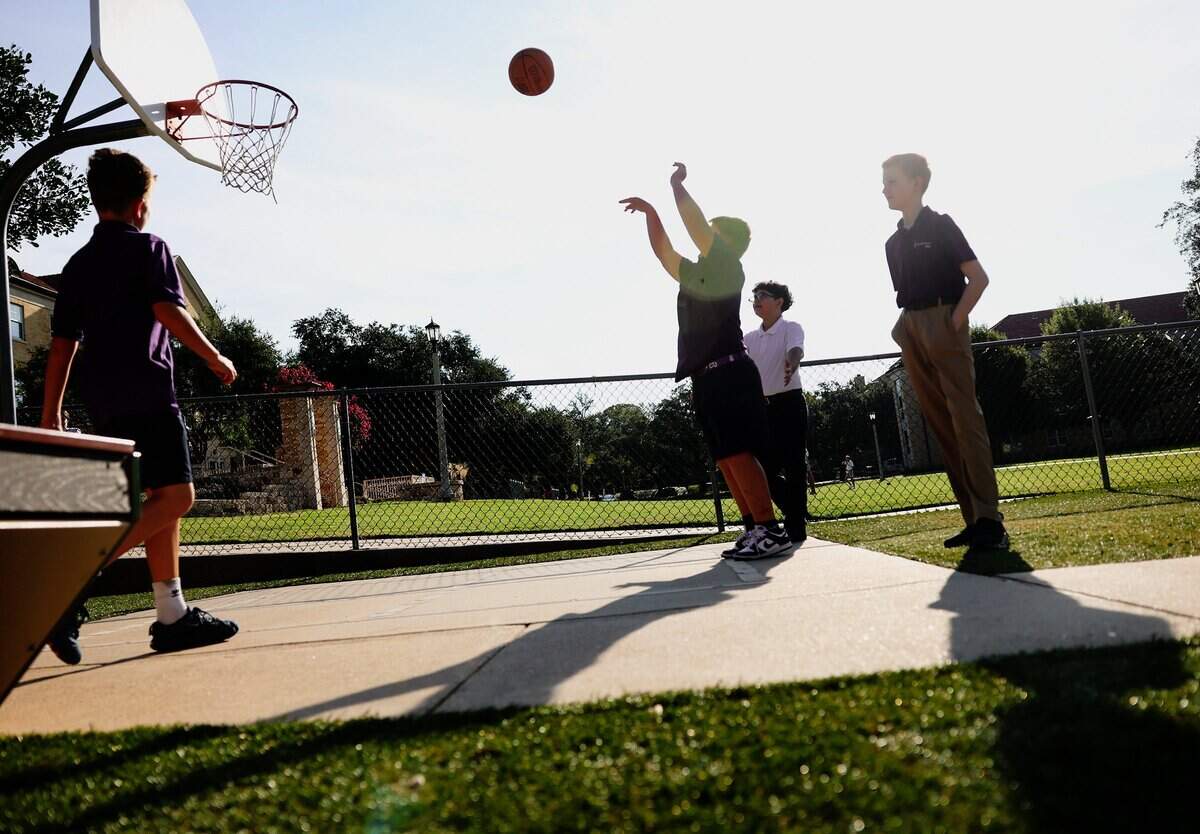 Students at Starpoint School take a brain break at the outdoor playground on Thursday, Sept. 17, 2026. Amanda McCoy FORT WORTH STAR-TELEGRAM
After the students finished their session with Muncy, they went outdoors for one of their three “brain breaks” of the day, which is provided in addition to recess. Research from TCU Professor Debbie Rhea, which included data from students at Starpoint School, shows how children perform better in school when they’re given regular, unstructured time outdoors.
The access to the outdoors and free play is another unique component of Starpoint that is typically not seen in public schools.
“The data revealed almost immediately that children’s health and learning outcomes improved when they received four outdoor breaks per day while in school,” according to TCU officials. “Creativity, socialization and concentration were improved, while bullying decreased in children and adolescents when they had this outdoor time built into their day.”
Related Stories from Fort Worth Star-Telegram
Fort Worth Star-Telegram
Lina Ruiz covers early childhood education in Tarrant County and North Texas for the Fort Worth Star-Telegram. A University of Florida graduate, she previously wrote about local government in South Florida for TCPalm and Treasure Coast Newspapers.