
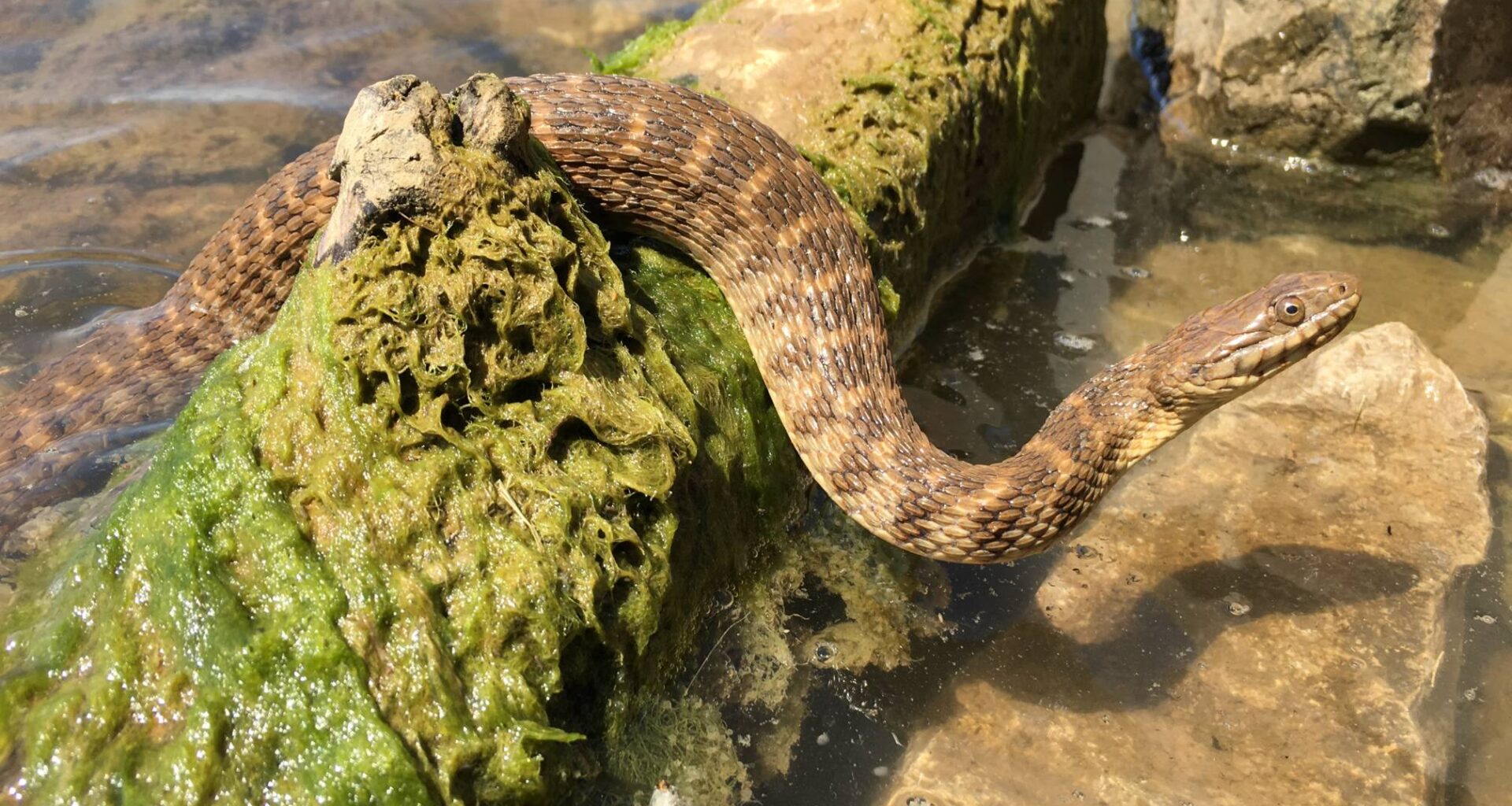
The Houston Zoo manages a protected breeding population of snakes collected from four areas. The colony could provide healthy, genetically diverse offspring for future releases. The Texas Comptroller of Public Accounts and Brazos River Authority are also contributing their expertise to the project.
Researchers will use genetic testing and health assessments to select breeding pairs and screen snakes for disease. They will identify release sites with suitable habitat, nearby populations, and connections to other populations, while accounting for human disturbance.
“We have spent the last three years sampling, tagging, and tracking snakes across over a dozen candidate release sites. Every spring and fall we assess the snakes for signs of disease, conduct habitat assessments, and run tests to examine genetic diversity and disease prevalence,” said Analisa Shields-Estrada, Ph.D., a postdoctoral researcher co-leading the project. “This data allows us to assess population health, calculate population estimates, and advise on land management decisions, all critical components to determining future release sites.”
Plans call for releasing five to 10 young snakes at each of four sites annually. Spring and fall monitoring will track survival, movement, habitat use, reproduction, and whether released snakes establish populations. The findings will guide future releases and could inform conservation efforts for other threatened reptiles and amphibians.
The project could also serve as a model for conserving threatened reptiles, amphibians, and fish with small, fragmented populations. At TXST, it will provide training in disease ecology, molecular genetics, conservation, and pathogen detection. Those skills can support careers in wildlife, agriculture, and human health.
“The long-term value of this project is that it will replace a one-size-fits-all approach with a tested, data-driven framework for recovery,” Rodriguez said.
Ultimately, the team hopes to keep the Brazos water snake moving through the waters it calls home, while preparing future scientists to protect other species.