
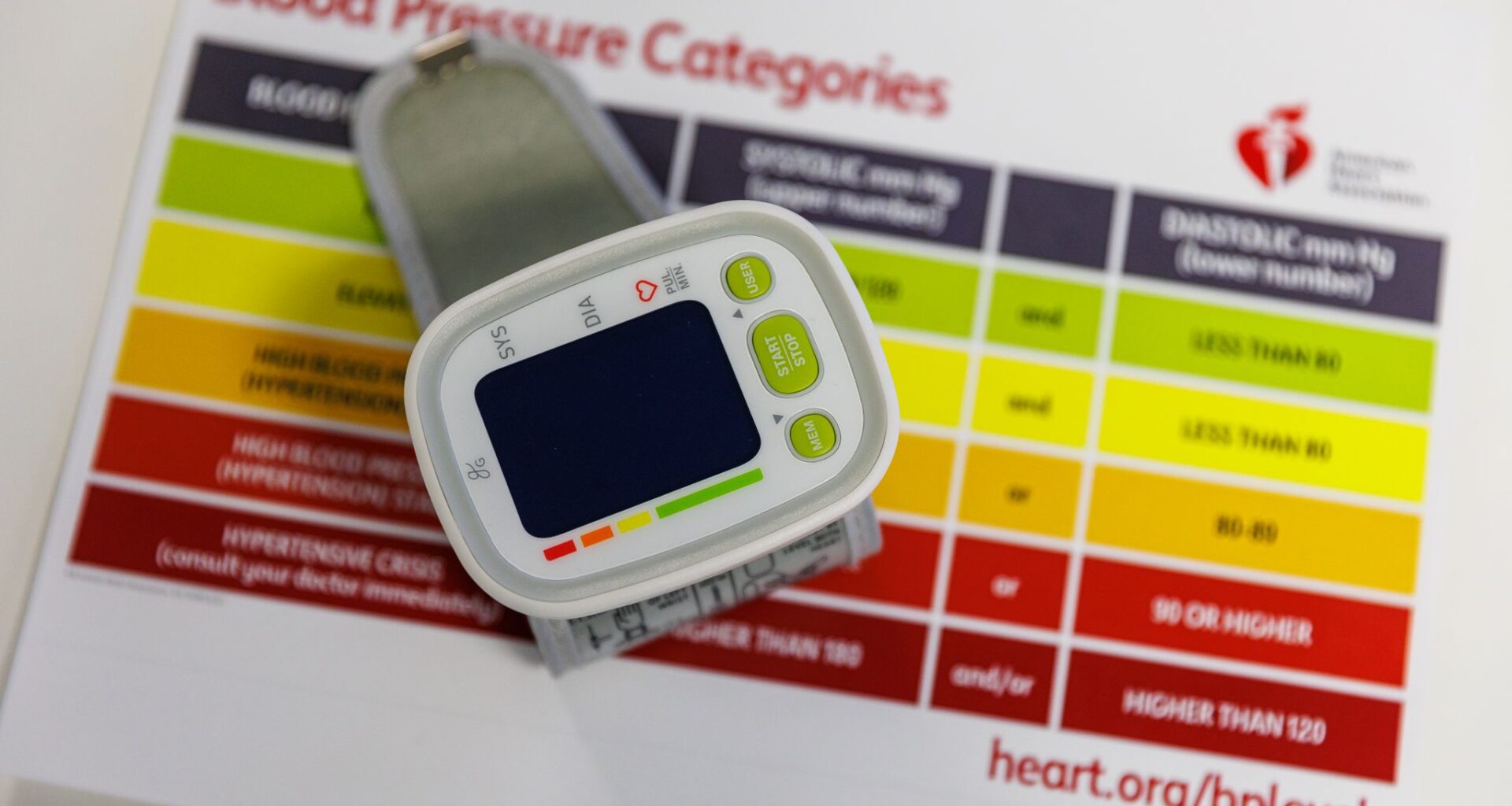
Lowering high blood pressure can improve brain health, and even a small decrease could make a difference, according to a new study from UT Health San Antonio.
Studies have long shown how high blood pressure can overwork the heart and damage arteries, putting patients at risk of heart failure. But the new research, published this month in eClinicalMedicine, identifies another way blood pressure may affect health: Lowering blood pressure is associated with a delay in the progression of cerebral small vessel disease, which is a major cause of strokes, cognitive decline, dementia and other diseases common in old age.
The study sheds light on the broad health benefits of lowering high blood pressure.
More than a third of San Antonio residents had high blood pressure in 2023 — slightly above the average for 1,200 cities across the U.S. — according to City Health Dashboard, a data portal created by New York University’s Grossman School of Medicine.
“Your blood pressure numbers today are a direct preview of your brain health tomorrow,” lead researcher Mohamad Habes said in a statement. “Small vessel disease can lead to dementia. Lower blood pressure could have a meaningful improvement in cognitive health.”
Researchers analyzed existing data from brain scans of people over the age of 50 who have high blood pressure. They looked at the force with which blood pushes against artery walls when your heart beats, also called systolic blood pressure, measured in millimeters of mercury (mmHG). Participants were given target blood pressures of less than 120 mmHG or less than 140 mmHG.
Researchers found that the participants who were assigned the lower target blood pressure saw a slower progression of cerebral small vessel disease by almost 40%.
Small vessel disease damages tiny blood vessels that deliver blood and oxygen throughout the brain. Over time, it can raise the risk of stroke, problems with memory and thinking, and dementia.
To understand how blood pressure affects the brain, the researchers examined the combined effects of different markers of brain health. These markers showed how having lower blood pressure can lead to a healthier brain, including by preventing fluid leaks, avoiding scar-like lesions and keeping a well-functioning brain waste clearing system.
Study author Sokratis Charisis created a formula to calculate the amount that a decrease in blood pressure lowers the progression of small vessel disease.
“Prior studies show the magnitude of the blood pressure decrease was important when looking at cardiovascular outcomes, like heart attack, heart failure and mortality from heart-related disease,” Charisis said in a news release. “We show there is a similar trajectory in the brain where the higher the decrease in blood pressure, the greater potential benefit to brain blood vessels.”
The analysis found that while small decreases in blood pressure can slow small vessel disease, larger reductions are linked to a greater decrease in the disease’s progression.
The authors wrote that the study warrants a follow up that includes a broader range of individuals with high blood pressure, such as people with diabetes, stroke and dementia.