
Yom Kippur is a day of fasting and prayer, but when I was growing up it was a prime opportunity for freeze tag. I’d spend the morning running through the halls of Houston’s Beth Yeshurun Synagogue, playing with my friends while our parents sat through services. Inevitably I’d drag my friends down one particularly isolated corridor to show off the names engraved above a windowless study room — the names of my great-grandparents: the Pearl and Alex Schwartz Study.
I stood there again over the summer for a rededication ceremony. Reconstruction work had finally been completed after Hurricane Harvey, and so my extended family gathered to remember and honor our patriarch. I never really knew him — he died when I was just a baby. But Alex’s story is the story of my family. In his youth, he had been studying to become a rabbi in his shtetl south of Vilnius, Lithuania. His father died of disease and his mother was killed by Cossacks, so he decided to make the long journey to America and reunite with his brother in Galveston. And thank goodness for that. He joined the military during World War I, ran a local soda bottling company and, along the way, contributed to Houston’s growing Jewish community — notably serving as a foundational member of Beth Yeshurun, which would go on to become one of the largest Conservative synagogues in the United States.
He also happened to be something of an amateur poet. And, for the first time in my 40 years, I got to read some of my great-grandfather’s poetry at the rededication ceremony. He wrote rhyming stanzas to celebrate family weddings, bar mitzvahs and — the one that I keep thinking about — a poem about how the Jewish community needs to stand united against antisemitism.
“It makes no difference what you do,
Because to them you are only a Jew.
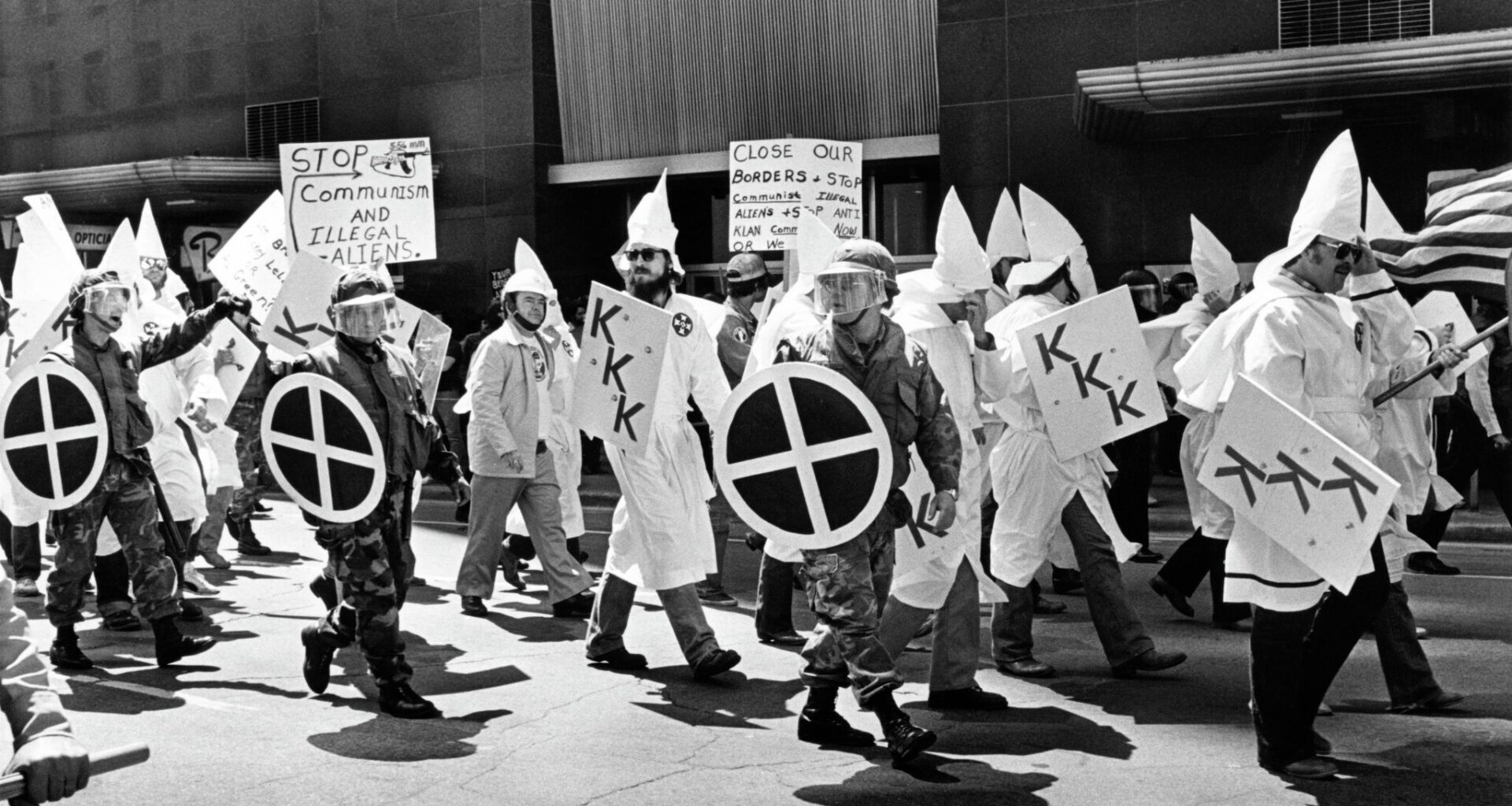
The Ku-Klux-Klan make no distinction,
All Jews they would bring to extinction.”
His message was that, no matter how observant or secular you may be, no matter how successful or wealthy, all Jews end up as targets of the same loathsome antisemites. There is no reason behind their hatred — and no way for an individual to cleverly elude it. We’re all in it together.
I remain struck by the similarity to Martin Niemöller’s famous “First They Came” poem, except Alex’s version is, well, kind of cute. And maybe even a little silly.
“You may eat only kosher meals
Or like meat from the animal that squeals,
Whether you belong to the Zionists
Or you are friendly with communists
Remember, you are a Jew — We are all Jews.”
We’re seeing this dynamic play out today, and not just for the Jewish community. The sad reality is that, ironically, hatred does not discriminate. Generations of integration — or even brazen obsequiousness — pose little obstacle to dedicated hatemongers.
No amount of burnt orange or cowboy hats stopped Bo French from hating on South Asian students at the University of Texas and viewing second-generation Texans as foreigners.
Muslim Republicans found that partisan alignment didn’t protect them from being booted out of the state GOP convention.
Even Catholic institutions have been targeted by the state in a politicized witch hunt against efforts to aid refugees and other immigrants.
Now more than ever we could use that sense of solidarity — not just for Jews, but for so many Houstonians who have become targets of hatred. We’re seeing the political mainstreaming of explicit bigotry that had until recently been quarantined to the shadowy corners of U.S. society, and only by standing together and unifying across cultural and political divides will we be able to put it back where it belongs. The sheer fact that we all live in Houston means we have more that unites us than divides us, and sometimes we need to be reminded of that unity.
So in that spirit, let me offer a few additional lines to my great-grandfather’s poem.
Whether you enjoy bagels and lox
Or follow a Pope who cheers, “Go White Sox!”
Maybe you built a big statue for Hanuman
Or fast all day when it’s Ramadan
Remember, you are a Houstonian — We are all Houstonians.