
Published on September 21, 2026
By the Office of Communication
In recognition of National Drive Electric Month, the City of Arlington is celebrating the growth of its municipal electric vehicle (EV) fleet and highlighting ongoing regional initiatives to support cleaner air across North Texas.
National Drive Electric Month is a nationwide initiative led by Plug In America in collaboration with national and local partners to raise awareness about the benefits of all-electric and plug-in hybrid vehicles. The annual campaign aims to accelerate the transition to sustainable transportation by giving individuals hands-on experience with electric vehicles (EVs) and demonstrating how electrified mobility easily integrates into everyday life.
Arlington’s EV Fleet
Expanding electric vehicle fleets is a critical focus for major Texas metro regions—including Dallas-Fort Worth-Arlington—that face long-standing EPA ground-level ozone nonattainment statuses. Because electric vehicles generate zero tailpipe emissions, increasing their use directly reduces the pollutants that contribute to ground-level ozone formation, protecting public health and improving regional air quality.
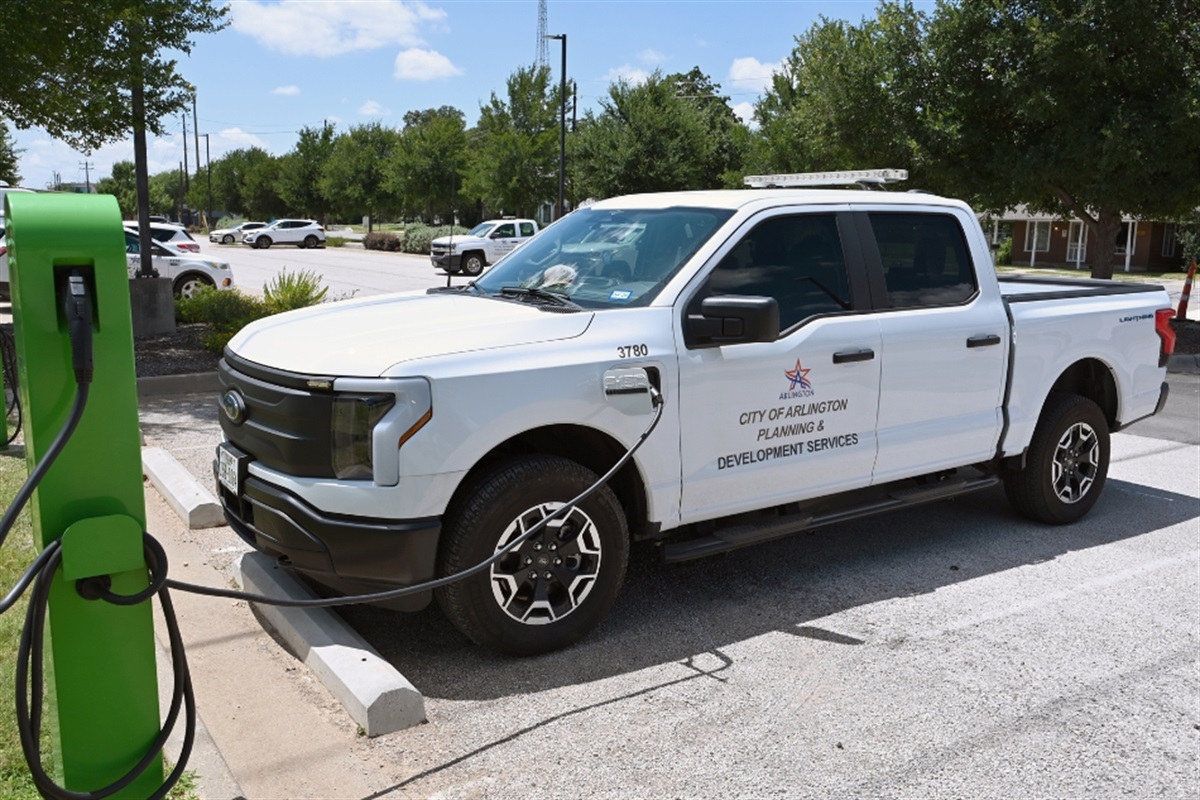
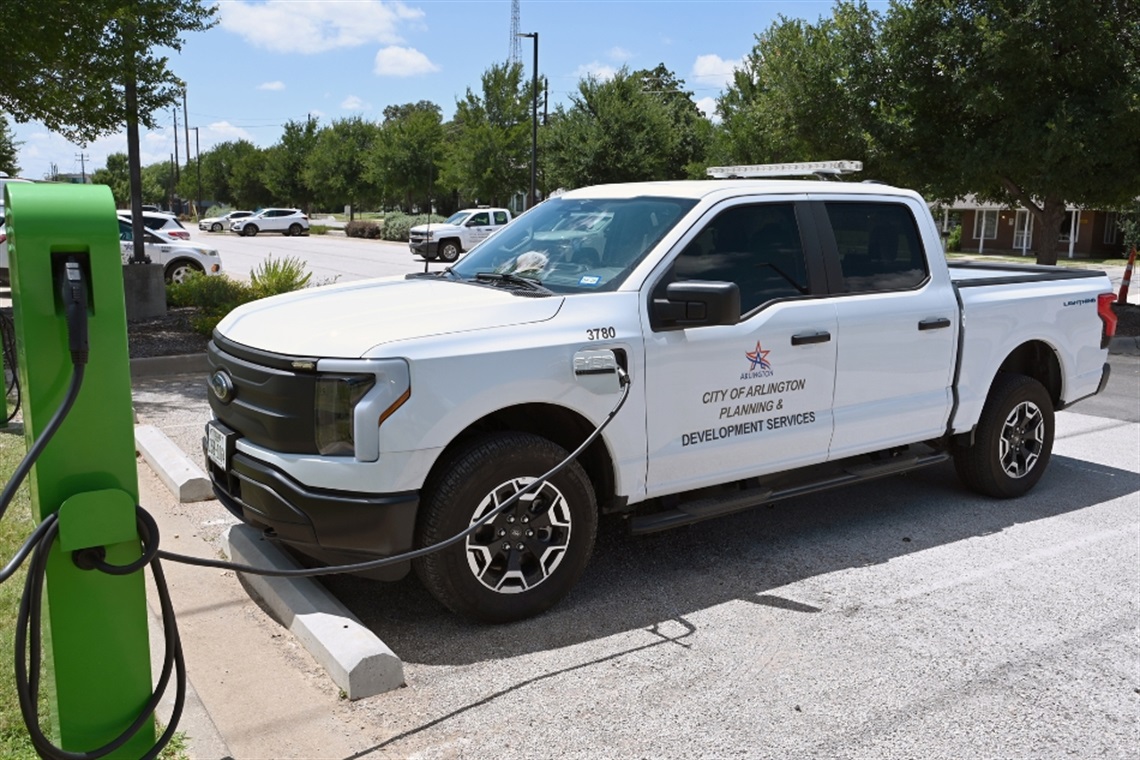
Leading by example, the City of Arlington currently operates 14 all-electric vehicles across multiple city departments. The growing municipal fleet includes models designed for both general service and field operations, such as the Chevy Bolt, Chevy Equinox and Ford F-150 Lightning.
Leadership in EV Readiness
Arlington’s proactive approach to infrastructure supporting electric vehicles gained national recognition when it became the first municipality in both Texas and the southern half of the continental United States to earn the prestigious Charging Smart Bronze Designation. The designation recognizes local government policies that streamline public and private charging installations, lower soft costs, and build a robust foundation for community-wide EV adoption.
To receive the Charging Smart Bronze designation, Arlington completed a series of actions that reduce barriers to EV adoption and make it easier, faster, and more affordable for residents and businesses to install EV infrastructure. At a minimum, Bronze designees must standardize permitting processes, review zoning codes, and collaborate with utility providers.
Arlington exceeded those requirements by documenting numerous additional accomplishments, including:
Planning: Developing a community-wide EV vision.
Regulation: Reviewing zoning ordinances to identify restrictions on EV charging infrastructure; adopting a standard permit application process for both residential and nonresidential EV charging; creating and publishing permitting checklists; and enabling online permit submission with electronic signatures.
Utility Engagement: Hosting coordination meetings with utility providers to explore future EV infrastructure and collaboration.
Education & Incentives: Launching a dedicated EV resource page on the City’s website; promoting available City and utility programs; and sharing digital tools that help users locate charging stations in the area.
Government Operations: Electrifying at least one light-duty municipal vehicle and training public safety personnel on EV-related emergency response procedures.
Shared Mobility: Partnering with the local transit operator to assess and adopt goals for transitioning to electric transit and paratransit services.
How EV Drivers Can Support Clean Air
Residents looking to monitor daily air quality and contribute to cleaner air in North Texas are encouraged to visit Air North Texas to sign up for ozone alerts. Here are some suggested steps EV drivers can take to help reduce emissions.
Charge Off-Peak (Overnight): Charging an EV during off-peak hours (typically late at night) reduces strain on the electric grid and utilizes electricity when clean, renewable energy sources—like Texas wind energy—are generating at their highest capacity.
Charge Smart on High-Ozone Days: On “Ozone Action Days,” high temperatures convert emissions into ground-level ozone faster. Charging your vehicle during cooler evening or nighttime hours helps minimize energy demand during peak heat periods.
Maintain Smooth Driving Habits: Even though EVs produce zero direct tailpipe emissions, aggressive driving uses more battery power, increasing how often you need to recharge. Smooth acceleration and utilizing regenerative braking help maximize battery efficiency and reduce power plant demand.
Keep Tires Properly Inflated: Low tire pressure creates rolling resistance, which forces your EV engine to use more power per mile. Maintaining correct tire pressure prolongs range and minimizes overall energy consumption.