
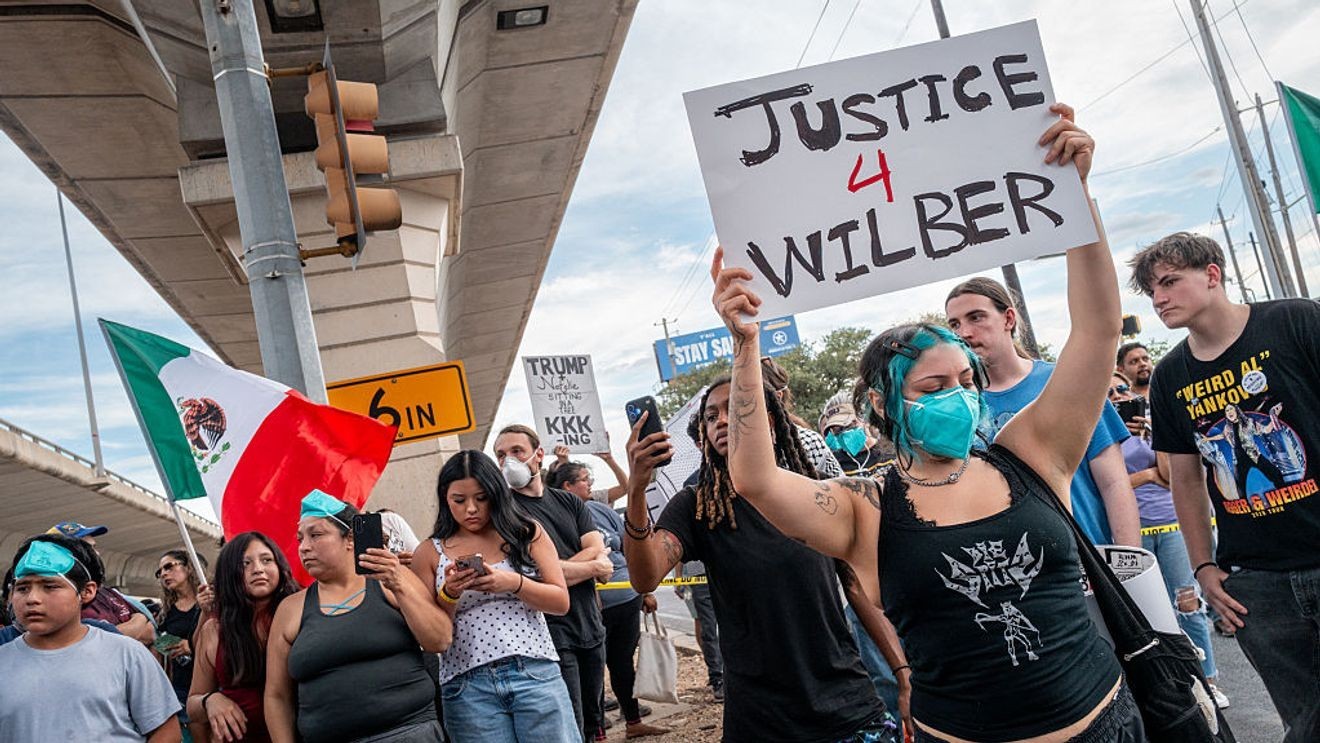
The shooting of a Venezuelan man by a U.S. Immigration and Customs Enforcement agent in Austin is intensifying debate over federal immigration enforcement, public safety and cooperation between local authorities and ICE.
An ICE agent shot and wounded 28-year-old Wilber Rafael Garces Perez in North Austin on Sunday. Austin Police Chief Lisa Davis said the shooting followed a traffic stop and foot pursuit, but stressed during an initial news conference that authorities had few details about what led to the use of force. Austin police were not involved in the federal operation.
Garces Perez was hospitalized in serious but stable condition before being transferred to federal custody. A law enforcement source told NBC that the Venezuelan national was in the country illegally and had a final order of removal. His attorney, however, has disputed the government’s characterization of his immigration history, saying he entered the country legally and had a valid work permit.
Former Chicago Police Superintendent and veteran FBI Special Agent in Charge Jody Weis joined The National News Desk to discuss the incident and the response from local officials.
Weis sharply criticized Austin leaders for speaking publicly about ICE while many of the circumstances surrounding the shooting remained unknown.
“My first reaction was disgusted, but I shouldn’t be surprised,” Weis said. “The question is, why would you hold a press conference when you have zero facts regarding the officer-involved shooting?”
Austin Mayor Kirk Watson said during Sunday’s news conference that he was “very angry” about what happened and called for local authorities to have a role in the investigation, arguing Austin police could provide “clear, third-party eyes.” Watson said residents have a right to feel safe and that an independent investigation would help establish credibility.
Weis argued the response from local leaders risked undermining ICE before investigators had established what happened.
“The whole purpose of that presser was to vilify ICE, to make them seem like a non-legitimate law enforcement agency,” Weis said.
Weis also criticized rhetoric questioning ICE’s legitimacy, arguing it could have consequences for federal agents conducting operations in already volatile environments.
“It tells the public you don’t have to listen to ICE. They’re not a legitimate law enforcement agency,” Weis said. “When this rhetoric goes out, it tells the public these guys aren’t legit. You don’t have to obey them. Run from them. They’re like criminals.”
Protesters gathered near the scene in the hours following the shooting, with reports putting the crowd at roughly 100 people. Demonstrators criticized ICE and called for the agency to leave Austin. Authorities eventually cleared the intersection, and Texas officials said pepper-ball bursts and projectiles were used during the response. At least four people were arrested, according to state and local authorities.
Weis said he believes investigators should look into how the protest mobilized so quickly.
“They’ve got to find out who is organizing this stuff and where is the money coming from,” Weis said. “This was an organized response. You had signs already made.”
The shooting has also renewed discussion about cooperation between local law enforcement and federal immigration authorities.
Weis argued that closer cooperation could allow ICE to take people into custody in more controlled settings, including jails and prisons, rather than requiring agents to locate them in public.
“If they truly cared about their citizens, that’s how they would handle things,” Weis said. “They’d cooperate with ICE. They would have people picked up inside jails, inside prisons.”
He argued that local officers could also assist federal agents during operations in the community by keeping demonstrators and other members of the public away from enforcement activity.
“If they did have to do operations outside, you would have the local officers working with ICE to make sure that the protesters and agitators are out of the way so that ICE can do their job,” Weis said.
Sanctuary policies vary significantly by jurisdiction but generally limit some forms of local participation in federal civil immigration enforcement. Supporters say such limits can preserve trust between immigrant communities and local police, while critics argue they can force ICE agents to make arrests in less-controlled public settings.
Weis said a lack of cooperation can increase the potential for dangerous encounters.
“People get hurt. People can get killed because without that cooperation, ICE has to go out, work on the streets and find these individuals,” Weis said.
Weis also cited the scale of ICE enforcement to argue that shootings represent a small fraction of encounters between agents and people targeted for immigration enforcement.
“Now, that’s tragic when anyone is killed,” Weis said. “But again, if you had cooperation, that really limits the interaction with the public. And that, of course, keeps everybody safe.”
Questions remain about exactly what happened before the ICE agent opened fire. Garces Perez has provided an account through his attorney that differs from some of the initial descriptions of the incident, saying he was making a DoorDash delivery when an unmarked vehicle struck his car and that he was attempting to pull over. His attorney is seeking his release from federal custody.
The shooting remains under investigation.