
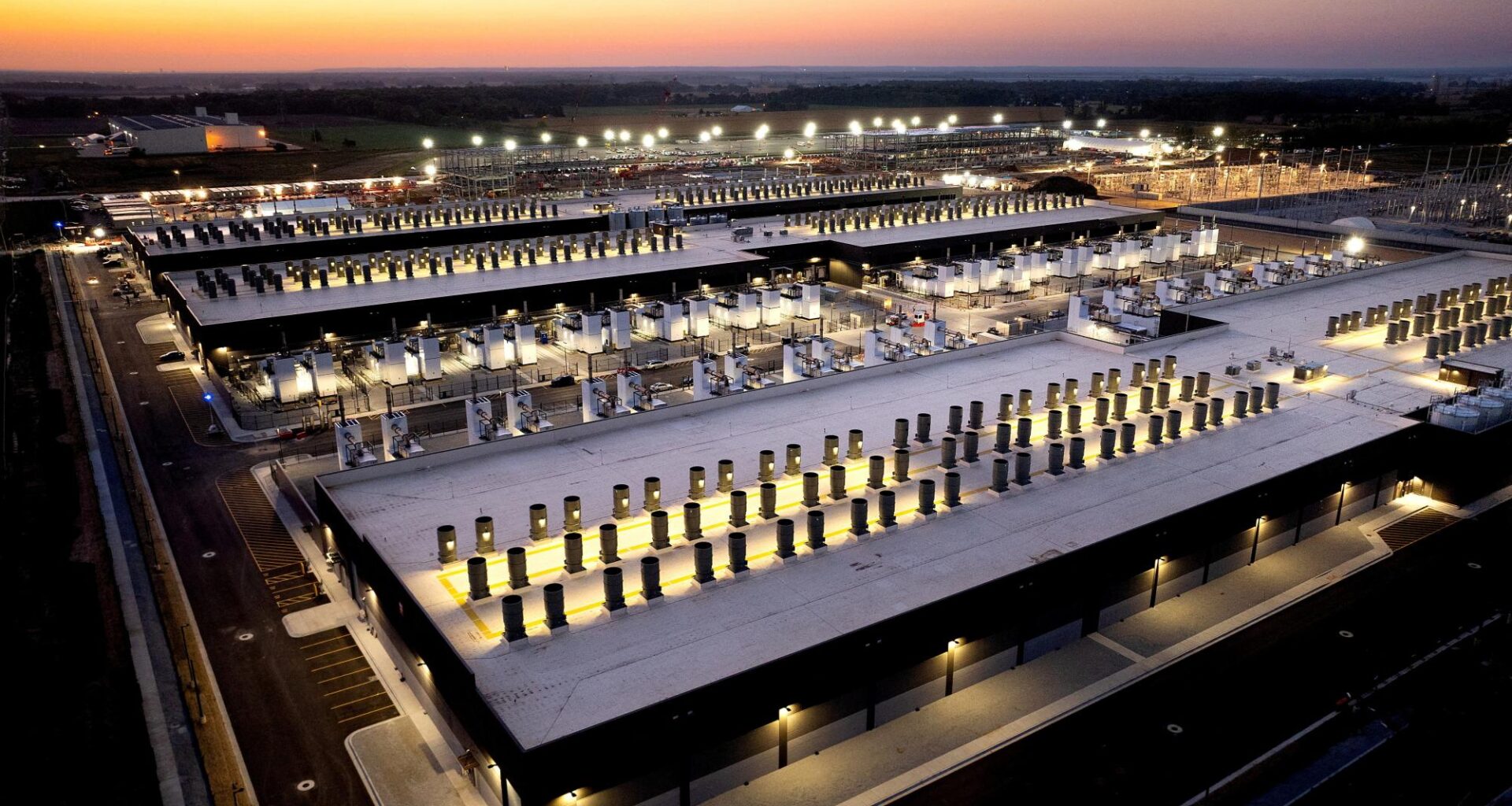
The city of Fort Worth is taking a closer look at the development of data centers as concerns grow over how they might affect neighborhoods, local land and water.
On Aug. 11, the city began considering a 90-day moratorium on the construction of new data centers while they study and prepare for possible regulations.
The demand for supporting artificial intelligence and cloud storage has been rising over the past months. North Texas has attracted new investors because of its large amounts of developable land and strong fiber-optic infrastructure.
There are currently four data center developments operating in Fort Worth: Meta Fort Worth Data Center, QTS Data Centers, TierPoint and Centersquare Data Centers. One additional facility is under construction, and four more are proposed within the city.
While these facilities are becoming more common, many people do not know what a data center is or why it requires so much land, water, and electricity.
Data centers are large buildings filled with computers that serve, store, process, and send information. They support everyday services such as cloud storage, video streaming, social media and artificial intelligence.
Those servers operate continuously and generate large amounts of heat, requiring extensive cooling systems to prevent overheating. Many large centers use water-based cooling systems as they can efficiently remove heat in highly dense systems.
 Cables sit inside a data center in Wisconsin, U.S., September 18, 2025. REUTERS/Audrey Richardson (REUTERS/via SNO Sites/Audrey Richardson)
Depending on their size and cooling system, data centers can use hundreds of thousands to several million gallons of water per day. According to the Environmental and Energy Study Institute (EESI), large facilities use up to 5 million gallons daily. That is equivalent to the daily water use of a 30,000-person town.
Electricity is one of the most important elements of a data center because it is the only thing that allows it to operate. A 20-megawatt data center uses 480,000 kilowatt-hours of electricity a day. According to U.S. Energy Information Administration household-use data, that is enough electricity to power 16,550 average U.S. homes for one day.
Data center development can also require large amounts of land. The average land transaction reached about 224 acres in 2024, according to Cushman & Wakefield. The price per acre reached an average of $244,000, although costs vary significantly depending on location and access to electricity and fiber optics.
Those demands have become a growing concern for some North Texas residents.
A fifth major project, Circle T, is proposed nearby in Westlake and has faced opposition from nearby residents. Some Keller residents have raised concerns about how close the development would be to their homes.
Tarrant County Commissioner Matt Krause said he asked residents whether measures such as supplying separate energy and water and reducing noise would ease their concerns.
“They still did not want one of these centers 506 feet from their residential neighborhood,” Krause said.
On Sept. 8, Krause held a town hall for residents to speak about their concerns surrounding the growth of data centers.
“It turned out to be really good, really good attendance,” Krause said.
Many residents expressed that they were not opposed to the construction but did not want these facilities near their homes and could possibly negatively impact their quality of life.
“Everybody said, ‘We understand the need for them. We understand why we have to have them. but there has to be some kind of guardrails put into place for these things,’” said Krause.
The Fort Worth Data Center and Infrastructure Commission (DCIC) is expected to report its recommendations to the city council on Nov. 3. A public hearing on the proposed moratorium is scheduled for 6 p.m. Nov. 10 at Fort Worth City Hall.
Krause encouraged residents on both sides of the issue to contact their elected officials.
“Go to your elected officials and make your voice heard,” Krause said. “Because at the end of the day, elected officials work for you. You don’t work for them and they need to hear from you on these important topics.”