
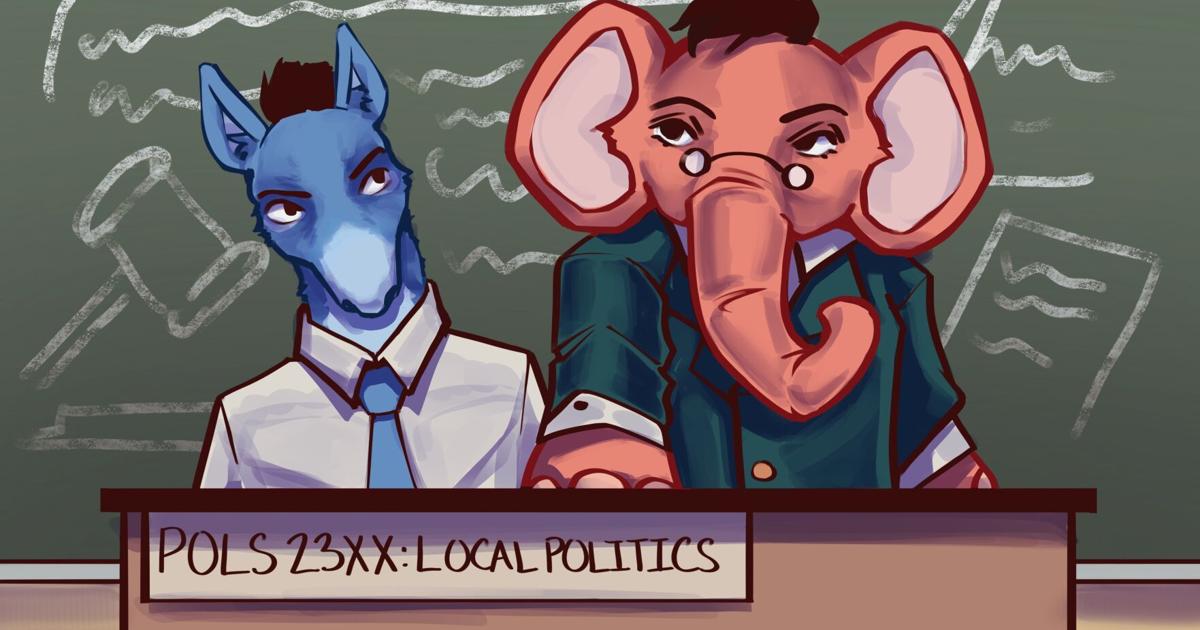

Students typically have a lot on their minds throughout the week with class assignments, projects and social plans. Still, political literacy needs to be a priority, especially with local and state elections around the corner.
Politics tend to be a touchy subject among students. Whether or not they have the same views and values as the majority, it has become improper for political ideas to be voiced in group settings.
The Shorthorn Editorial Board believes that with the upcoming midterm election on Nov. 3, understanding the current political climate and the election’s possible outcomes is essential for domestic and international students.
For the 2024 presidential election, there was an almost 5% drop in 18- to 24-year-old voter turnout compared to the 2020 presidential election, according to Statista.
The 43.9% turnout in the 2024 election followed a trend of college-aged students being the lowest age bracket turnout in presidential elections since 1964, according to Statista.
This percentage drops significantly when looking at local elections.
According to the Tarrant County Elections Department website, around 81.6% of the voting-age population, or 1.3 million people, is registered to vote in the upcoming election. Out of that number, almost 11% of them are college-aged voters.
One reason for the small percentage of voter registration and turnout could be a lack of political education, which can discourage students from voting altogether.
This is evident for both domestic and international students as they navigate the city’s political climate.
Being unable to cast a ballot does not mean students won’t feel the consequences.
International students are affected differently by changes in immigration policy, visa regulations, travel restrictions and federal decisions concerning higher education.
Political decisions that might seem unrelated to students can limit international students’ ability to leave the country, maintain their immigration status, transfer schools or remain in the U.S. after graduation.
In August of last year, The Texas Tribune reported on the possibility of a dramatic drop in international student enrollment at universities like UTA due to federal and state legislation.
One such piece of legislation was a June 2025 proclamation by President Donald Trump titled “Restricting the entry of foreign nationals to protect the United States from foreign terrorists and other national security and public safety threats.”
The proclamation further restricted international travel within the United States as an attempt to “protect its citizens from terrorist attacks and other national security or public-safety threats,” according to the proclamation.
Legislation on higher education has been implemented as well, with student F-1 visa stay limits introduced by the Department of Homeland Security in July.
At a Glance
The Issue: People might not see the importance of educating themselves during local election cycles.
We Think: Understanding local elections can help students prepare for the effects the results can have on daily life.
Take Action: People should educate themselves on political issues that might affect them, even if they can’t vote themselves.
The amendment looks to limit nonimmigrant student and exchange visitor visas to four years and reduce the time allowed for departure, transfer of schools or change of status following graduation from 60 days to 30, according to a department press release.
The change sparked a lot of questions for students enrolled under existing visas, adding more stress to the already tense environment of higher education.
The executive order prompted UTA to create a special task force to help international students navigate the change, according to previous Shorthorn reporting.
Increased scrutiny on immigration by local and federal governments can further affect the community and international students at UTA.
Students deserve to understand how election results will affect their communities, educations and futures. They should have the opportunity to prepare themselves for potential negative outcomes.
Students, whether eligible to vote or not, should take the time to educate themselves on the candidates, their backgrounds, reasons for running and plans when in office, and how their policies might affect people in the future.
One way students can do this is by going to nonpartisan voter guide sites such as:
BallotpediaNonprofit VOTEFactCheck.orgGuides.VoteLeague of Women Voters of TexasUnite America InstituteVote Smart
According to Vote411, an election information site run by The League of Women Voters of Texas, students can print a guide as a reference when they go to vote. While phones and tablets are prohibited in Texas voting booths, printed guides are allowed.
Students can also follow local, Texas-based or national nonpartisan news sites such as The Texas Tribune, Fort Worth Report, The Dallas Morning News and NPR.
Students should also search for ways to stay informed on political issues relevant to their daily lives, whether it’s listening to a podcast like The NPR Politics Podcast, reading news from credible publications on social media or subscribing to a politics newsletter.
While staying informed, students should look into the mission or about page of a news source. This is typically where the news company will list whether they are nonpartisan or partisan, what their affiliation may be and what information they look to provide their readership.
Students, even without a ballot, are members of the communities they live in, and staying informed can give them a sense of belonging and a deeper understanding of the issues shaping the place they call home while they study at UTA.
The Shorthorn Editorial Board is made up of opinion editor Noah Little, managing editor Leslie Orozco, news editor James Ward, engagement editor Sairam Marupudi, design editor Ryleigh Hood, copy editors Adwita Kunte and Isabella Moreno, photographer General Mason Starks, and news reporters Gabrielle Jankowski and Xioany Collazo. Starks was not present for the conversation.