
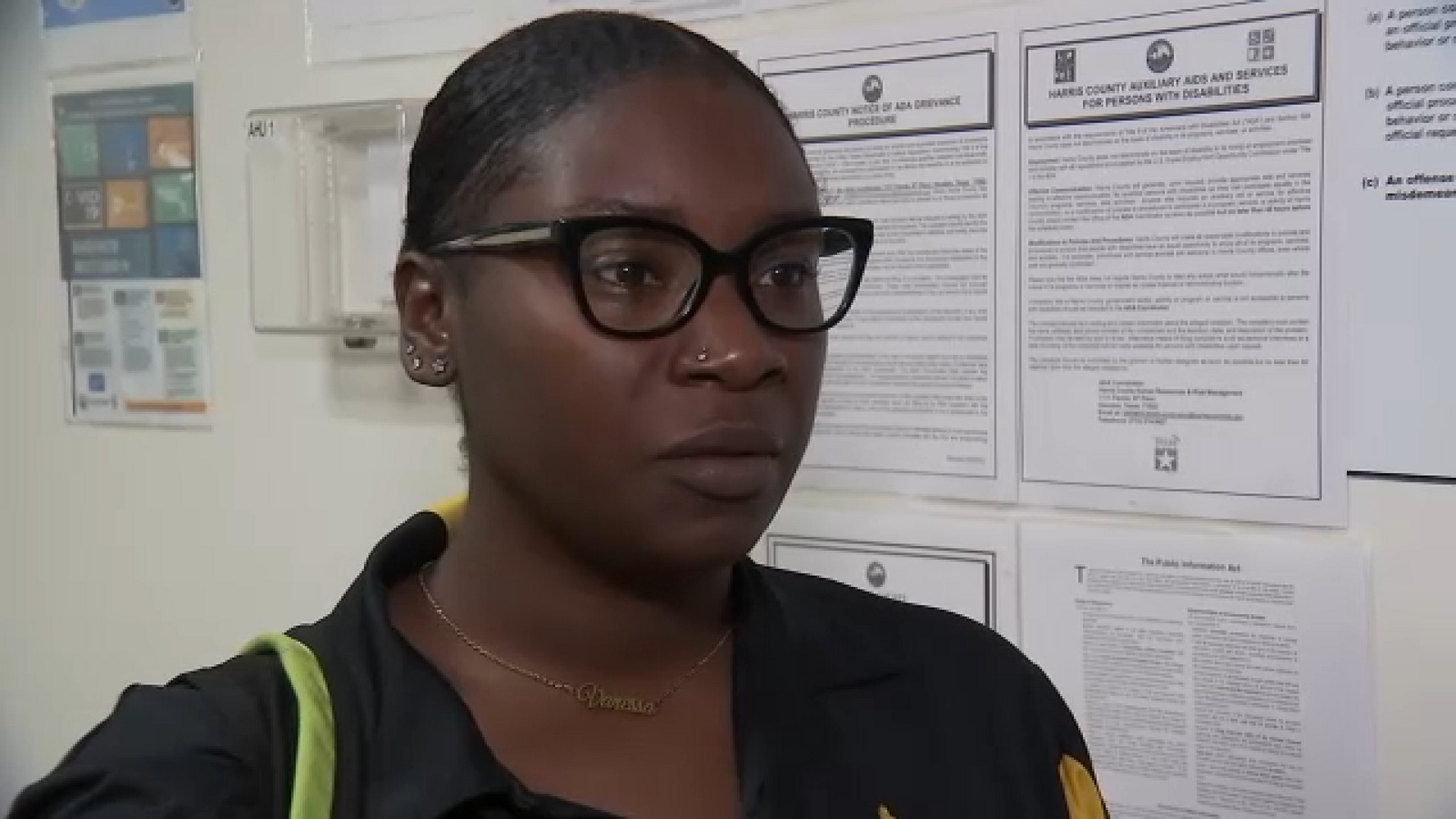
HARRIS COUNTY, Texas (KTRK) — For many, falling behind on rent can happen quickly. It can involve losing a job, an unexpected illness, or simply trying to keep up with rising everyday expenses.
Once that happens, an eviction notice may not be far behind.
In Harris County alone, more than 75,000 eviction filings were made last year, according to a recent Rice University Kinder Institute report.
RELATED: Parts of Houston and Harris County have eviction filing rates 3 times county average, data shows
ABC13 went to the courtroom at Harris County Precinct 7, Place 1 to hear some eviction cases.
One person after another walked into court for their eviction hearing.
Among those who showed up was Vanessa Crowe.
“I did come here for an eviction hearing today,” Crowe said. “I am past due on my balance. I came here looking for a little bit of assistance for legal help.”
Crowe said she fell behind while trying to manage life as a single mother and college student.
“I just started childcare and that alone by myself paying for it. That’s expensive,” Crowe said.
She walked into court unsure of what would happen next, and she was far from the only one.
According to a 2024 map by the Kinder Institute, the highest concentrations of eviction filings were in the northern suburbs and south Houston. Some of those areas saw eviction notices involving 30% of renters, roughly three times the county average.
In the MacGregor neighborhood, where Crowe said she lives, 14.5% of renters faced eviction.
Inside the Precinct 7, Place 1 courtroom, Judge Wanda Adams comes face to face with those cases.
“We had an average maybe when I first got here, we probably average in a given day, maybe about 20 to 25,” Judge Adams said. “Then it started growing. I think one day they came and they told me, ‘Judge, you have 100 or so evictions on your docket.'”
Adams said those cases often involve people dealing with a sudden setback.
“The majority of the evictions that I see now are because people have lost jobs or there’s been a death in the family,” Judge Adams said.
Crowe’s case was one of them. But Crowe said there was a moment when she considered not coming to court at all.
She says she didn’t believe showing up would change the outcome. However, it did.
Crowe said she was connected with legal help and rental assistance, which gave her the chance to get current on what she owed.
Ultimately, the courtroom she feared could mean losing her home became the place where she found a path to stay because she showed up.
“I’m so grateful that I was able to get the assistance that I need and have a reset and be able to get back up on my feet,” Crowe said.
Copyright © 2026 KTRK-TV. All Rights Reserved.