
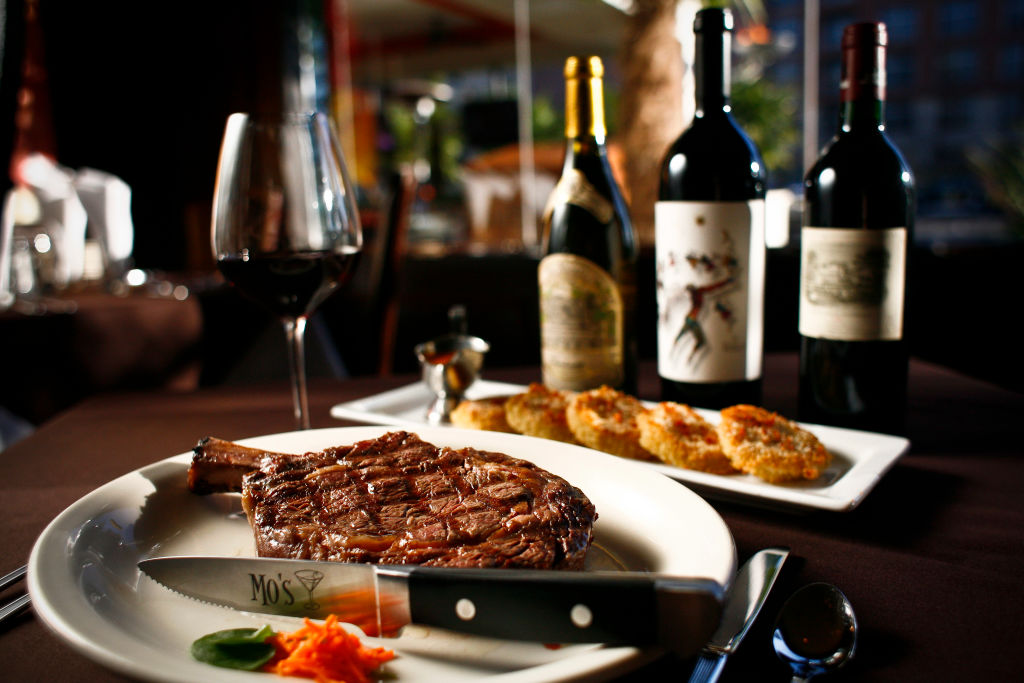
The Texas Ethics Commission is considering a proposal that would raise how much can be spent on meals and expenses before publicly identifying the official.
Houston Chronicle/Hearst Newspap/Houston Chronicle via Getty Imag
Texas lobbyists could soon get more room to wine and dine state officials before having to publicly name who benefited.

The Texas Ethics Commission was initially set to meet Wednesday to consider raising the legislative per diem from $221 to $290.40, according to the commission’s public meeting packet. Texas Scorecard first reported that the change would also raise the amount lobbyists can spend on meals and other expenses before triggering detailed disclosure requirements.
Article continues below this ad
TEC decided Wednesday to table the proposal but it’s unclear when that will be.
What’s at stake?
The proposal also would raise a separate lobbyist threshold for gifts, awards and mementos from $110 to $120, according to the commission packet.
Texas Scorecard also noted the per diem increase would give lawmakers an additional $9,716 during a 140-day regular legislative session. At the current $221 rate, lawmakers receive $30,940 during a regular session. At $290.40, that would increase to $40,656, according to Texas Scorecard’s calculation.
Article continues below this ad
How lobbying law works
Under the Texas Ethics Commission’s lobbying guide, registered lobbyists must identify the person who benefited when they spend more than $132.60 in one day on food and beverages, transportation or lodging for a state officer or employee. The guide says that threshold is 60 percent of the legislative per diem.
The Texas Ethics Commission is considering a proposal that would raise how much can be spent on meals and expenses before publicly identifying the official. (Photo by AaronP/Bauer-Griffin/GC Images)
AaronP/Bauer-Griffin/GC Images
If the per diem increases to $290.40, that detailed reporting threshold would rise to $174.24.
Article continues below this ad
Charles D. Adams, a Houston-based attorney and former judge, told Chron the per diem increase itself is not the part that bothers him.
“I don’t have any issue with them increasing their per diem,” Adams said. “What confuses me is why they are; it seems that they’re pretending that that necessarily has to increase how much dark money lobbyists can insert into the process.”
Texas law does not ban registered lobbyists from buying food or beverages for state officers or employees. The Ethics Commission guide says a lobbyist may provide food or beverages only if the lobbyist is present at the event, with limited exceptions for lower-value food or beverages sent outside the Capitol Complex. The guide also says there is no monetary limit on what a registered lobbyist may spend on food or beverages.
Adams said the proposal raises two separate questions: whether lawmakers should get more money for session expenses, and whether lobbyist spending thresholds should rise with it.
Article continues below this ad
“They could say, ‘yes, we’re gonna increase the per diem, but we’re not gonna allow lobbyists to spend more money on us without reporting it,'” Adams said. “They don’t have to allow lobbyists at all to buy them meals. And in fact, they shouldn’t.”
How is lobbying different from bribery?
The broader issue is why this can feel so strange to people outside the Capitol. Lobbying is legal and involves trying to influence policy or legislation, while bribery is illegal and involves offering money or favors to get someone to act in the giver’s interest, according to Investopedia’s explainer.

Stay informed, and entertained.
By signing up, you agree to our Terms Of Use and acknowledge that your information will be used as described in our Privacy Policy.
The Texas Ethics Commission guide draws the legal line around exchange. It says Texas bribery law bars offering or accepting a benefit “as consideration for a decision, opinion, recommendation, vote, or other exercise of discretion” by a public servant.
Article continues below this ad
“What we want is our politicians and our public service to be held to a higher standard than American citizens than a lower one,” Adams said. “And of course, that’s not the case. And this just makes it easier for the bad guys.”
If approved, the proposed rule would take effect Jan. 1, 2027.