
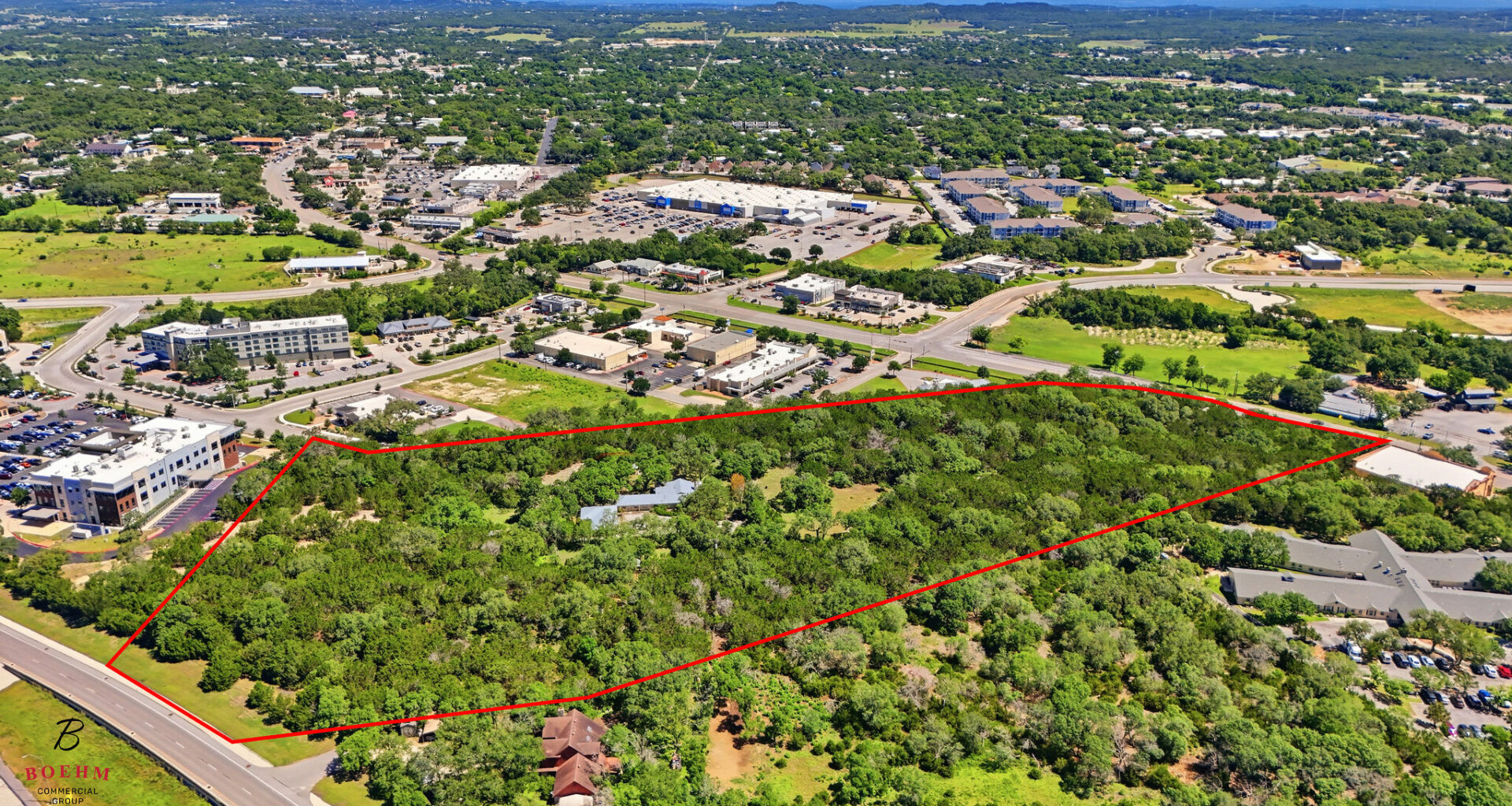
Builders said at a September 23, 2026, meeting that the outskirts of San Antonio, toward Castroville, Seguin, and other areas, are seeing the most development as of September 2026. The challenge is typically whether there is enough surrounding infrastructure to accommodate it.
Courtesy of PR Newswire
The San Antonio region is seeing immense love from relocators, with a recent study naming the city the top destination for Generation Z movers. Local builders are noticing a similar growth trend and are offering a more detailed look at where it’s headed.

Industry leaders spoke at a “Constructing San Antonio” panel on Wednesday, September 23, to discuss development trends in the area, factors that can slow project progress and potential challenges affecting community members. Panelists came from architecture, contracting, and engineering firms.
Article continues below this ad
Industry leaders spoke at a “Constructing San Antonio” panel on Wednesday, September 23, to discuss development trends in the area, what can prolong project progress, and potential challenges impacting community members. Depicted from left to right are moderator Jenny Park and speakers Heath Wenrich, Dan Byrom, and Chad Respondek.
Melanie Love Salazar/MySA
Dan Byrom, vice president of Joeris General Contractors, said the outskirts of San Antonio are in highest demand right now. There’s been an increase in “new construction” projects, mainly in the east-central area near Seguin. Indeed, the town, home to just over 41,000, has seen its fair share of real estate announcements in recent years.
Among them is a 544-acre mixed-use development called the Seguin Exchange, which is underway at the northwest corner of Interstate 10 and State Highway 46. State filings indicate a movie theater, fitness center and a multi-million-dollar Target are planned for the site.
Meanwhile, renovation and redevelopment are occurring across San Antonio, Byrom said. There’s less of a location-specific trend within the city’s limits.
Article continues below this ad
Chad Respondek, vice president of KFM Engineering and Design, highlighted the buzz along and near the I-35 corridor. He noted the perk of its proximity to Austin and, further down the road, Dallas. Nearby cities, including Liberty Hill, Cedar Park, and San Marcos, are among the places feeling the impact. National grocers, entertainment centers and mega-gas stations have all capitalized on the population boom.
Other areas to watch include areas near Highway 16 and Loop 1604, where manufacturing is flourishing, Byrom said. There, a JCB plant is nearly complete, and a Toyota plant is scheduled to begin operations within the next five years.
Of course, there’s no talk of growth without mentioning the Far West Side.
“Coming out of COVID, it kind of seemed like Boerne and New Braunfels blew up at the same time,” Heath Wenrich, president of RVK Architecture, said. “You’ve got a lot of residential going to the west towards Castroville.”
Article continues below this ad
Residents on this side of town have noticed, and the issue isn’t always discussed positively. While many are excited about having more restaurants and fun places to go, others argue that the roads aren’t designed to accommodate such expansion. With the increase in data centers near Medina County, water and power supply are also concerns.
People moving to the Alamo City is a good thing, Wenrich said, but for many of the smaller surrounding communities that didn’t see growth for decades, it brings challenges.
“It’s really hard for a utility company to respond overnight when all of a sudden there are three developments, each with 1,000 homes in each one, and they need to provide water, electrical, and sewer service now, you know?” Wenrich said.
Article continues below this ad
San Antonio proper, Wenrich says, is doing a better job of providing infrastructure because it’s historically been part of a larger metropolitan area.
“They were a little more sophisticated,” Wenrich said. “They were looking at growth projections, whereas a lot of the smaller communities weren’t, right? They just didn’t need to. They didn’t have the resources to do that. So I really think it starts there.”