
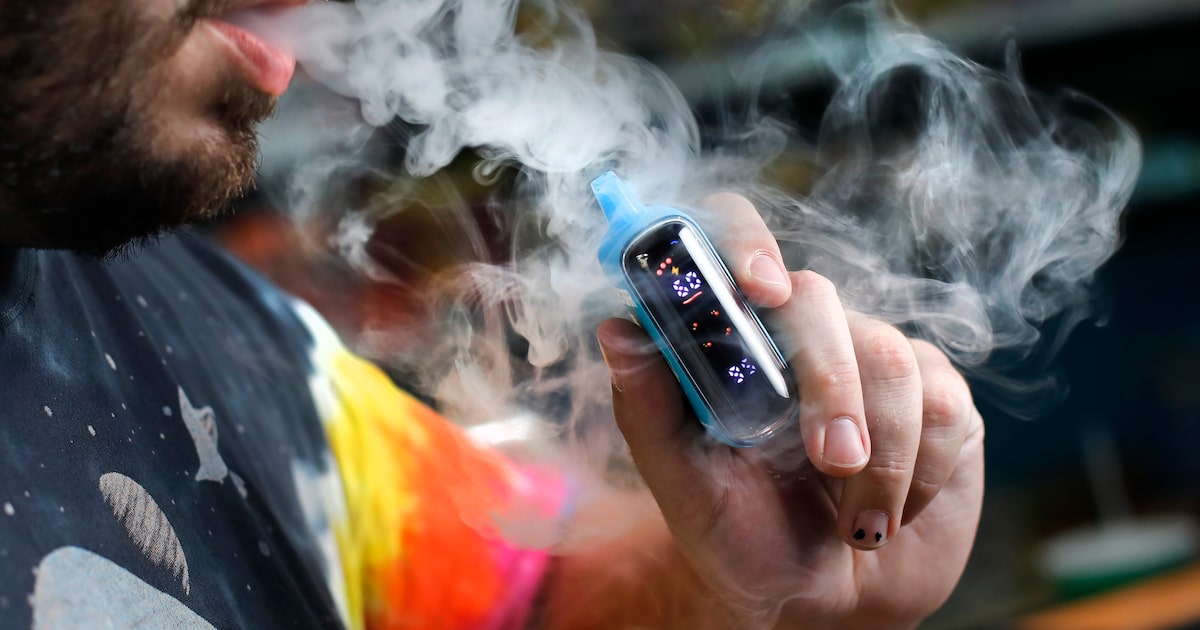
Starting Dec. 10, vaping will be prohibited in public and enclosed spaces, including bars, workplaces, parks and other areas designated as no-smoking zones in the city of Dallas.
Last year, the Dallas City Council approved a resolution to update its 2003 ban on smoking in public places to include e-cigarettes, to protect vulnerable populations from what it considers harmful secondhand exposure.
Related

Dallas joins San Antonio, which banned vaping last year; Austin in 2017; and Houston in 2022.
D-FW Public Health Alerts
Electronic cigarettes are sometimes called e-cigs, vapes, vape pens, and electronic nicotine delivery systems, according to the Centers for Disease Control and Prevention. E-cigarettes come in many shapes and sizes. Most contain nicotine.
Smoke from cigarettes or electronic smoking devices contains chemicals that are harmful and worsen air quality, even more so in indoor environments, according to the Office of Environmental Quality and Sustainability.
When cigarettes or electronic smoking devices are not properly discarded, these chemicals can enter soils and waterways, contaminating valuable resources and poisoning local wildlife.
During the City Council discussions last year, council members supported the ban, citing how addictive nicotine can be for children.
More than 1.6 million middle and high school students use e-cigarettes in the U.S., per a 2024 Food and Drug Administration study. Additionally, data from the 2024 National Youth Tobacco Survey show millions of students are now addicted to these products, particularly the flavored options.
In 2020, Dallas County reported its first death from a vaping-related illness — a teen.
About 95% of today’s tobacco users started using before the age of 21. E-cigarettes have escalated this problem, with over 5,700 kids starting to vape every day, according to the CDC.
What does the vaping ban in Dallas mean?
The city’s ban prohibits smoking in public indoor or enclosed areas, spaces designated as nonsmoking by an establishment’s owner, parks, workplaces, public transit and any retail or service establishment.
City rules also forbid smoking within 15 feet of any entrance to a public indoor area. A violation can result in a fine of up to $500.
State laws
In recent legislation, state lawmakers passed several bills aimed at curbing teen vaping.
Senate Bill 1316 by Sen. Molly Cook, D-Houston, which bans advertising e-cigarettes within 1,000 feet of a church or school, as required for other tobacco products.
SB 1313, also by Cook, targets e-cigarette advertising specifically catering to minors — including imitations of trademarks or appearances of “products primarily marketed to minors” or “cartoon-like fictional characters,” per the legislation’s language.
Related

SB 2024, by Sen. Charles Perry, R-Lubbock, prohibits the sale of a range of products designed to resemble common objects, such as pens and smartphones, that may appeal to children.
Help for teenagers
The Dallas County Health and Human Services offers a voluntary, free program for teenagers to quit smoking.
The Not On Tobacco program is for teens aged 14 to 19. The topics covered in the program include: nicotine addiction and triggers, effects of smoking/vaping, overcoming obstacles to quitting, how to deal with stress and other topics.
For more information on the program, visit the health service website.