
Austin declared Thursday National Overdose Prevention Day in the city, with a proclamation read by Council Member Ryan Alter. The proclamation came a week after Austin-Travis County Emergency Medical Services saw a spike in overdoses.
EMS is seeing that its primary way to reverse an opioid overdose — Narcan, or the generic naloxone — is now requiring more doses. In the last month or so, people have needed multiple doses of Narcan, up to six doses, said EMS Capt. Christa Stedman. Previously, people typically needed one to two doses.
University of Texas-related social media accounts are warning about cychlorphine, a substance tied to a string of overdoses across the country, including in Texas. This synthetic opioid is not detected by fentanyl test strips and requires multiple doses of Narcan.
“The illicit drug supply remains unpredictable and dangerous,” said Dr. Desmar Walkes, the public health authority for Austin and Travis County. “We must continue timely surveillance, rapidly sharing information with our response partners.”
The current batches causing overdoses often contain fentanyl mixed with other synthetic opioids, as well as antidiarrhea medications, antihistamines and other over-the-counter drugs, Stedman said.
“We don’t know what we don’t know,” Stedman said, but the drugs being made by illicit manufacturers are “more potent.”
The need for multiple doses was also evident in the overdoses that were reported overnight Sept. 16 in and around Shakespeare’s Pub in the 300 block of East Sixth Street. Police said investigators believe the cases might be linked to a bad batch of drugs circulating downtown.
One person was in respiratory arrest when first responders arrived but was stable by the time the patient was taken to a hospital, Stedman said.
All five were given Narcan by police, other first responders or people already at the scene. Several required multiple doses.
Four people were taken to area hospitals in stable condition, while a fifth refused transportation, Stedman said during a news conference that day. All five patients were adults.
Austin and Travis County saw a reduction in overdose deaths in 2025 compared with previous years. Last year, 301 deaths represented a 21% decrease from 2024. Opioid-related overdose deaths fell 35%, Walkes said.
“The impact reaches across our community, although the burden is not equally experienced, for the disproportionate impact is seen in marginalized communities,” Walkes said. “Our data help us to identify where the burden is greatest so we can better target prevention and outreach and resource efforts. We are making progress. Overdose, however is preventable.”
Since 2021, Austin Public Health has distributed 30,000 Narcan doses and trained 2,000 healthcare providers in stigma reduction and treatment, Walkes said.
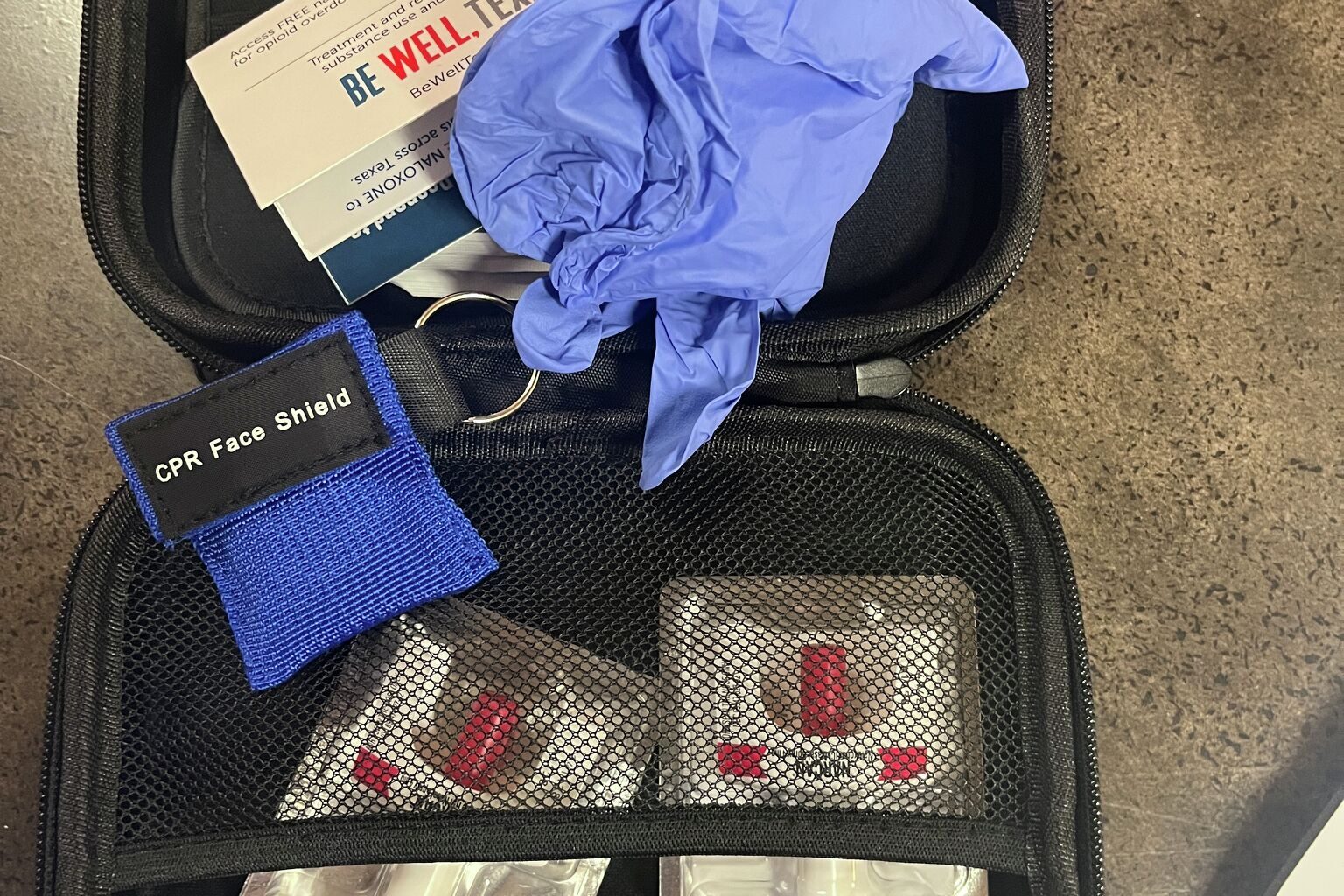
Every ambulance carries Narcan in both intravenous and injectable forms. The nasal spray form is widely available for bystanders and first responders to use.
The city and county had a $2 million federal grant that funded Narcan distribution. EMS Chief of Staff Wesley Hopkins said the grant money has run out, but EMS is using opioid settlement funds to continue supplying Narcan.
Travis County offers free Narcan to people who complete its overdose-response training, while the N.I.C.E. Project operates free, no-questions-asked Narcan vending machines at several locations around Austin, including the Sunrise Homeless Navigation Center, the Terrazas Branch Library and Rio Market near the University of Texas. Vivent Health also distributes free naloxone through its Austin harm-reduction program. It is also available at local pharmacies and online through Amazon.
Stedman now recommends people keep more than the two doses included in each package on hand.
Know the signs of an overdose
People experiencing an overdose may show these signs:
Not responsive or less responsive.
Drowsy.
Pupils are pinpoint.
Difficulty breathing, or their breathing has slowed or stopped.
Discoloration of fingertips, such as a blue tinge.
What to do if you find someone you think is overdosing
Call 911 to get help on the way.
Administer Narcan.
Check for a pulse. Administer CPR if there is no pulse.
Wait three to five minutes.
If they are still unresponsive, administer a second dose of Narcan. Continue CPR if needed.
Wait three to five minutes, administer a third dose of Narcan. Continue CPR if needed.
Repeat until help arrives.
Reporter Faith Bugenhagen contributed to this report.