
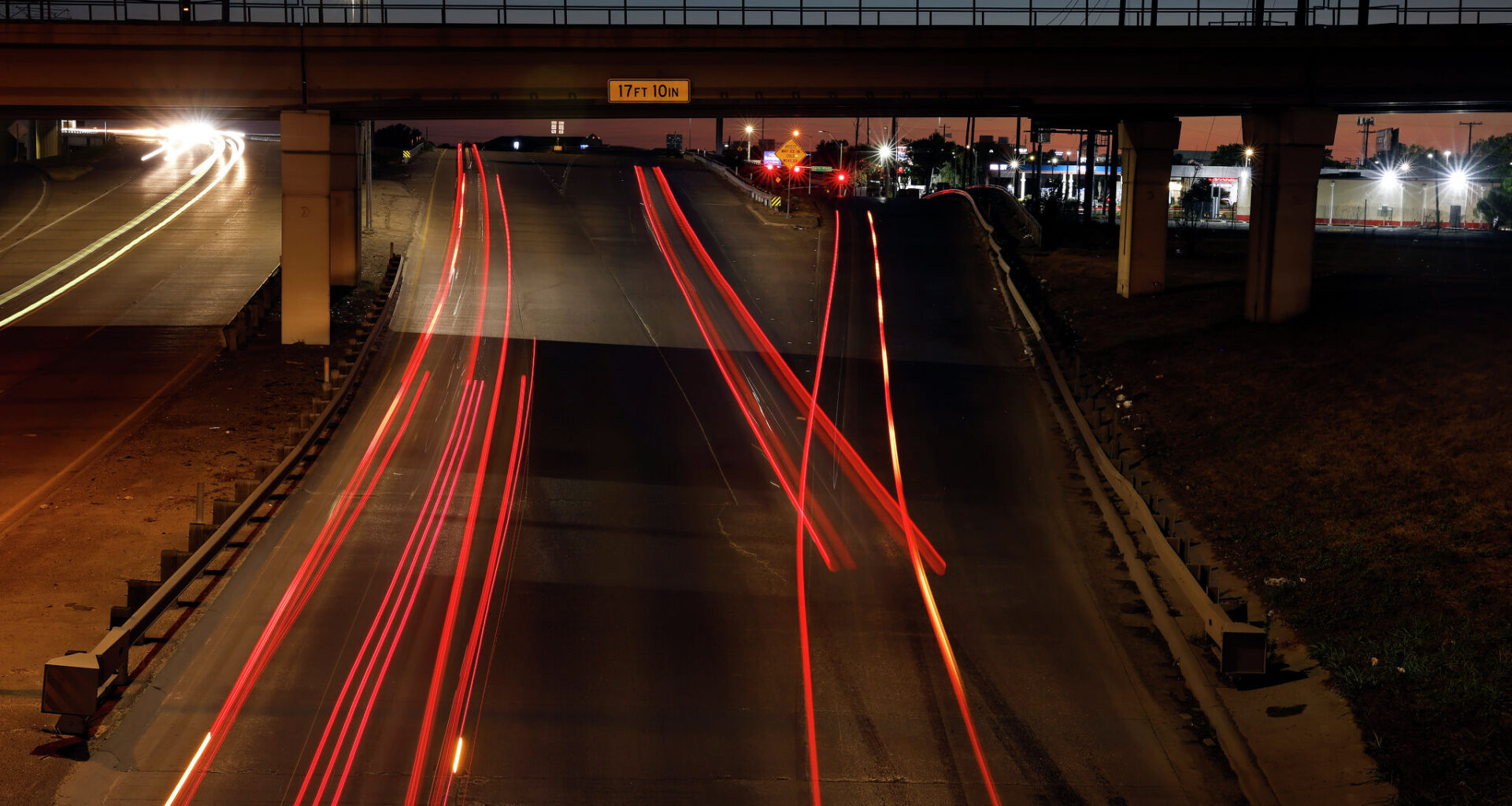
Dallas-Fort Worth drivers often navigate tollways, frontage roads and managed lanes in the same trip. Here’s how to read the signs.
Tom Fox/The Dallas Morning News
For drivers navigating North Texas highways, a few seconds of confusion can mean a missed exit, an unexpected toll or a sudden lane change.

Frontage roads and HOV restrictions are common. The region’s highways include different lane types such as managed and general-purpose. A single stretch of road can include several lane-specific signs, puzzling unfamiliar drivers and potentially resulting in an accident.
Understanding which signs match which lanes can help drivers make timely and safe decisions.
Article continues below this ad
Here’s what to know about navigating North Texas roadways.
Toll roads
Several transportation agencies operate various North Texas tollways. A big orange ‘T’ is placed above entrance ramps to indicate to motorists they are traveling on a paid road.
The North Texas Tollway Authority owns and operates eight of the 17 toll roads in the region, and the Texas Department of Transportation is responsible for the remaining nine. TEXpress, or managed lanes operated by TxDOT, are along parts of highway corridors such as Interstate 635, North Tarrant Express and Interstate 35W.
Major NTTA roads include President George Bush Turnpike, Dallas North Tollway and Chisholm Trail Parkway.
Article continues below this ad
Related: Who owns TEXpress lanes in North Texas?
Both agencies use TollTag billing, but pricing and ownership differs.
As the population in North Texas continues to grow, transportation authorities have been addressing major bottlenecks and congested roads across the region to help alleviate traffic. The 635 East project, which wrapped up in September, widened 11 miles of the interstate to accommodate the increasing number of motorists. An additional general purpose lane was added, providing drivers with six lanes in each direction, as well as completely rebuilt managed lanes.
Related: TxDOT’s $1.7 billion 635 East Project completed in Dallas County
The state-operated roads use dynamic pricing in the managed lanes, which is dependent on how heavy traffic is in the general purpose lanes. TEXpress uses large overhead electronic signs to display the road name and current price.
Article continues below this ad
NTTA uses fixed prices for all its toll roads. For motorists traveling without a TollTag and using ZipCash, the trip on any of the toll roads in the region could be double the price.
Despite operating under different authorities, NTTA is in charge of billing for all toll roads in North Texas.
Related: Here’s how to understand your Dallas toll bill
HOV lanes
Drivers can tell whether they’re driving in a high-occupancy vehicle, or HOV, lane by looking for the diamond-shaped indicator on the road or overhead signs saying “HOV,” “HOV 2+” or “Motorcycle OK.”
Article continues below this ad
Vehicle-type restrictions are placed along HOV lanes during certain hours of the day to help prevent congestion on major highways and improve mobility along busy corridors. The HOV lanes are time-sensitive, meaning they are not open 24/7 to all drivers.
HOV lanes on U.S. Highway 75 are being reconstructed to allow more drivers to use the lane for 22 hours a day. However, from 7 a.m. to 9 a.m., the HOV lane on southbound U.S. 75 is reserved for carpoolers, motorcycles and low-emission vehicles only. The same restrictions apply for northbound traffic on the highway from 4 p.m. to 6 p.m.
Related: U.S. 75 project nears completion from I-635 to SH 121
Exit only lanes
Drivers in the region may notice some exits on highways have yellow panels under the green highway signs saying “exit only,” often accompanied by an arrow pointing in the direction of the departing lane.
Article continues below this ad
The yellow panel is a warning to drivers that the lane beneath that sign is not a through lane and will not continue onto the highway. Motorists in an exit-only lane may also see pavement markings such as arrows indicating that the lane is about to split from the main highway road.
Many North Texas highways include several exit lanes that lead to frontage roads, major interchanges and other closely spaced exits. Paying attention to this sign is especially important because it can prevent drivers from having to make last-minute lane changes or taking an unexpected exit.
Related: Dallas County lead North Texas in collisions in August
Road rage incidents often stem from dangerous driving behaviors such as unsafe lane changes or cutting someone off, said Texas Department of Public Safety Sgt. Juan Gutierrez. Practicing safe driving and being mindful of overhead signs helps prevent dangerous encounters on the road.
Article continues below this ad
A Fort Worth road rage shooting took place on Interstate 20 in August, leaving one dead. The suspect, who was arrested hours after the shooting, alleged the victim was tailgating him prior to the incident on the road. According to data provided by the Texas Department of Transportation, 21 road rage collisions took place in North Texas in August. Tarrant County accounted for six incidents — the most in the region.