
FORT WORTH — Familiar composers Joseph Haydn and Johannes Brahms, born almost exactly a century apart, were paired in the Fort Worth Symphony Orchestra’s Friday night concert. But one of the pieces was presented in a world premiere arrangement.
With Haydn’s London Symphony (No. 104) on the program, the obvious link was Brahms’ so-called Variations on a Theme by Haydn (although the theme probably wasn’t original with Haydn). The novelty, conducted by music director Robert Spano at Bass Performance Hall, was pianist Dejan Lazić’s piano-concerto arrangement of Brahms’ Double Concerto for violin and cello.
A Croatian native trained in clarinet and composition as well as piano at the Salzburg Mozarteum, Lazić has composed original works as well as an earlier piano-concerto version of Brahms’ Violin Concerto. What’s billed as the Brahms/ Lazić Piano Concerto “No. 4” leaves the orchestral score untouched but adapts the solo parts for more or less Brahmsian pianistic effects.
At intermission, I asked two musicians I greatly respect what they thought of the arrangement. The pianist didn’t like it, thinking the piano writing could have been much more developed. The violinist very much liked it.
I rather enjoyed it. Lazić’s arrangement supplied pianistic sonorities that effectively filled in solo parts originally for just a violin and a cello. Whether unaccompanied or integrated within orchestral textures, the piano parts sounded plausibly Brahmsian to me. I’d be glad to hear it all again.
Brahms was no stranger to rearrangements. He developed his Piano Concerto No. 1 from a two-piano sonata and an intermediate symphonic version. And he produced piano arrangements of all four of his symphonies. Arnold Schoenberg transcribed Brahms’ G minor Piano Quartet for symphony orchestra.
Lazić played his Double Concerto arrangement with panache — and generous expressivity where called for. Spano and the orchestra supplied spirited, authoritative collaboration.
The Haydn Variations, marvels of rhythmic, textural and contrapuntal imagination, were well paced and shaped, although the orchestra wasn’t always as finely focused as it was in the rest of the concert. The horns audibly enjoyed their jolly contributions in the sixth variation.
The Haydn symphony was given a big-band treatment, complete with six double basses. I wished for a stylishly smaller ensemble and more lightness of touch. And longstanding evidence suggests a late 18th-century minuet like this — a scherzo in all but name — should go quite a bit faster than Spano’s courtly pace.
But overall, the performance was personable and caringly formed, and violins produced a particularly lovely silvery sheen.
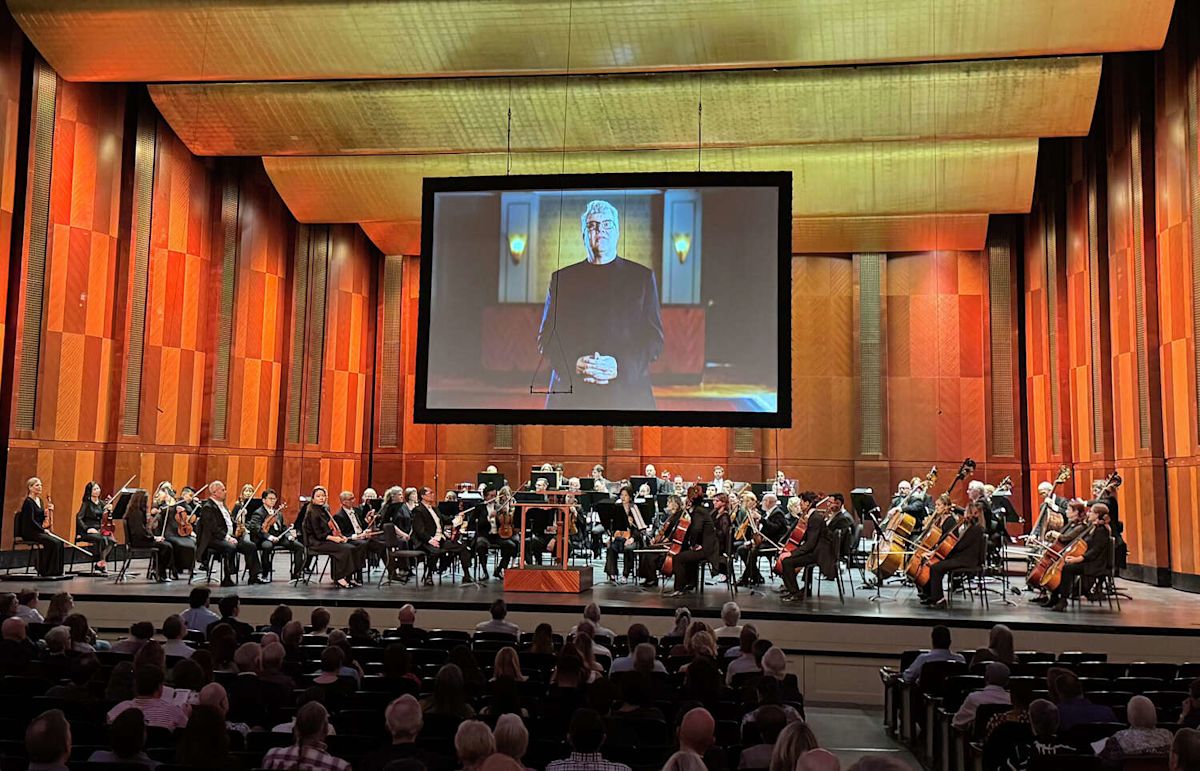
I rather like the current FWSO practice of introducing concerts with well-produced videos featuring members of the orchestra. The videos are projected on a large screen that’s retracted before the performance. Friday’s was amiably done by principal keyboardist Buddy Bray. But isn’t it past time to put the national anthem to rest as a starter?
Details
Repeats at 7:30 p.m. Saturday and 2 p.m. Sunday at Bass Performance Hall, Fourth and Commerce streets, Fort Worth. $30 to $103. 817-665-6000, fwsymphony.org.
Subscribe
This article originally published at Review: Fort Worth Symphony premieres a new Brahms arrangement.