
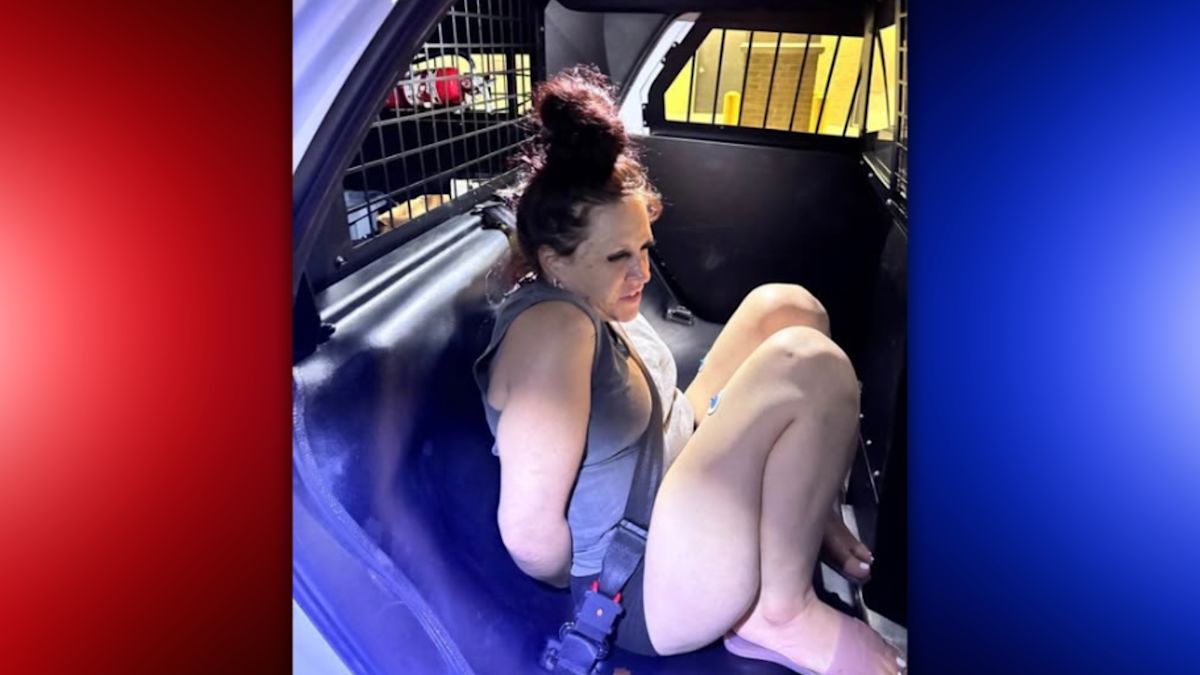
A woman was taken into custody in Harris County, Texas, after deputies said they caught her breaking into residential mailboxes.
Deputy Lagoy with Harris County Constable Precinct 4 responded to an in-progress burglary call in the 13000 block of Kuykendahl Road, where the constable’s office said the woman had forced entry into the mailboxes and removed various pieces of correspondence.
The U.S. Postal Inspection Service counted 49,146 reports of high-volume theft from mail receptacles in fiscal year 2023, more than double the 20,574 recorded four years earlier. A 2025 USPS inspector general audit found 40 arrow keys missing or unverified across three Houston stations, including 29 at Beechnut Station, where more than 12,800 cluster box units were potentially at risk.
Precinct 4 announced Burglary of a Building as the charge and did not identify the woman.
Special Delivery
Embedded media follows; please allow a moment for it to load.
Isn’t theft of mail a heavier charge?” one commenter asked
Under 18 U.S.C. § 1708, stealing or taking mail from a letter box, mail receptacle, post office, mail route, or other authorized mail depository can be prosecuted federally, as can attempts and knowingly possessing or concealing stolen mail.
A separate statute, 18 U.S.C. § 1705, covers willfully or maliciously damaging or breaking open certain mailboxes and other receptacles used for mail.
Federal mail-theft cases are not unusual. Project Safe Delivery, launched in 2023 as mail theft and attacks on postal employees climbed, recorded 3,960 mail-theft arrests nationwide through June 30, 2026.
Postmarked Texas
Section 31.20 of the Texas Penal Code covers intentionally taking mail without the addressee’s consent and with intent to deprive that person of it. Senate Bill 1281, effective Sept. 1, 2025, widened the law beyond mail already sitting in a recipient’s box to reach items still moving through the system or waiting to be collected for delivery.
Texas burglary law separately covers entering a building or part of one without effective consent with intent to commit theft, as well as entering and then committing or attempting theft.
A Texas Senate bill analysis points to stolen checks, money orders, and other negotiable instruments being altered or counterfeited and then cashed, and the 2025 law increased penalties in some cases where stolen financial instruments are used for fraud.
The legislation also created a separate felony for certain misuse of mailbox keys and locks. Possessing, copying, transferring, or using one with intent to steal, defraud, or deprive someone of property can bring a third-degree felony, with a higher penalty after a prior conviction. A USPS Office of Inspector General audit of Houston examined thieves’ use of universal postal keys, known as arrow keys, to access collection boxes, outdoor parcel lockers, cluster box units, and apartment panels.
Signed, Sealed…
In Florida, a postal carrier was accused of taking and redeeming a $2,600 winning lottery ticket that had been mailed to help pay funeral expenses, while a Texas postal employee was accused of stealing a basketball card worth about $3,600 and later trying to sell it online.
Postal Inspectors warned about check washing, in which thieves erase or remove the original payee or amount, write in new information, then try to cash or deposit the altered check. The potential scale showed up in Houston, where federal prosecutors accused three postal carriers and two others in a scheme involving nearly $24 million in stolen checks, including one worth more than $1.5 million.
Credit cards, financial records, and documents containing personal information can also be used for fraud or identity theft.
The U.S. Postal Inspection Service recommends emptying a mailbox promptly rather than leaving mail there overnight, contacting the sender when a check, replacement card, or other expected item never arrives, and using USPS Hold Mail when you are away.
For outgoing mail, use a blue collection box before its last pickup of the day or take valuable items inside the post office. Checks can be made harder to alter by using indelible black ink and filling the payee and amount fields all the way across; the American Bankers Association and Postal Inspectors also recommend watching the account after a check is mailed.
USPS Informed Delivery shows customers previews of expected mail, making an item that appears in the daily preview but never reaches the box easier to spot.
Suspected mail theft can be reported to the U.S. Postal Inspection Service at 1-877-876-2455, while victims of check theft or related fraud should also contact local police and their financial institution.
All parties are presumed innocent unless and until proven guilty in a court of law.