
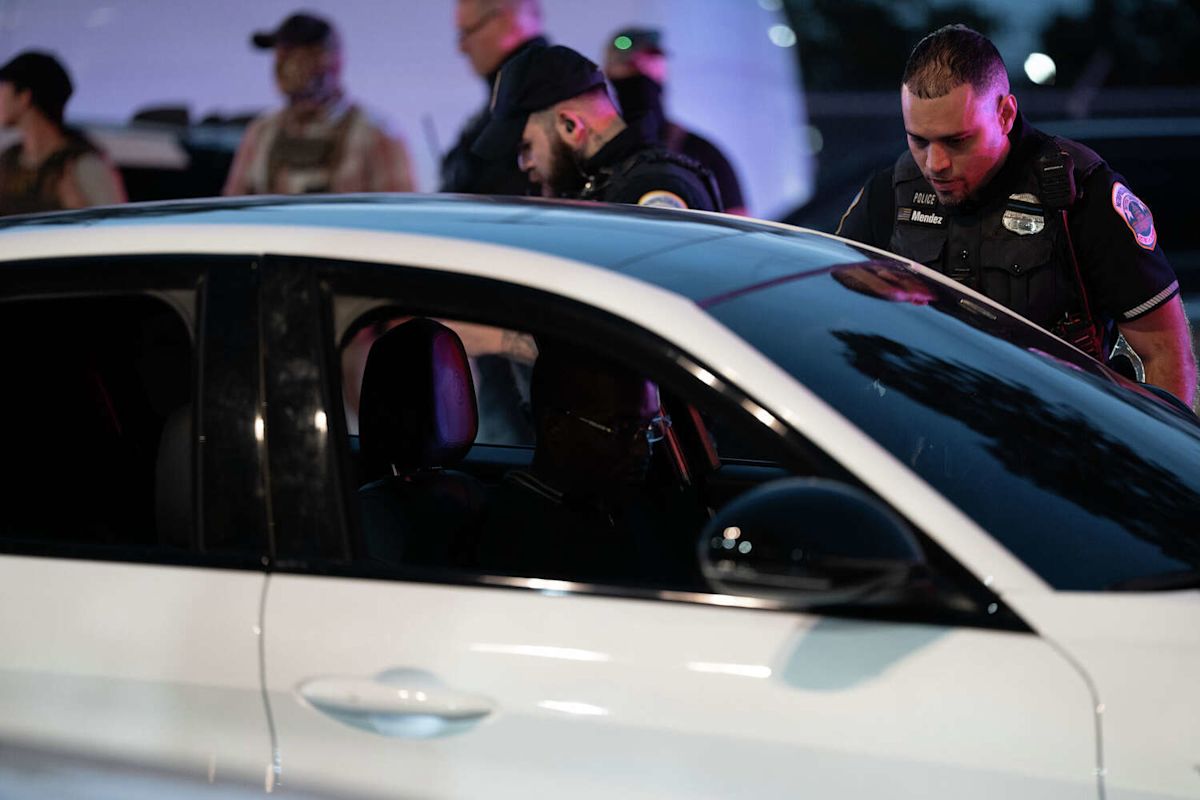
After a night on Sixth Street or leaving a concert, you’re driving home when flashing red-and-blue lights appear behind you.
Your registration is current. Your insurance is valid. Your brake lights work, and you weren’t speeding.
So why were you pulled over?
Texas police can’t stop a vehicle simply because they want to. Officers generally need reasonable suspicion that a traffic law has been violated or that criminal activity is occurring before making a traffic stop.
Here’s what Texas law says about when a stop is legal – and when it may not be.
When can Texas police legally pull you over?
According to the Varghese Summersett legal blog, here are some legal reasons why police can make a traffic stop:
Traffic Violations: Speeding, running a red light, failing to signal a lane change, or driving against traffic.
Equipment Violations: A broken taillight or headlight, a missing license plate light, or expired registration tags.
Erratic Driving: Swerving between lanes, erratic braking, or signs of impairment.
Visible Violations: Not wearing a seatbelt, texting while driving, or having illegal window tint.
When can’t Texas police legally pull you over?
Texas law generally allows people to record police during a traffic stop or other public interactions, provided they do not interfere with an officer’s official duties. (Jay Janner/The Austin American-Statesman via Getty Images) (Austin American-Statesman/Hearst/The Austin American-Statesman vi)
Based on the Fourth Amendment of the U.S. Constitution and Article I, Section 9 of the Texas Constitution, people are protected from unreasonable searches and seizures.
If you’re pulled over in a traffic stop, police need to have a legal cause.
The following opinion from the late Texas Court of Criminal Appeals Judge Cathy Cochran in Wiede v. State (2007) could be a clear example of Texas rulings affirming that statutory authority can’t supersede constitutional protections.
According to the Texas case, after a traffic accident, officers searched Craig Wiede’s vehicle based on a Texas Transportation Code provision.
The Court rejected the State’s argument, explaining that a statute cannot eliminate Fourth Amendment protections or authorize a vehicle search without probable cause. The evidence was suppressed.
Here are other examples of circumstances police generally can’t use by themselves to justify a stop:
Driving slowly: Unless you’re impeding traffic or driving dangerously below the limit, slow driving is legal.
Race, ethnicity, or appearance: Stops based on how you look rather than what you’re doing are unconstitutional.
Vague anonymous tips: A caller saying someone looks “suspicious” without describing criminal behavior is not enough.
Driving in a “high crime” area: Your presence in a particular neighborhood, standing alone, is not reasonable suspicion.
Can you challenge an illegal traffic stop in Texas?
If you believe your rights were violated during a traffic stop, you can fight it in court.
Whether you have a dashcam or the officer who pulled you over has a body camera, the footage could help your defense in court. But what you do and don’t say on camera can make or break the case.
According to the Thiessen Law Firm blog, the firm based in Texas provided some legal counsel to keep in mind during a stop:
Stay calm and pull over safely.
Don’t give the officer additional reasons to justify the stop.
Be polite but exercise your rights. You have rights during a traffic stop including the right to remain silent.
Provide required identification only. Give your license, registration, and insurance when asked, but don’t volunteer additional information.
Don’t answer incriminating questions. When asked “Do you know why I pulled you over?” or “Have you been drinking tonight?” you can plead the Fifth and say “I’m not comfortable answering questions without an attorney present”.
Don’t resist or argue. Save your defense for court where it actually matters.
Can you record a traffic stop in Texas?
MUSTANG RIDGE, TEXAS – APRIL 16: Limon Verde takes a video of a DPS vehicle after a suspected ICE-involved traffic stop in Mustang Ridge, outside Austin, Thursday, April 16, 2026. (Mikala Compton/The Austin American-Statesman via Getty Images) (Austin American-Statesman/Hearst/Austin American-Statesman via Ge)
Texas law generally allows people to record police during a traffic stop or other public interactions, provided they do not interfere with an officer’s official duties.
According to the American Civil Liberties Union, photographing and recording anything plainly visible from a public place is protected by the First Amendment. That includes police officers, government buildings and transportation facilities.
However, recording does not give someone the right to obstruct law enforcement.
Texas Penal Code Section 38.15 makes it an offense to interrupt, disrupt, impede or otherwise interfere with a peace officer performing official duties.
What is qualified immunity?
According to The Texas State Law Library, the doctrine known as qualified immunity gives law enforcement officers shielded liability for causing injuries or harm unless they violate someone’s clearly established rights. Typically, the question of whether immunity applies is a central legal issue in a police misconduct case.
This article originally published at When can Texas police pull you over? Here’s what the law says.