
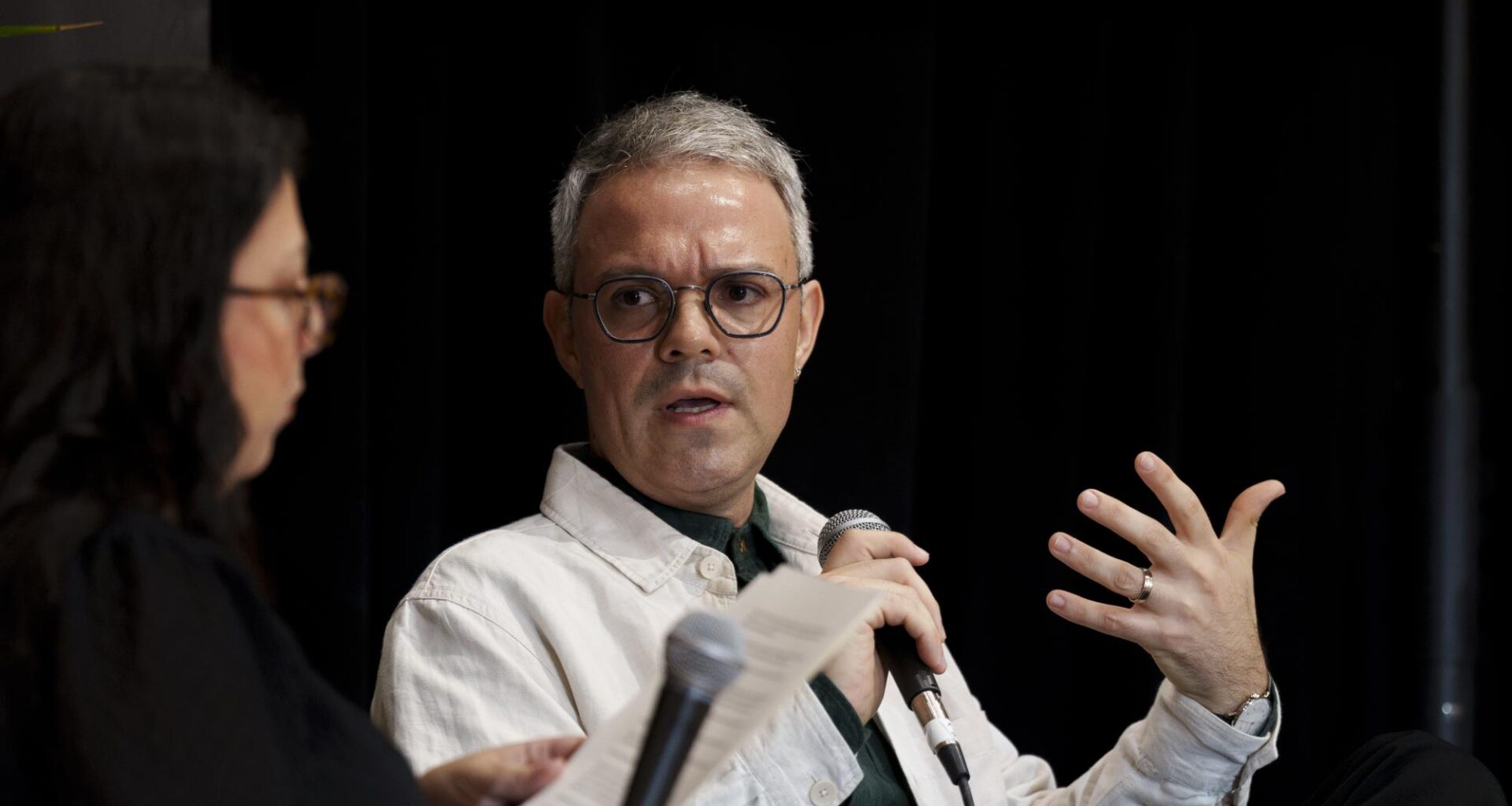
A UT assistant professor who was denied tenure spoke about academic freedom and the state of higher education on Saturday during a panel at TribFest, the Texas Tribune’s annual journalism convention.
Iván Chaar López, who is listed in the UT directory as a history and social and cultural analysis assistant professor, spoke as a member of the panel “Who decides what Texas universities teach?” Chaar López was joined by Lisa Limeri, a Texas Tech University adjunct professor, and two journalists.
Chaar López, who drew local attention when he did not receive tenure over the summer, said he believes the University refused to grant him tenure due to the political nature of his research, which centers on border surveillance technology. Academic tenure is a status granted by a university or university system that protects instructor’s jobs and only allows them to be fired under extraordinary circumstances.
Chaar López submitted an appeal to the president’s procedural review committee and was denied, according to reporting from the Austin American Statesman. The University has not released a statement regarding Chaar López’ denial. The University adopts an “up-or-out” tenure policy, meaning he must leave by the end of this school year.
“It seems like there is an interest to have findings aligned with the political views of the leadership, and that’s not science,” Chaar López said. “That’s not evidence-based research. That’s political energy and view discrimination.”
Chaar López said he went under an extensive tenure review process and received support from “experts in the field.” After he was denied tenure, he said he met with the interim dean of his department, who López said speculated that he was denied tenure because the provost and University president had a “negative view of (the American studies) field.”
American Studies, the field of study Chaar López specializes in, is one of two undergraduate programs in the Department of Social and Cultural Analysis that will retain its major status. The University informed department faculty that it would not continue supporting its other ethnic and gender studies programs.
Chaar López described the elimination of these majors as an example of academic overreach from University officials.
“We’re going through a moment in higher education where the amount of tenured positions have been decreasing over time, so it becomes even harder to find these stable positions to conduct independent science-led research,” Chaar López said. “So of course you’re anxious about that uncertainty, and you know you’re just thinking strategically, well, maybe it makes sense to restrict myself.”