
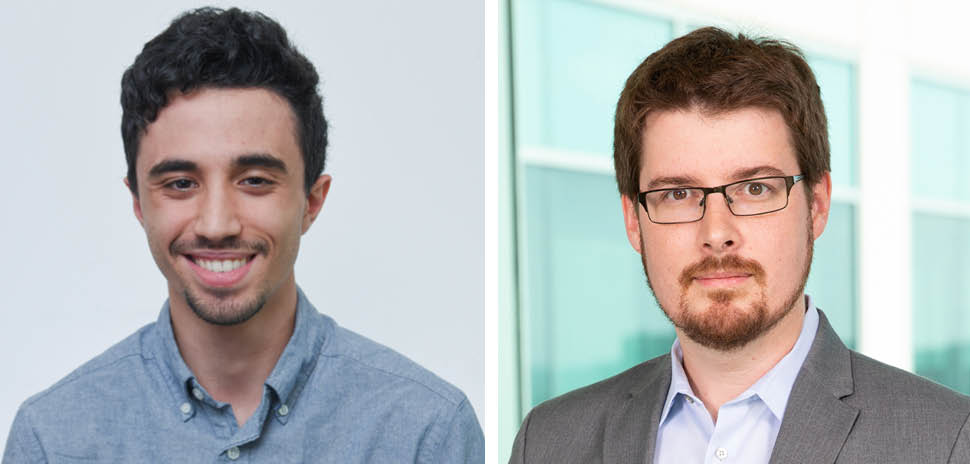
Sina Khorsandi, left, and Jacques Lux are two of the three co-founders of MusiQ Bio. [Photos: UT Southwestern]
Dallas-based biotech startup MusiQ Bio, a UT Southwestern Medical Center spinoff, received a $2.59 million state grant to advance new cancer treatments.
The Cancer Prevention and Research Institute of Texas awarded the grant. The money will enable MusiQ Bio and UT Southwestern’s Lux Lab to further study the startup’s Microbubble-assisted Ultrasound-guided Immunotherapy of Cancer, or MUSIC, technology platform.
The grant supports development of treatments that prime the immune system to fight cancer and enhance the effects of existing cancer immunotherapies, UT Southwestern said. Researchers are gauging MUSIC’s effectiveness in treating various forms of cancer to gather the evidence needed to eventually test the technology in patients.
Sina Khorsandi, co-founder and chief scientific officer at MusiQ Bio, said in a statement that the institute’s funding could pave the way for human clinical trials of MUSIC within five years.
The birth of MUSIC
CPRIT said the technology originated thanks to a $250,000 grant awarded in 2021 to Lux and UT Southwestern. The grant supported exploration of microbubble-assisted ultrasound-guided immunotherapy for metastatic cancer.
Khorsandi created MUSIC under the mentorship of Jacques Lux, associate professor of radiology and biomedical engineering at UT Southwestern and director of the Translational Research in Ultrasound Theranostics Lab. Lux co-founded MusiQ Bio and sits on its scientific advisory board.
Lux’s lab at UT Southwestern develops sound-responsive materials, including microbubbles, that can detect disease and deliver drugs or immunotherapy agents inside the body.
When Khorsandi joined the lab as a graduate student in 2018, he became interested in using microbubbles as drug delivery agents.
“Slightly smaller than a red blood cell, microbubbles contain inert gas enclosed within shells made of biocompatible materials such as lipids, proteins or synthetic polymers,” UT Southwestern said.
The role of microbubbles
Microbubbles have long been used as contrast agents for ultrasound procedures. In an ultrasound field, microbubbles scatter sound waves and make nearby structures more visible, UT Southwestern said. Higher ultrasound pressure pops the bubbles, producing mechanical forces that can temporarily increase how porous cell membranes and tissues are.
Khorsandi, Lux and their colleagues figured they could harness microbubbles to deliver a molecule known as cGAMP to immune cells known as antigen-presenting cells, UT Southwestern said. James Chen, professor of molecular biology at UT Southwestern, discovered cGAMP. The molecule activates a pathway to stimulate the body’s immune system, including cancer-fighting T cells.
By attaching cGAMP and antibodies that target antigen-presenting cells to microbubble surfaces, the team identified the potential for microbubbles to bind to the cells and deliver cGAMP into cells during ultrasound.
CPRIT said MusiQ Bio’s platform delivers drugs across the blood-brain barrier and directly into diseased areas.
Unlike existing microbubble platforms, MusiQ Bio’s technology relies on a “two-factor authentication” system that binds to specific cells and releases drugs only when activated by ultrasound, CPRIT said. This allows noninvasive delivery of gene therapies while minimizing off-target exposure.
Early results show promise
In 2022, the Lux Lab reported in Nature Nanotechnology that this MUSIC approach significantly reduced tumor growth in mouse models of triple-negative breast cancer, eliminating tumors in 60% of the mice. In addition, the approach boosted the effects of an immune checkpoint inhibitor, a common type of cancer immunotherapy.
Khorsandi, Lux and their colleagues have since reported similarly promising results with MUSIC in melanoma models. Current studies explore the platform’s impact on pancreatic cancer and glioblastoma, a type of aggressive brain tumor.
Pairing MUSIC with a complementary platform called Systematic Oncotherapy using Nanobubbles for Acoustically-guided Tumor Activation, or SONATA, could produce new ways to tap into the immune system’s cancer-fighting capabilities, Lux said.
“Other ways to deliver cGAMP are problematic,” he said. “They don’t have the layer of targeting and control we have, which is required for cGAMP efficacy. We believe our platform could offer important advantages.”
R E A D N E X T

North Texas has plenty to see, hear, and watch. Here are our editors’ picks. Plus, you’ll find more selections to “save the date.”

The startup, led by ex-Remington Hospitality CEO Sloan Dean, relies on 60-plus AI agents to perform back-office tasks so hotel staff can focus on guests.
The Spears Institute’s new global ambassador told founders that infrastructure is what lets creativity scale. The event continues through Thursday with more than 40 sessions and a closing keynote from Colossal Biosciences CEO Ben Lamm.

The Washington, D.C.-based company is ramping production of its Anthem long-range cruise missile in North Texas. Investors include Andreessen Horowitz, Founders Fund, Lux Capital, 8VC, Aleph and Lightspeed Venture Partners.

A joint study running through February 2028 will test pilot sites and inform a policy roadmap the partners hope will advance a national telehealth-based navigation system for patients.
Flexcar says it’s disrupting a $110 billion industry “by providing customers a better alternative to car ownership.”
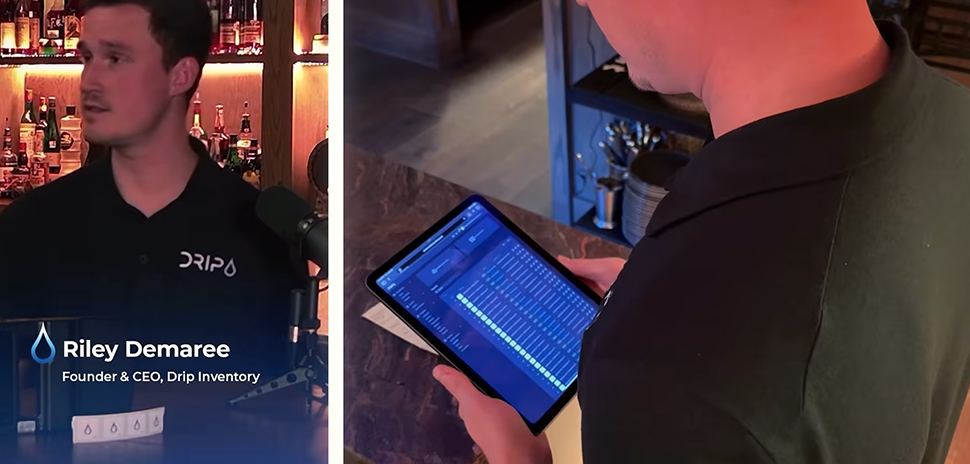
The first of four episodes of Next Founder Up dropped Aug. 5. The series will follow the six startups competing for CodeLaunch’s U.S. championship, including Frisco-based Drip Inventory.

Located at DFW’s Terminal A, the Bonton Farms retail store will introduce travelers to the nonprofit’s mission while selling local honey, handmade jams, goat milk soaps, grab-and-go food items, apparel and gifts. It is the organization’s first location outside South Dallas.

Irving-based Builders FirstSource led a $25.3 million Series A investment as part of a larger partnership with the Vancouver, Washington-based maker of AI software for residential construction.
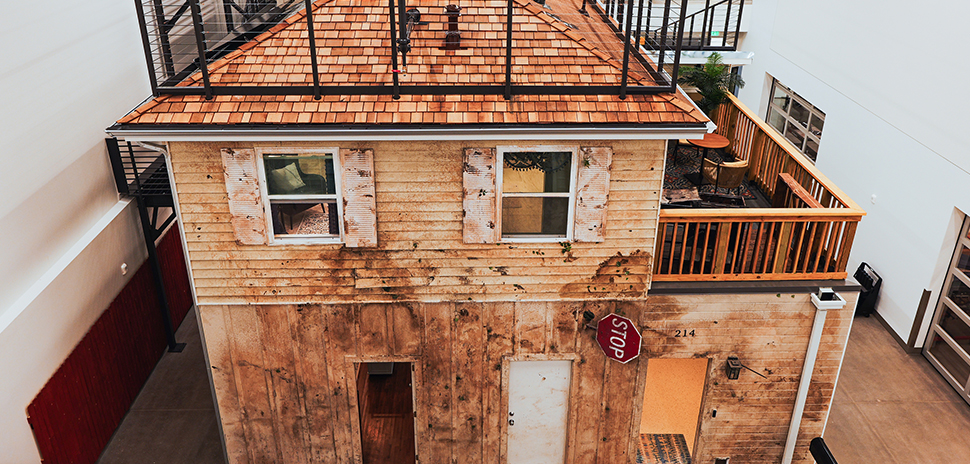
The university’s Property Lab features two full-scale, two-story homes, and the Auto Lab contains nearly 30 electric, hybrid and traditional vehicles, supporting a claims workforce of 23,000.