
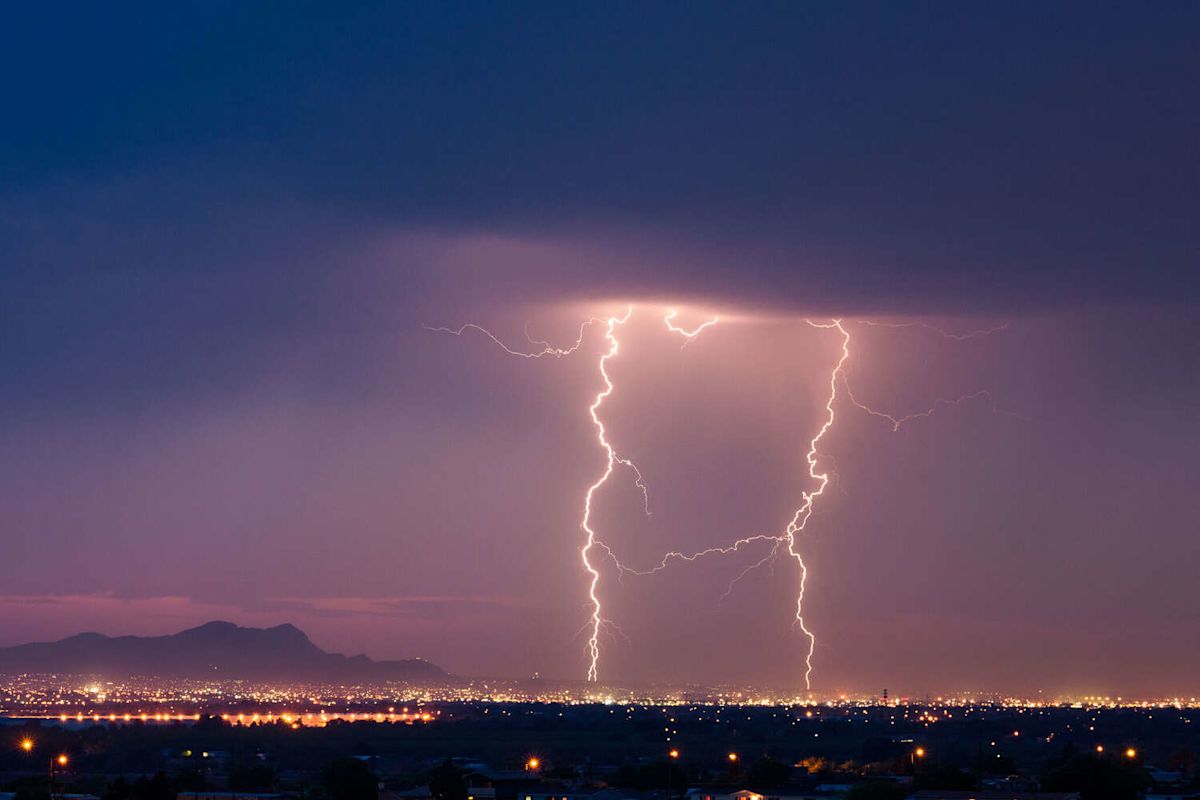
The remnants of Hurricane Polo could bring what one longtime meteorologist is calling “devastating” amounts of rain to the far West Texas desert Tuesday.
Polo – which made its first landfall in the Mexican state of Baja California Sur late Monday night and was expected to make a second landfall in Sonora on Tuesday morning – will continue moving inland, eventually arriving in El Paso as a tropical depression. And it’s that that has Robert Bettes, chief meteorologist with KTSM 9 News, the Nexstar Media Group-owned NBC affiliate in El Paso, sounding the alarm.
Bettes took to social media late Monday night to warn The Sun City that Polo’s rains will be far different from the typical summertime monsoons that have been pouring rain across the desert in recent weeks.
“I’ve been doing the weather in El Paso for 31 years, and I can tell you that there have only been a handful of events that deeply concern me, that I believe could actually end up being very devastating for our town,” Bettes said in a video on Facebook just before 11:30 p.m. on Monday, September 28.
“This is one of those events,” he said.

The National Weather Service has issued a flood watch for far West Texas, including El Paso, and portions of southwest New Mexico as the remnants of Hurricane Polo are expected to dump heavy rains across the region. (Courtesy National Weather Service – El Paso)
Bettes previously spent a decade as a meteorologist at KVEO NBC Local 23 in the Rio Grande Valley, which is frequently impacted by tropical cyclones – most recently, when Hurricane Hanna dropped 8 to 15 inches of rain across the Valley in late July 2020. The veteran meteorologist called on his Valley forecasting experience to stress the seriousness of his warning to El Pasoans.
“I became very good at tropical weather and I can tell you these storms are different than monsoon thunderstorms,” Bettes said.

The National Weather Service is predicting that far West Texas, including El Paso, and portions of southwest New Mexico are at moderate risk of experiencing excessive rainfall as the remnants of Hurricane Polo dump heavy rains across the region. (Courtesy National Weather Service – El Paso)
West Texas, portions of New Mexico under Polo flood watch
The National Weather Service at El Paso has issued a flood watch and a flash flood watch for all of far West Texas and portions of southwest New Mexico through 6 a.m. Wednesday. Polo’s remnants are expected to bring excessive rainfall and flash flooding. But the key hazard will be in how the tropical rains will sweep across the region in repeated waves.
“High rainfall rates and repeated rounds of rain up to 4 inches may result in instances of flash flooding,” reads a NWS flood watch advisory issued just before 6 a.m. on Tuesday.
As Bettes illustrated during his Facebook video, bands of rainfall had already begun to move across the desert Monday night ahead of Polo’s arrival. The tropical moisture is expected to collide with a “very powerful low pressure system” from the west, further exacerbating precipitation in a region that has already been contending with the end of monsoon season.
According to the El Paso Times, the monsoon season typically brings 4-5 inches of rain to the desert between June and the end of September. But Bettes fears Polo could bring as much as 6 inches of rain all at once in “a worst-case scenario.”
“That could be a devastating event,” Bettes said.
This article originally published at Why an El Paso meteorologist is warning Texans about a rare rain threat.