
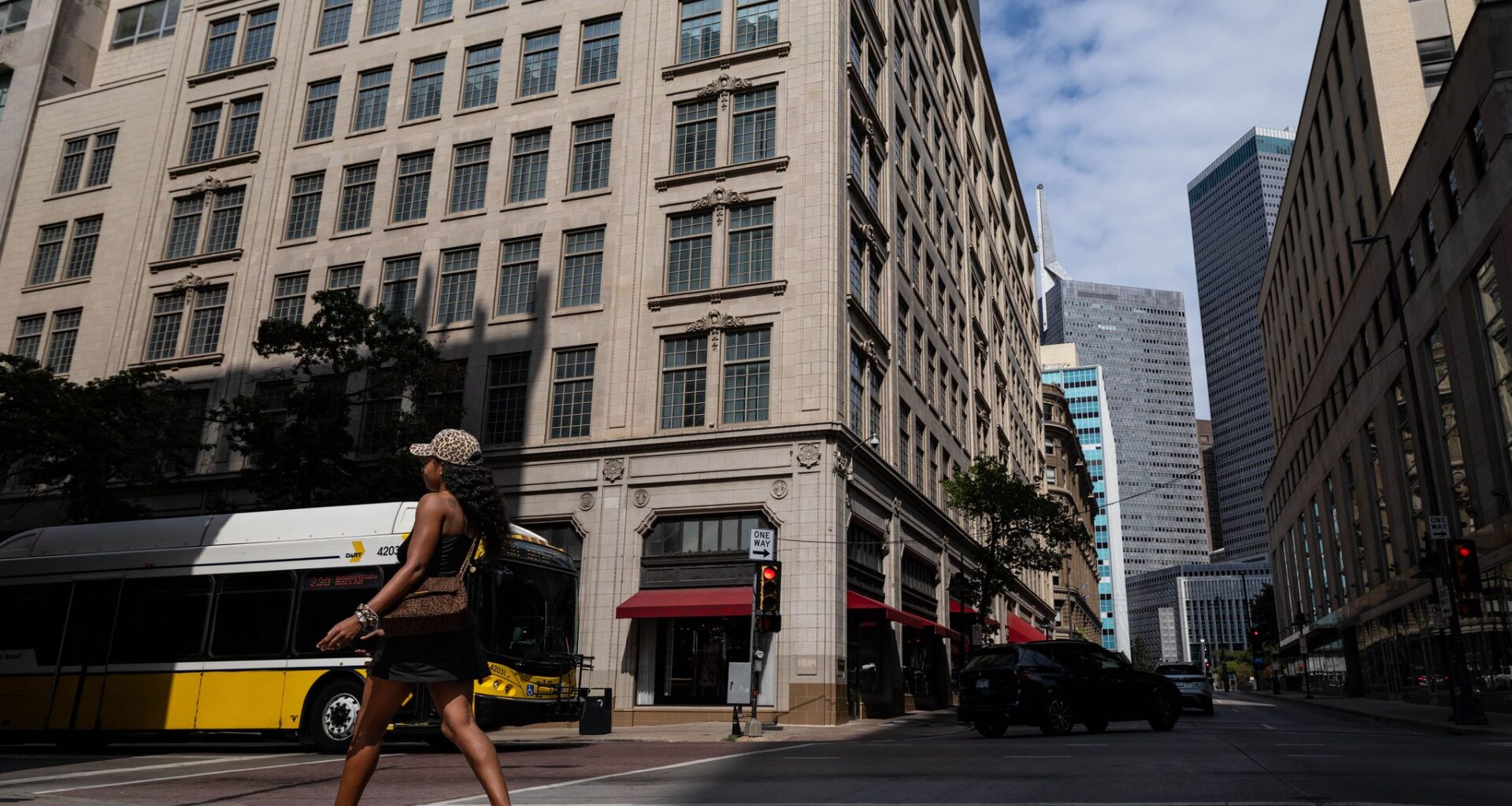
The future of downtown Dallas is dependent on turning vacant parking lots into retail and residential development, improving public transit and planting trees along sidewalks.
The city’s center needs to be more fun, officials said at an annual State of Downtown event Wednesday.
“We didn’t have the luxury of cursing the darkness or mourning what was,” said Jennifer Scripps, president and CEO of Downtown Dallas Inc., the nonprofit that oversees economic development in the urban core.
Instead, the organization is focusing on attracting new investment and residents. Downtown’s office buildings need to be flipped into apartments. Empty lots should be filled with better landscaping and art to attract new businesses and events. Walking spaces must be linked to surrounding neighborhoods.
The push comes in the wake of corporate departures and loss of grocery stores.
One of downtown’s signature historic redos, The National, went into foreclosure this year after the developer said low occupancy and interest rates were to blame.
But, DDI officials say, all is not lost. Dallas College is building a new campus that could spur more housing for its students. Texas Women’s University is establishing a downtown campus that will open next year.
Plus, there’s $15 million in bond funds for development on Harwood Street and the Loop has advanced the work of creating a 50-mile trail around the city.
The organization partnered with MIG, an urban planning and architecture firm, to look to other cities for inspiration.
Houston has a project called “cool and connected corridors” to plant more trees and alleviate the type of heat Dallas knows all too well. Philadelphia and Chicago are creating districts in the urban core and changing codes and regulations to help that process.
Unlike past events that primarily focused on public safety, this year’s presentation focused on the ingredients the city would have to put together to rescue downtown from stagnating.
The idea is to give downtown a sense of place it currently lacks, said Chris Beynon, MIG’s chief development officer.
AT&T’s departure also means the adjoining Discovery District will be without a tenant. Beynon said the city needs to safeguard the area so it doesn’t become a “donut hole.”