
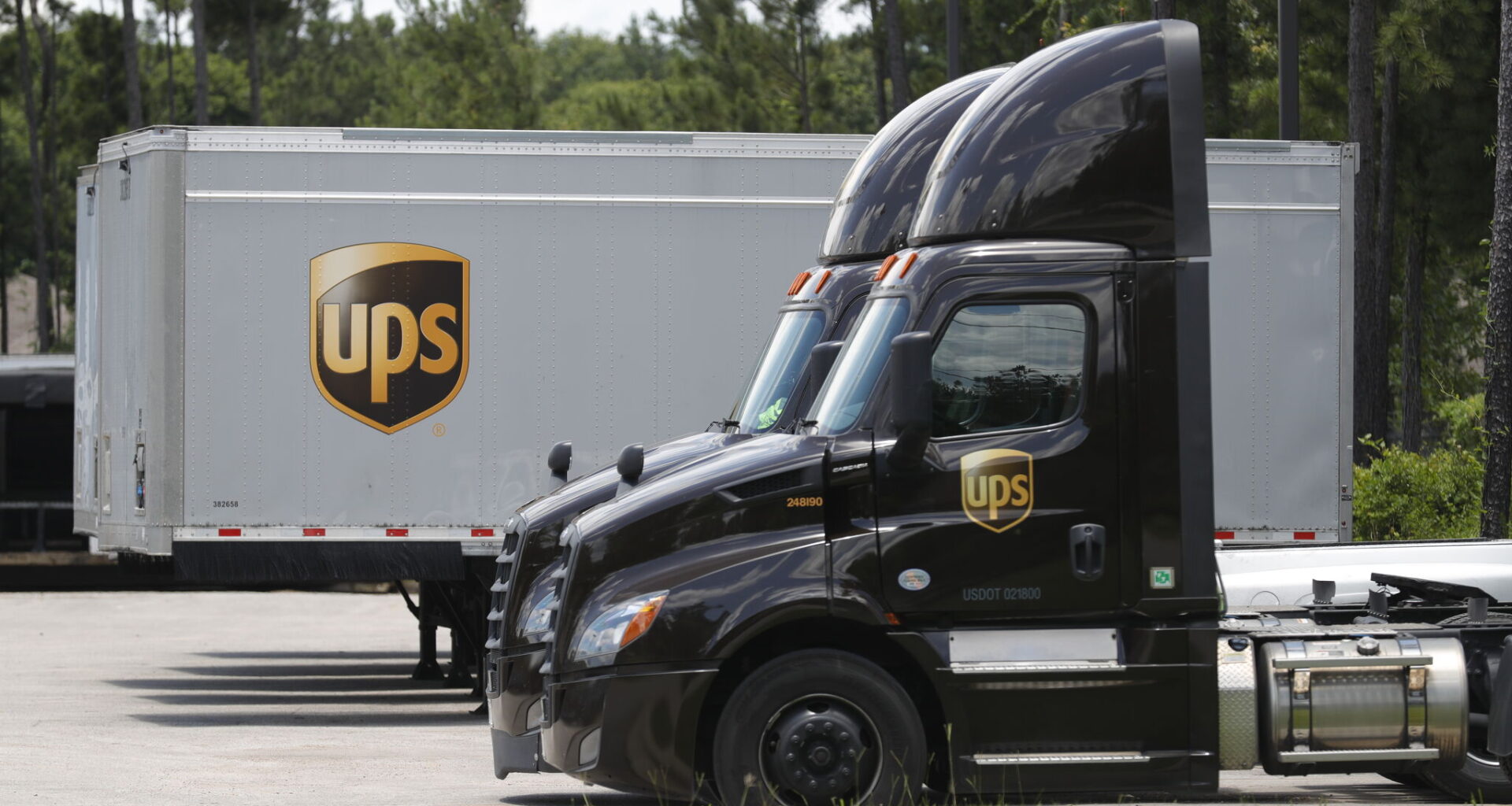
UPS is among the companies that have received property tax abatements from City Hall in recent years for investing and creating jobs in Houston.
Jason Fochtman/Staff photographer
Companies hoping to receive tax breaks in Houston may soon be required to meet more stringent guidelines, including giving their workers higher wages and benefits.
The overhaul of the city’s property tax abatement rules comes as City Council has greenlit several new agreements in recent years, including an $11 million deal approved last month for a new natural gas power plant developed by NRG Energy. The new rules, released by the city last week, also would make it easier for retail developments to qualify for the tax incentives.
READ MORE: Houston City Council waives its own rules to give NRG an $11M tax break for a new power plant
Article continues below this ad
The slate of changes, many proposed by Council Member Alejandra Salinas and backed by labor groups, is expected to reach the city council for consideration next month. The proposals would boost insurance, wages and apprenticeship requirements for companies that are granted abatements. Companies with a significant history of workers’ rights violations would be barred from the program.
Under the proposed rules, companies seeking new tax breaks would need to:
Ensure 15% of hours are worked by apprentices
Pay construction workers competitive wages based on federal guidelines
Pay permanent workers at least $18 an hour
Offer health insurance for employees and dependents
Submit more data to auditors than is now required
Submit a statement outlining why the project needs an abatement to move forward
The rules also would make companies and subcontractors with a history of workplace safety violations ineligible and would add a new type of abatement designed to increase density in low-income areas.
Dallas, San Antonio and Harris County’s tax break rules all have minimum wage and health insurance, but Houston’s current code does not, Salinas said.
“We all agree that tax abatements can be an important tool,” Salinas said at an August council meeting. “But for over a decade, labor groups have been demanding that the city hold these companies to account and set specific requirements they must meet if they are going to benefit from a lack of tax payments.”
Article continues below this ad
Companies also would have to ensure 15% of construction hours are performed by apprentices, and all construction workers must be paid competitively for their trades.
Houston has granted these deals, known as Chapter 312 abatements, to a wide range of companies in the hopes of spurring economic development. Companies get discounts on their property taxes – typically no more than a 90% reduction – for up to ten years in exchange for investing in new facilities or upgrades and creating jobs.
READ MORE: Controller’s audit raises questions about Houston economic development program
These abatements have typically gone to large warehouse facilities for United Parcel Service and Kroger as well as mixed-use developments and office buildings.
The city’s economic development office also has proposed a new type of abatement in response to council members’ push for more retail development in high-poverty areas.
Article continues below this ad
Such projects would not be required to create new jobs. The city says the developers they want to target typically do not hire permanent workers themselves, but that retail tenants in the new facilities would employ workers.
“There are some instances where a project may not necessarily be an industry that we are recruiting for,” said economic development director Gwendolyn Tillotson-Bell. “But we know that in some communities that are food deserts, for example, a grocery store is critically important.”
Applications for this tax break also would come with a new requirement to obtain a letter of support from a local Super Neighborhood.
SUPER NEIGHBORHOODS: These Houston groups are supposed to give residents a direct line to City Hall. Nearly half are inactive.
Any requirement in the tax abatement code can be set aside if the council agrees to waive it. The NRG deal, for example, included a provision waiving rules that would otherwise have prohibited the abatement from supporting an energy generation project.
Article continues below this ad
Still, the property tax abatement program has more rules than another economic development tool Houston historically has more frequently used. It lets cities lend or grant public funds to private companies but has no job creation rules or penalties for noncompliance.
A 2018 audit by the controller’s office also critiqued the city’s oversight of that program, noting that the city ran the program without formal procedures or, in some cases, documentation of whether companies had satisfied their agreements before receiving the tax breaks.
UNCHECKED: Local officials hand out millions in taxpayer funds to companies with no limits, little transparency
“Not a lot of teeth”
Nathan Jensen, a government professor at the University of Texas-Austin, warned that the city’s proposed changes risk tacking on too many goals for one program. A good program should have a clear, specific focus, such as creating jobs or attracting premium industries, he said, rather than serving as a catch-all for any company seeking tax breaks.
Article continues below this ad
“This is still a very broad policy that allows for tremendous discretion on who gets incentives and who doesn’t,” Jensen said.
The proposed wage and benefits requirements, he said, are a good starting point but will remain less impactful if the program does not create many permanent jobs in the first place.
An analysis circulated by Salinas’ office estimated that Houston’s abatement program has created 830 new jobs in the last decade, far fewer than San Antonio and Dallas, which landed much larger employers like Toyota and Morgan Stanley through their programs.
Meanwhile, projects that have come to the Houston area in recent years, such as Apple, Eli Lilly and Bristol Myers Squibb, have generally chosen to settle outside of city boundaries.
Overall, Houston paid out $1.6 million in tax abatements to companies in 2025, according to an annual comptroller report.
That figure will likely grow with the addition of four new abatements over the last two years, including the NRG agreement, which alone will cost a projected $1.1 million annually.
Not all the council members’ proposals appear in the city’s draft. Tillotson-Bell’s office declined to incorporate a proposal by Salinas to add more auditing requirements to the code, saying existing language is sufficient.
The new labor requirements are welcome but mean little if not paired with penalties and auditing, said Dominic Chacon, a coordinator with Texas Campaign for the Environment.
“We hear all the numbers and all the good language, but there’s not a lot of data to really back it up,” said Chacon. “There’s not a lot of teeth on the reporting, a lot of the oversight. What does get reviewed is usually self-reported from these companies.”
UNFAIR BURDEN: How skeptical Texas lawmakers put an end to a controversial tax incentive program
The code does not explicitly name which city agency is responsible for auditing the requirements, Chacon noted.
The economic development office does not appear to release annual audits, but told council members last month that two companies — Cullen SH Apartments and Fairway Energy — did not receive abatements last fiscal year because they were found to be out of compliance.